



When a brand-name drug’s patent runs out, you might think generic versions flood the market right away. But that’s not how it works. In reality, it can take years after patent expiration before a generic version actually shows up on pharmacy shelves. Why? It’s not just about waiting for the patent to expire. There’s a whole system of legal, regulatory, and business hurdles that slow things down - sometimes for more than two years.
What Actually Happens When a Patent Expires?
The 20-year patent clock starts when the drug company first files for protection, not when the drug hits the market. By the time a new drug gets FDA approval, about 8 to 10 years of that patent term are already gone. That means the real window for the brand-name company to make profits is often only 7 to 12 years - not the full 20. But even after that 7- to 12-year window closes, generics don’t just pop up overnight. The key to getting a generic drug approved is the Abbreviated New Drug Application, or ANDA. This lets companies skip expensive clinical trials because they only need to prove their version is bioequivalent - meaning it works the same way in the body as the brand-name drug. Sounds simple, right? Not quite.The Hidden Layers of Protection
Patents aren’t the only thing blocking generics. The FDA gives out different types of exclusivity that can stack on top of patents. For example:- New Chemical Entity (NCE) exclusivity: 5 years of market protection, even if the patent expires earlier.
- New Clinical Investigation exclusivity: 3 years if the drug gets a new use or formulation.
- Orphan Drug Exclusivity: 7 years for drugs treating rare diseases.
- Pediatric Exclusivity: Adds 6 months to any existing exclusivity period.
Patent Thickets and the Orange Book
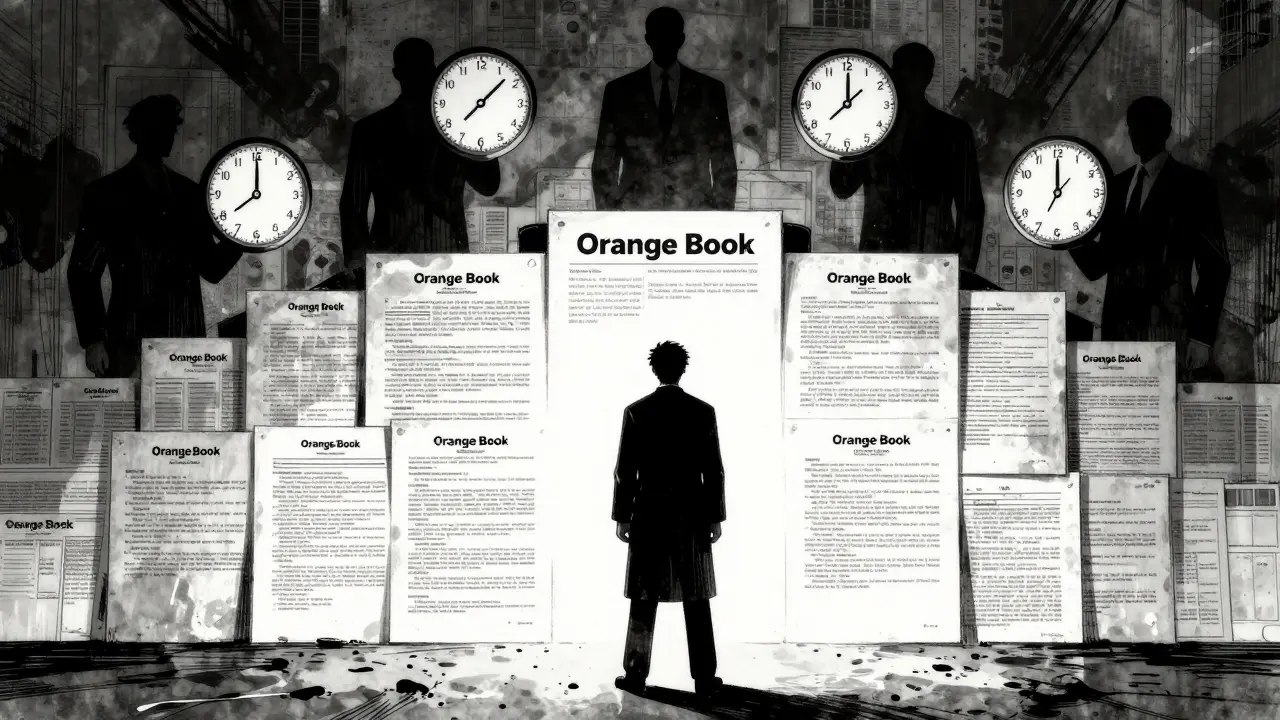
Brand-name companies don’t rely on just one patent. They file dozens - sometimes over a dozen - covering everything from the active ingredient to how it’s made, how it’s packaged, even how it’s taken. These are listed in the FDA’s Orange Book, which is the official public record of patents tied to brand-name drugs. A 2023 study by Professor Robin Feldman found that the average brand-name drug has 14.2 patents listed in the Orange Book. That’s not a mistake - it’s strategy. When a generic company wants to enter the market, they have to challenge each one. If they file a Paragraph IV certification (saying they believe a patent is invalid or won’t be infringed), the brand-name company can sue. And if they do, the FDA is forced to delay approval for up to 30 months. Here’s the catch: that 30-month clock isn’t the real bottleneck. Research from the National Institutes of Health found that generics typically launch 3.2 years after the 30-month stay ends. Why? Because companies are busy fighting multiple lawsuits, waiting for court decisions, or trying to figure out which patents are actually enforceable.The 180-Day Exclusivity Race
There’s one big incentive for generic companies to be first: 180 days of exclusive market access. The first company to successfully challenge a patent gets to be the only generic on the market for six months. That’s huge - it means they can charge higher prices before other generics arrive. But this creates a high-stakes race. First filers have to launch within 75 days of FDA approval or they lose the exclusivity. That pressure leads to problems. In 2022, FDA data showed that 22% of first filers didn’t launch on time because they couldn’t get manufacturing right. Another 10% lost exclusivity because their patent challenge failed. Some companies play the game smartly. Sandoz, for example, developed three to four different manufacturing methods for its generic version of Copaxone. That way, if one process got blocked by a patent, they could switch to another without losing time.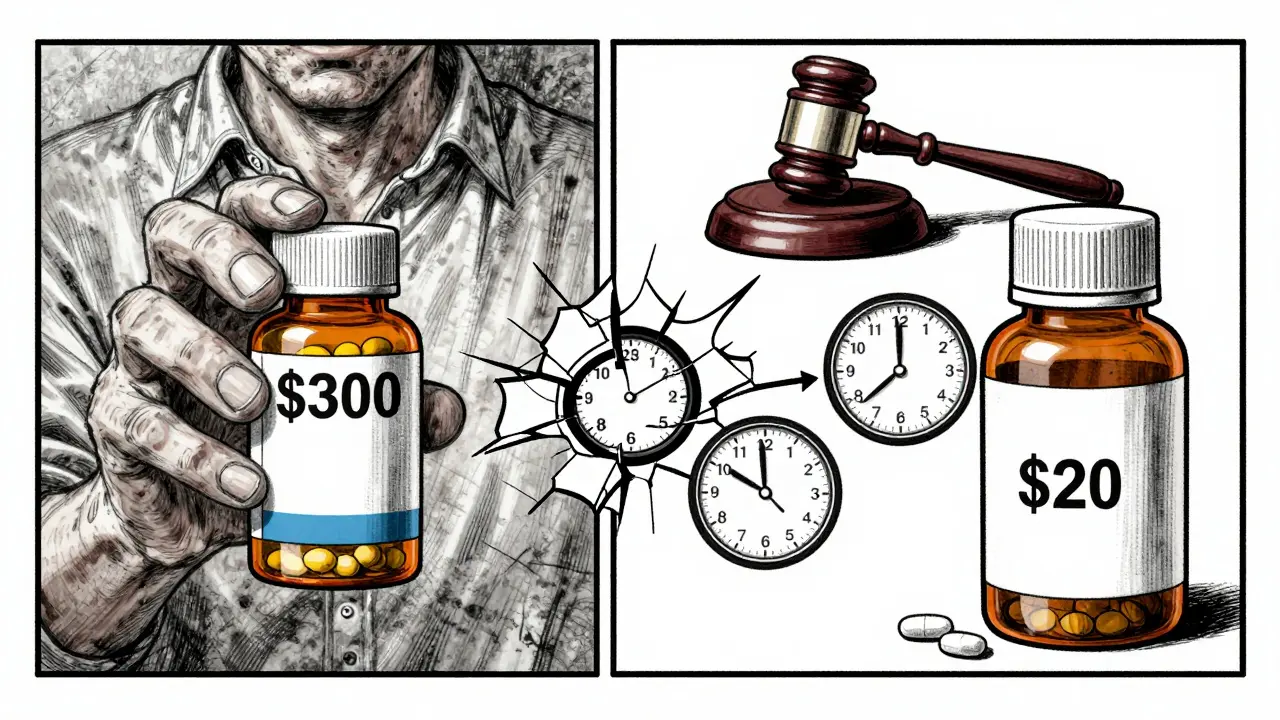
Why Some Drugs Take Forever
Not all drugs are created equal. Small molecule pills - like blood pressure or cholesterol meds - usually see generics within 1.5 years of patent expiration. But complex drugs? Not so fast. Biologics - like insulin, rheumatoid arthritis drugs, or cancer treatments - are made from living cells, not chemicals. They’re harder to copy. The law that governs their generics (called biosimilars) is different and slower. The Biologics Price Competition and Innovation Act (BPCIA) from 2010 created a new pathway, but it’s still messy. On average, biosimilars take 4.7 years to launch after the brand-name drug’s patent expires. Even among small molecules, some face longer delays. Cardiovascular drugs, for example, have an average delay of 3.4 years after patent expiry. Dermatology drugs? Just 1.2 years. Why? It’s often because of patent thickets. Drugs with more than 10 listed patents see delays that are 37% longer than those with just one or two.Settlements That Delay Generics
Here’s one of the most controversial parts: reverse payment settlements. That’s when a brand-name company pays a generic company to stay out of the market. It sounds crazy - why pay someone not to compete? But it happens. The FTC estimates that 45% of patent lawsuits end in these deals. In 2021, the Supreme Court ruled in Amarin Pharma v. Helsinn that secret payments like this violate antitrust laws. That’s changed things. Reverse payments are now rarer, but they still exist. A 2022 Congressional Research Service report found that these settlements delay generic entry by an average of 2.1 years - costing consumers $3.5 billion a year.Approval ≠ Availability
Even when the FDA says a generic is approved, it doesn’t mean it’s in stores. In 2022, FDA data showed that only 62% of approved generics hit the market within six months. Why? Manufacturing issues. Supply chain problems. Companies waiting for the 180-day window to open. Or sometimes, the brand-name company just won’t sell the reference drug to the generic maker - a tactic called “product hopping.” The CREATES Act of 2019 tried to fix that by making it illegal to block access to the original drug for testing. But enforcement is still spotty.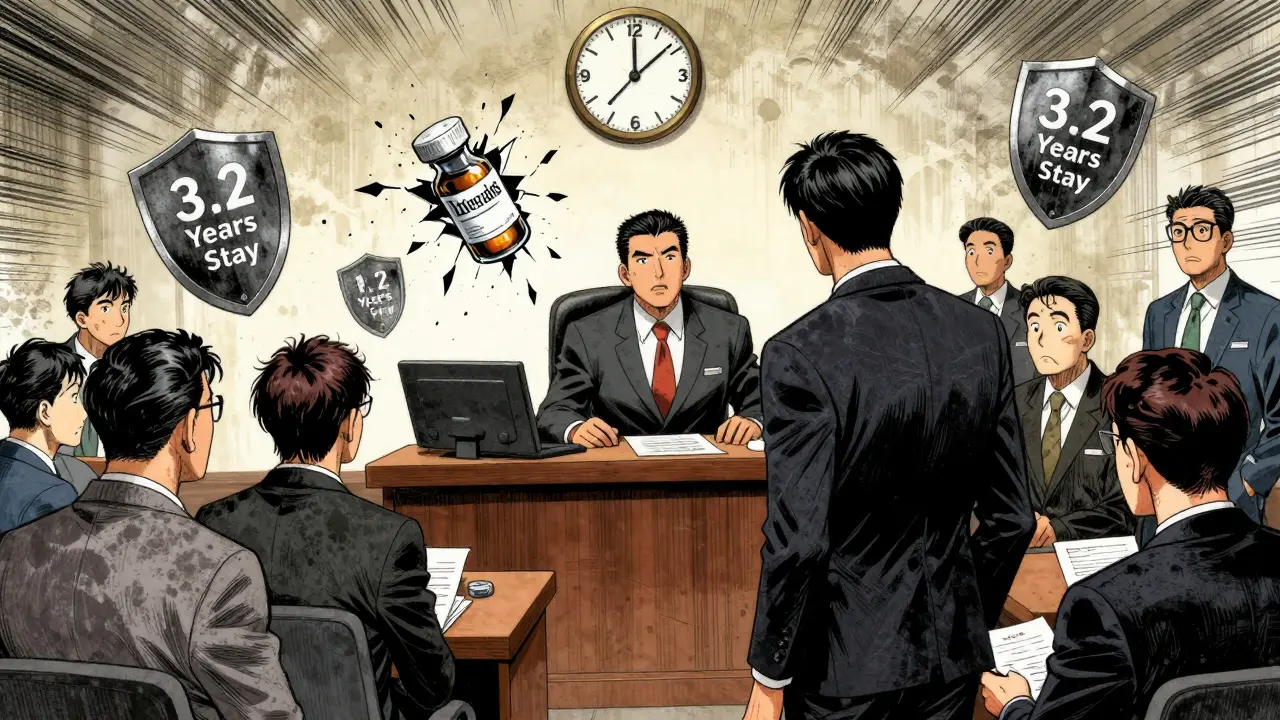
Who Controls the Market?
The generic drug market isn’t crowded with small players. It’s dominated by a few big companies: Teva, Viatris, and Sandoz control nearly half of the $70 billion U.S. generic market. That means fewer competitors to drive down prices - and more power to delay entry if it suits them. And it’s getting harder to enter. The FDA’s 2023 GDUFA II rules aimed to cut review times for complex generics from 36 months to 24. But as of mid-2024, only 62% of applications met that goal. The system is still slow.What’s Changing?
There are signs of progress. The Orange Book Transparency Act, which went into effect in 2023, forced companies to list patents more accurately. In its first year, patent listing disputes dropped by 32%. That’s helping generics plan better. The FDA is also testing AI tools to speed up bioequivalence testing. Early results suggest it could cut development time by 25%. And the number of generic drugs approved keeps rising - 1,165 in 2021 alone. But here’s the reality: the median time from patent expiration to generic availability is still 18 months, according to FDA Commissioner Robert Califf in early 2024. That’s a long time for patients paying hundreds of dollars a month for a drug that could cost $20 in generic form.Why This Matters to You
If you’re taking a brand-name drug that’s about to go generic, don’t assume savings will come quickly. Talk to your pharmacist. Ask if a generic is approved - and if it’s available. If it’s not, ask why. Sometimes, it’s just a supply issue. Other times, it’s legal delays. The system was designed to balance innovation with access. But in practice, it often favors the brand-name companies. The delays aren’t always about science. They’re about money - and the legal tools that let companies stretch out profits long after their patent should have expired. The good news? Generics already save the U.S. healthcare system $373 billion a year. The bad news? We’re still leaving billions on the table because generics are stuck in legal limbo.How long after a patent expires does a generic drug usually become available?
On average, it takes about 18 months after patent expiration for a generic drug to become available. But that can range from just a few months to over three years, depending on patent challenges, regulatory exclusivity, and manufacturing delays.
What is the Hatch-Waxman Act and how does it affect generics?
The Hatch-Waxman Act of 1984 created the ANDA pathway, allowing generic manufacturers to prove bioequivalence without repeating clinical trials. It also introduced the 30-month stay and 180-day exclusivity period to balance innovation and competition. It’s the legal backbone of today’s generic drug system.
Why do some generic drugs never launch even after FDA approval?
Approval doesn’t guarantee availability. Companies may delay launch due to manufacturing problems, unresolved patent lawsuits, or waiting to enter the market during the 180-day exclusivity window. Sometimes, brand-name companies refuse to sell the reference drug needed for testing, which legally blocks generic production.
What’s the difference between a generic drug and a biosimilar?
Generics are exact copies of small-molecule chemical drugs. Biosimilars are highly similar - but not identical - versions of complex biologic drugs made from living cells. Biosimilars face longer approval times and more complex testing, which delays their market entry by an average of 4.7 years after the brand-name drug’s patent expires.
Can a generic drug be blocked by multiple patents?
Yes. Many brand-name drugs have 10 or more patents covering different aspects - the active ingredient, how it’s made, how it’s used, even packaging. Generic companies must challenge each one, which can delay entry by months or years. Drugs with more than 10 listed patents see delays that are 37% longer than those with fewer patents.
Are reverse payment settlements still common?
They’re less common than before, thanks to court rulings like Amarin Pharma v. Helsinn in 2021, which made secret payments illegal. But they still happen, especially for high-revenue drugs. The FTC estimates they delay 45% of generic entries that would otherwise occur sooner.


David Chase
30 Dec 2025 at 06:50THIS IS WHY AMERICA IS BROKE!!! PATENTS?? EXCLUSIVITY?? 30-MONTH STAYS???!?!?!!? BRAND NAMES ARE JUST STRETCHING OUT PROFITS WHILE KIDS CAN'T AFFORD INSULIN!!! 😤💸 #PharmaScam #GenericDrugsNow