


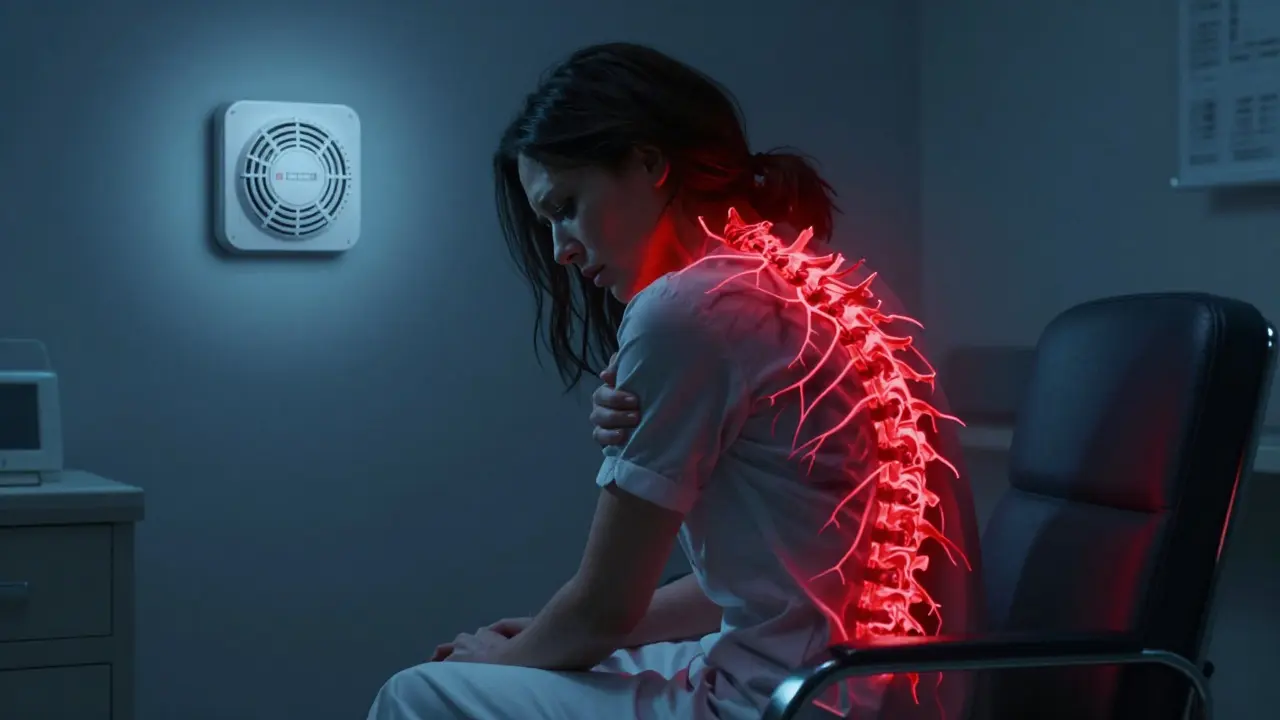

What if your pain isn’t telling you what you think it is?
Most people believe pain means damage. If your back hurts, your spine must be broken. If your knee aches, the cartilage is worn out. This idea seems logical - and it’s been drilled into us for decades. But here’s the twist: pain doesn’t always mean tissue damage. In fact, in chronic pain, it often has very little to do with it at all.
Pain Neuroscience Education, or PNE, is a way of helping people understand how pain actually works in the brain and nervous system. It’s not about blaming the body. It’s about fixing the misunderstanding. And for people stuck in long-term pain, this shift can be life-changing.
Why traditional pain advice often fails
For years, the go-to advice for chronic pain was simple: rest, avoid movement, and treat the structure. If you had a herniated disc, you were told to stay off your feet. If your shoulder hurt, you were handed a sling. The message? Something’s broken. Don’t move it.
But here’s what happened: people got more afraid. They stopped moving. Their muscles weakened. Their fear grew. And the pain? It didn’t go away - it got worse.
That’s because pain isn’t just a warning light. It’s a protective output - like an alarm system that’s too sensitive. In chronic pain, the nervous system learns to overreact. Even normal movements, like bending over or walking, can trigger intense pain signals, even when nothing is damaged. This isn’t weakness. It’s biology.
Studies show that when people are told their pain is due to structural damage, they’re more likely to avoid activity, use more medication, and feel more helpless. That’s not just bad advice - it’s harmful.
How PNE changes the story
PNE flips the script. Instead of saying, “Your back is broken,” it says, “Your nervous system is on high alert.”
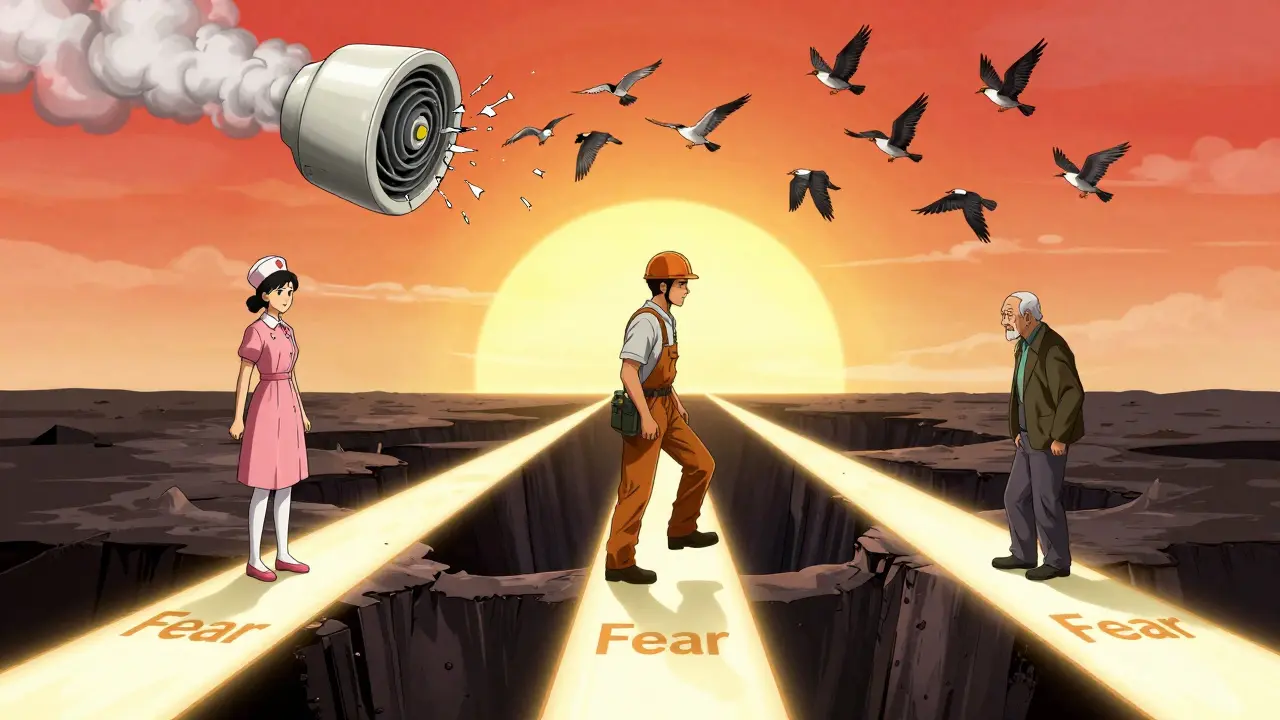
Think of your nervous system like a smoke alarm. If it’s working right, it goes off when there’s a real fire. But if it’s faulty, it goes off when you burn toast. That doesn’t mean the house is on fire. It just means the alarm is too sensitive.
PNE teaches people that pain is a signal - not a measurement. It’s the brain’s way of saying, “I think something might be dangerous,” even if there’s no real threat. This isn’t imaginary pain. It’s real pain. But the cause? It’s not in the tissues. It’s in the brain’s interpretation.
Key concepts in PNE include:
- Peripheral sensitization: Nerves in the injured area become more reactive.
- Central sensitization: The spinal cord and brain amplify pain signals over time.
- Neuroplasticity: The brain can rewire itself - for better or worse.
- The biopsychosocial model: Pain is shaped by biology, thoughts, emotions, and environment.
These aren’t just terms. They’re tools. When someone understands that their pain isn’t a sign of damage, they stop fearing movement. And when they stop fearing movement, they start moving again. And movement? That’s how the nervous system learns it’s safe.
What does PNE actually do?
The data doesn’t lie. A 2023 review of 23 randomized trials found that PNE reduced pain intensity by an average of 1.8 points on a 10-point scale. That’s not just statistically significant - it’s meaningful. People report less fear, less disability, and better sleep.
One of the biggest wins? Pain catastrophizing - the spiral of “this will never end,” “I can’t handle this,” “I’m broken.” PNE cuts that spiral. In the same review, pain catastrophizing scores dropped by 6.2 points on a 52-point scale. That’s a massive shift in mindset.
And here’s the kicker: PNE works best when paired with movement. Not instead of it. Alongside it. A 2016 study showed that when PNE was added to exercise, pain improved 30-40% more than with exercise alone. Why? Because when you understand your pain isn’t danger, you’re willing to move through it. That’s the magic.
Real people tell the same story. One woman in Melbourne, a 42-year-old nurse with fibromyalgia, went from six pain pills a day to one every three days after six sessions of PNE combined with graded activity. She didn’t get “cured.” She got her life back.
Who delivers PNE?
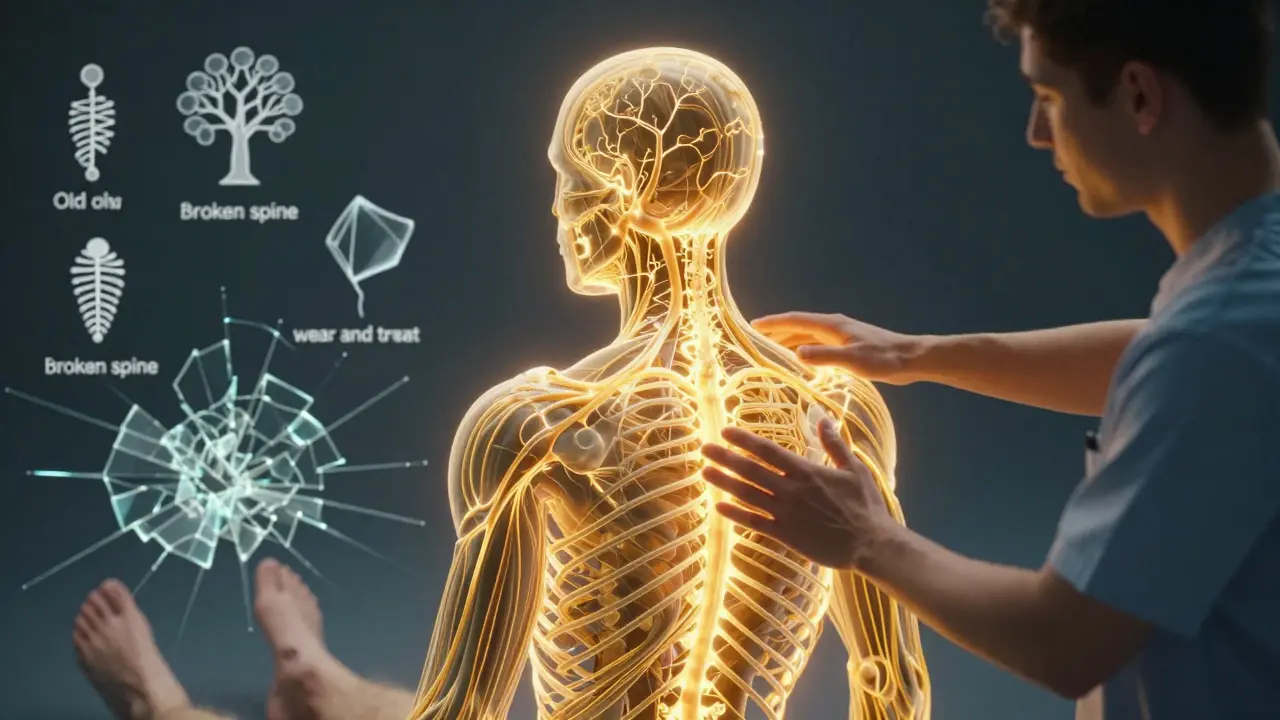
PNE isn’t something you read in a book and do alone. It’s a conversation. Usually, it’s delivered by a physical therapist, occupational therapist, or pain specialist who’s been trained in it. The most common format is one-on-one sessions lasting 30-45 minutes. Group sessions and digital tools are growing, but personal interaction still wins.
There’s no single certification, but programs like the International Spine and Pain Institute offer 24-hour courses that teach how to explain pain using metaphors, diagrams, and simple language. The most effective practitioners don’t just recite facts - they listen. They adapt. They meet people where they are.
And the learning curve? It’s real. Most clinicians need 3-6 months to feel confident. That’s because PNE isn’t about teaching anatomy. It’s about changing language. Saying “your nerves are hypersensitive” instead of “your spine is degenerating.” That shift in words changes everything.
What PNE doesn’t do
PNE isn’t a magic bullet. It doesn’t erase pain overnight. It doesn’t work for everyone. And it’s not meant for acute injuries - like a broken bone or a recent surgery - where tissue damage is clearly the cause.
People with low health literacy or severe cognitive impairment often struggle with the concepts. And some patients expect immediate relief. When they don’t get it, they walk away. That’s why timing matters. PNE works best early - within the first few sessions of care.
Also, it’s not a replacement for other treatments. It’s a foundation. You still need movement. You still need sleep. You still need stress management. But PNE gives you the mindset to do those things without fear.
Why it’s catching on - fast
Just 15 years ago, PNE was rare. Today, 72% of US physical therapy programs teach it. Medicare started reimbursing it in 2021. Fortune 100 companies are using it to cut workers’ compensation claims by 22%.
Why? Because it works. And because the old way - pills, scans, surgeries - isn’t fixing the problem. It’s just managing symptoms. PNE tackles the root: the brain’s fear-based response to pain.
Apps like Pain Revolution have over 186,000 downloads. Virtual reality versions are being tested. And researchers are now exploring how to tailor PNE to individual brain patterns - using biomarkers to predict who will respond best.
What to expect if you try PNE
If you’re considering PNE, here’s what usually happens:
- You’re asked to describe your pain - not just where, but how it feels, when it gets worse, what you think it means.
- Your provider explains pain using simple metaphors: alarms, volume knobs, smoke detectors.
- You’re shown diagrams of the nervous system - not to scare you, but to show how it can get stuck in overdrive.
- You’re told it’s safe to move, even if it hurts. Not because the pain is fake - because it’s misfiring.
- You’re given a handout or app to review later.
- You start moving - slowly, safely, with support.
It’s not a lecture. It’s a conversation. And by the end, most people feel relieved. Not because their pain is gone - but because they finally understand it. And that changes everything.
Is PNE right for you?
If you’ve had pain for more than three months, and you’ve been told it’s “wear and tear,” “degeneration,” or “nothing serious,” PNE might be exactly what you’ve been missing.
If you’ve been avoiding movement because you’re scared it’ll make things worse - PNE can help.
If you’ve tried everything - physical therapy, injections, meds - and still feel stuck - PNE could be the missing piece.
It’s not about blaming your brain. It’s about empowering it. Pain isn’t your enemy. Your fear of it is.
What’s next for pain education?
Researchers are now testing PNE for acute pain after surgery. Early results suggest it can reduce opioid use and speed recovery. Virtual reality versions are showing 30% better knowledge retention than traditional methods. And as value-based care grows, clinics are realizing: treating pain isn’t about scans and pills. It’s about changing how people think.
The future of pain care isn’t more scans. It’s more understanding.





Shelby Price
2 Feb 2026 at 15:41This makes so much sense. I've had back pain for years and was told to avoid everything. Turns out, moving through it was the key.
My pain didn't vanish overnight, but my fear did. And that changed everything.