


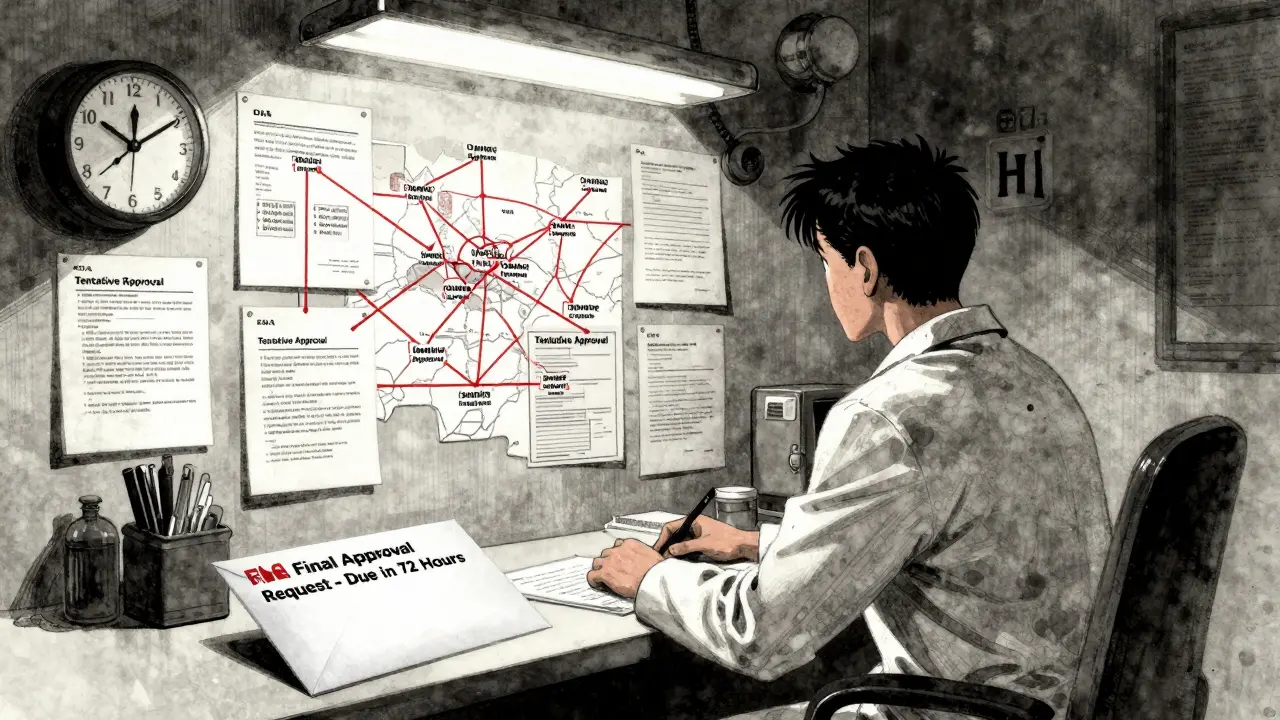

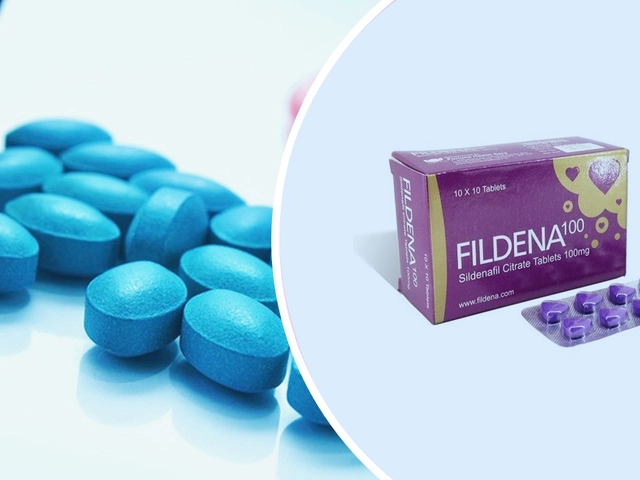
When a generic drug company submits an application to the FDA to sell a cheaper version of a branded medicine, they don’t always get approved right away-even if their product is perfect. That’s because of something called tentative approval. It sounds like good news, but it’s actually a waiting game. The FDA says, "We’ve checked everything, and your drug meets all the science standards. But you can’t sell it yet." Why? Because of patents. And patents mean litigation. And litigation means months, sometimes years, of waiting. This isn’t just paperwork. It’s a high-stakes race. Companies spend millions developing a generic version of a drug like Viagra, Januvia, or EpiPen. They get all the way to the finish line, only to be told: "Hold on. The patent hasn’t expired yet." The system was designed by Congress in 1984 under the Hatch-Waxman Act. The goal? Let generics in faster without trampling on innovation. So they created a middle ground: tentative approval. It’s not final. It’s not a green light. But it’s the closest thing to a guarantee that you’ll be first in line when the patent clock runs out. Here’s how it works. When a generic company files an Abbreviated New Drug Application (ANDA), they must certify one of four things about the brand-name drug’s patents. Most of the time, they choose Paragraph IV: "We believe this patent is invalid or won’t be infringed by our drug." That’s a legal challenge. And when they do, the brand-name company has 45 days to sue. If they do, the FDA is legally required to pause final approval for up to 30 months. That’s the litigation clock. But here’s the twist: the FDA can still give you tentative approval during this time. That’s the game-changer. If your drug passes all the FDA’s tests-chemistry, manufacturing, labeling, bioequivalence-and the only thing holding you back is a patent lawsuit, you get a letter that says: "Tentative Approval Granted." You’re not allowed to sell the drug. But you’re now in the queue. Your spot is locked in. When the patent expires or the lawsuit ends, you don’t have to reapply. You just submit a quick update, and within days, you get final approval. The catch? You have to stay on top of it. Many companies think tentative approval means they can relax. They can’t. The FDA requires you to submit amendments to your application at least three months before the patent expires if you’re making minor changes. If it’s a major change-like switching manufacturing sites-you need ten months’ notice. Miss that window? Your approval gets delayed. And in a market where being first means capturing 80% of sales, that’s a $100 million mistake. Take Lupin Limited. In 2018, they had tentative approval for a generic version of Cialis. They tracked the patent expiration down to the day. They submitted their final request exactly 90 days before the patent ended. The moment the patent expired, the FDA approved them. Within 24 hours, their drug was on pharmacy shelves. They captured 42% of the market in the first month. Compare that to Aurobindo Pharma. In 2021, they had tentative approval for a generic version of Jardiance. But they changed their manufacturing site without properly documenting it in their final approval request. The FDA flagged it. Approval got delayed by four months. Sales loss? Estimated at $150 million. It’s not just about timing. It’s about understanding every patent and exclusivity period. Some drugs get extra protection-like pediatric exclusivity. A Mylan representative once told the FDA that they missed a six-month pediatric exclusivity extension on their EpiPen generic. Even though they had tentative approval for 18 months, they couldn’t launch until that extra time ran out. Six months. Gone. The FDA gets about 1,000 tentative approvals every year. And 85% of all generic drugs entering the U.S. market today go through this process. The top 10 generic manufacturers typically have 15 to 25 products in this limbo at any given time. Smaller companies? Usually 2 to 5. But they all play the same game. And the stakes are rising. In 2023, the FDA announced it would cut the review time for final approval requests from 60-90 days down to just 30 days for minor changes. That’s good news. But it also means companies have less room for error. If you wait until the last minute to submit, you’re gambling. One missed deadline, one unclear amendment, one overlooked patent-and you lose your chance. Legal teams and regulatory teams now work side by side. One team tracks patent expiration dates. The other tracks FDA submission deadlines. If they’re not synced, you’re in trouble. The biggest myth? That tentative approval means you’re almost done. It doesn’t. It means you’re halfway through a marathon-and you still have to run the last 13 miles without stopping. Companies that win are the ones who treat tentative approval like a live system, not a checkbox. They monitor patent litigation updates. They track FDA guidance changes. They run internal simulations: "What if the patent expires on a Friday? What if the FDA takes 28 days instead of 30? What if our competitor files a lawsuit we didn’t see coming?" The FDA doesn’t call you. They don’t send reminders. They don’t hold your hand. You have to stay ahead. And that’s why, despite all the complexity, tentative approval remains the backbone of the generic drug market. It’s not perfect. It’s not simple. But without it, patients wouldn’t get affordable versions of life-saving drugs for years after the brand-name patent expires. The system works-when you know how to play it. If you’re a generic manufacturer, this isn’t just a regulatory step. It’s your launchpad. Get it right, and you’re first to market. Get it wrong, and you’re out of the race before it even starts. The clock is ticking. And the FDA isn’t going to warn you when it runs out.
How Tentative Approval Compares to Other Approval Paths
Not all generic drugs go through tentative approval. But most do-especially when patents are in play. Here’s how it stacks up against other pathways:
| Pathway | Requires Clinical Data? | Patent Challenge Allowed? | Tentative Approval Possible? | Market Entry Timing |
|---|---|---|---|---|
| ANDA (Generic) | No | Yes (Paragraph IV) | Yes | After patent expires or litigation ends |
| 505(b)(2) | Partial | Yes, but limited | No | After full FDA review |
| NDA (Brand New Drug) | Full clinical trials | No | No | After FDA approval |
Only the ANDA pathway allows for tentative approval. That’s because it’s built on the Hatch-Waxman framework, which was designed to balance innovation with competition. The 505(b)(2) pathway is for drugs that are similar to existing ones but have changes-like a new dosage or delivery method. It doesn’t allow for patent challenges in the same way, so the FDA doesn’t offer tentative approval. The key takeaway? If you’re making a true generic-identical in active ingredient, dose, and route-you’re in the ANDA lane. And if there’s a patent, you’re in the tentative approval zone.
What Happens After Tentative Approval?
Getting tentative approval isn’t the end. It’s the beginning of a new phase: the waiting game. Here’s what you need to do next:
- Track every patent and exclusivity period-not just the main one. Look for secondary patents, pediatric exclusivity, orphan drug exclusivity. Missing one means a delay.
- Monitor litigation. If the brand-name company sues, the 30-month stay kicks in. You can’t sell until it ends. But you can prepare.
- Prepare your final approval request at least three months before the earliest lawful approval date. If you’re making a manufacturing change, give ten months’ notice.
- Keep manufacturing compliant. 27% of delays in 2022 were due to cGMP issues. Even if your drug is approved, if your factory doesn’t meet standards, you’re blocked.
- Have legal and regulatory teams sync up. One team handles patents. The other handles FDA submissions. If they’re not talking, you’re at risk.
Companies that treat this as a passive status lose. Those who treat it like a live project win.
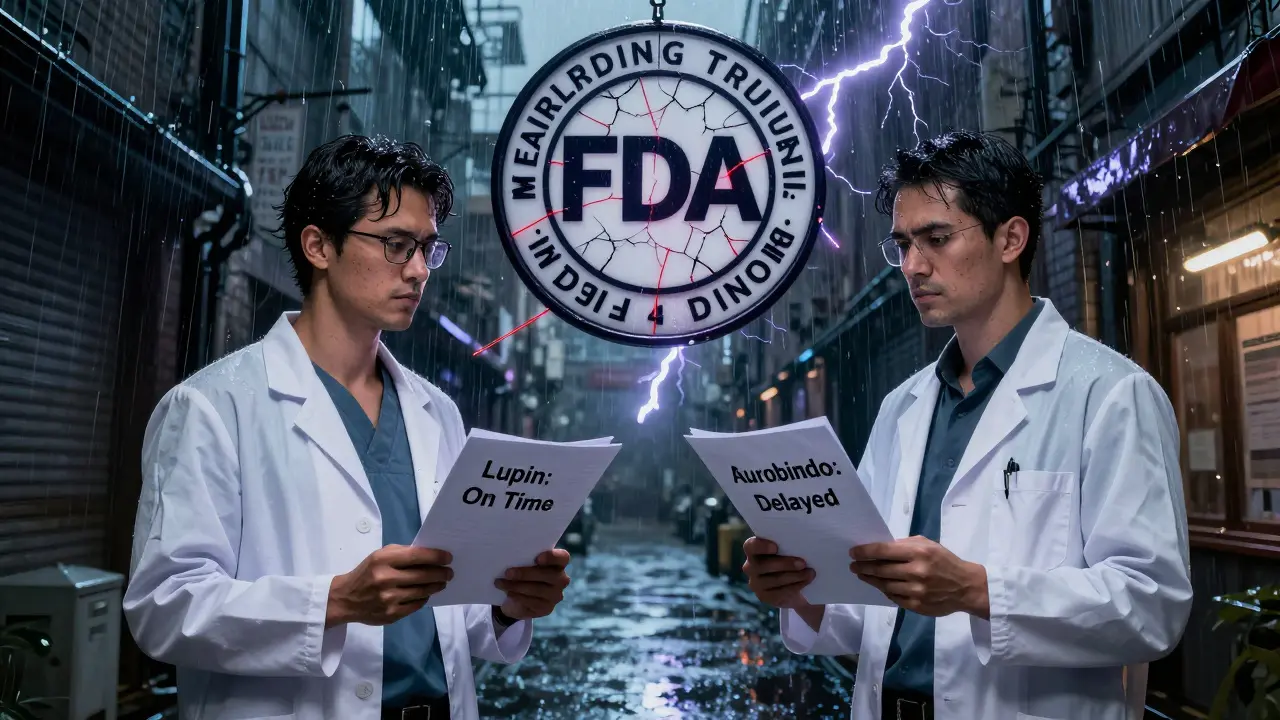
Common Mistakes and How to Avoid Them
Based on FDA data and industry reports, here are the top three mistakes generic manufacturers make after getting tentative approval:
- Mistake 1: Assuming "tentative" means "almost approved". It doesn’t. You still need to submit a final request. The FDA won’t do it for you.
- Mistake 2: Ignoring amendment rules. Changing a label, packaging, or manufacturing site? You need to notify the FDA. If you don’t, your approval gets stuck.
- Mistake 3: Underestimating patent complexity. Some drugs have 10+ patents. One expires in 2026. Another in 2027. You can’t launch until all are gone. Track them all.
Pro tip: Use a shared digital tracker-updated weekly-between your legal, regulatory, and supply chain teams. Make sure everyone sees the same dates.

Why This Matters for Patients
Tentative approval isn’t just a corporate process. It’s what keeps drug prices down. Without it, patients would wait years for affordable versions of medicines. In 2023, the U.S. generic drug market was worth $75 billion. That’s billions in savings for patients, insurers, and Medicare. The system isn’t perfect. It’s slow. It’s complex. But it works. And as long as patents exist, tentative approval will be the bridge between innovation and access.





Andrew Poulin
6 Mar 2026 at 14:16Tentative approval is just the FDA's way of saying 'we like you but your ex won't let you date'
Companies spend millions only to get stuck in patent limbo. It's a scam dressed up as regulation.