




Medication Interaction Risk Checker
Select a common pain reliever (NSAID) to see how it interacts with blood thinners (anticoagulants) based on clinical data.
Ibuprofen
Commonly used for fever and pain
Moderate RiskDiclofenac
Often prescribed for arthritis
High RiskNaproxen
Long-acting anti-inflammatory
Very High RiskAcetaminophen
(Tylenol) Non-NSAID option
Safe AlternativeAnalysis for -
Select a medication to see the risk multiplier.
⚠️ Clinical Note:
Combined use increases the risk of gastrointestinal and intracranial bleeding.
To understand why this happens, we first have to look at what these drugs actually do. Anticoagulants is a class of medications, often called blood thinners, that slow down the body's process of clotting blood. These are vital for people with atrial fibrillation or a history of deep vein thrombosis to prevent strokes and pulmonary embolisms. On the other hand, NSAIDs is nonsteroidal anti-inflammatory drugs, such as ibuprofen and aspirin, used to reduce pain and inflammation. While they are incredibly effective for arthritis or a headache, they do more than just block pain-they change how your blood behaves.
The Double Hit to Your Clotting System
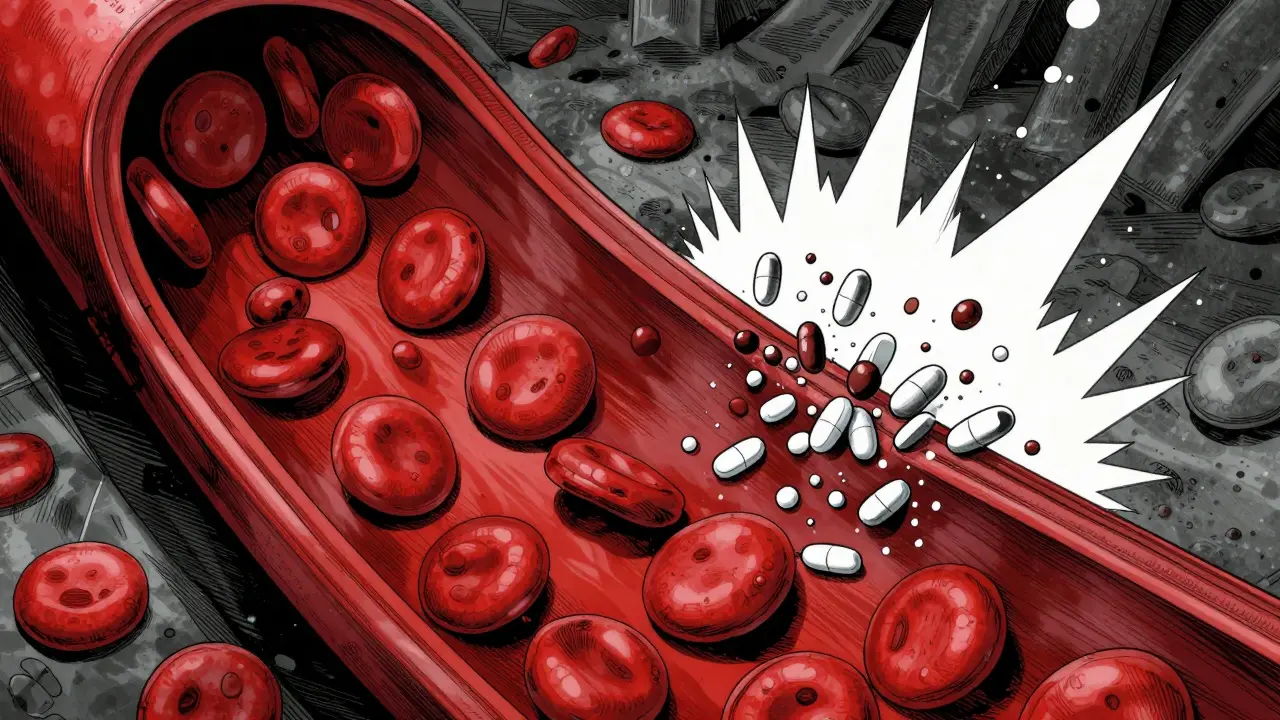
When you take a blood thinner, you're essentially telling your body to take longer to form a clot. That's the goal-keeping blood flowing. However, when you add an NSAID into the mix, you're hitting your body's defense system from a second angle. NSAIDs interfere with platelets, the tiny cells that act like the first responders to a leak in a blood vessel. If platelets can't stick together and the anticoagulant is slowing down the clotting proteins, your body loses its ability to stop a bleed.
It isn't just about the blood, though. NSAIDs are notorious for irritating the lining of the stomach and intestines. They strip away the protective mucus layer of the gastrointestinal tract. If an NSAID creates a tiny sore or ulcer in your stomach wall while your blood is chemically prevented from clotting, that small leak becomes a steady stream. This is why the risk of gastrointestinal bleeding is so drastically higher in this group.
Quantifying the Danger: The Numbers
This isn't just a theoretical warning from a pharmacist. Hard data shows that the risk spikes significantly when these drugs are combined. Research from Aarhus University Hospital involving 200,000 patients found that people taking both had more than double the risk of internal bleeding compared to those on blood thinners alone. Not all pain relievers are created equal, however. Some are far more aggressive than others.
| NSAID Type | Risk Multiplier | Risk Level |
|---|---|---|
| Ibuprofen | 1.79x | Moderate |
| Diclofenac | 3.3x | High |
| Naproxen | 4.1x | Very High |
The danger isn't limited to the stomach. The data shows a 3.22-fold increase in intracranial hemorrhage-bleeding in the brain-which is a life-threatening event. Even pulmonary and urinary tract bleeding see significant jumps. Whether you are taking older medications like Warfarin or newer agents like Apixaban (Eliquis) and Rivaroxaban (Xarelto), the interaction remains a serious threat across the entire class of anticoagulants.
Why So Many People Still Make This Mistake
If the risks are this clear, why does this combination still happen? A big part of the problem is accessibility. You can buy ibuprofen at a gas station, but you need a prescription for a blood thinner. Many people don't realize that a "simple" over-the-counter pill can interact with a prescription drug. In fact, a study in JAMA Internal Medicine found that over half of anticoagulant users were unaware of the risks, and 68% wrongly believed that taking an NSAID once in a while was perfectly safe.
There is also a cruel irony in the demographics. The people most likely to need blood thinners-older adults-are often the same people struggling with chronic arthritis pain. When your joints ache every day, the temptation to use a powerful anti-inflammatory is high, even if the warning label is there. This gap in awareness leads to thousands of preventable emergency room visits every year.
Safer Ways to Manage Pain
If you can't use NSAIDs, how do you deal with pain? The most common and safest recommendation is Acetaminophen (known as Tylenol). Unlike NSAIDs, acetaminophen doesn't interfere with platelet function or damage the stomach lining. However, even this "safe" option has limits. If you're on blood thinners, most experts recommend capping your daily dose at 3,000 mg to avoid stressing the liver.
For those with severe chronic pain, there are other paths. Some doctors may suggest low-dose Celecoxib, which is a COX-2 inhibitor. While still riskier than acetaminophen, it may be less aggressive on the stomach than traditional NSAIDs. But this should only happen under strict medical supervision. If you're preparing for surgery, the timing of your last dose matters. For example, ibuprofen usually needs to be stopped 2 days before a procedure, while longer-acting drugs like piroxicam may need to be stopped 10 days prior to ensure your blood can clot properly during the operation.

Red Flags: When to Seek Emergency Help
If you have accidentally combined these medications, you need to know what to look for. Bleeding doesn't always look like a gaping wound; sometimes it's subtle. Watch for these warning signs:
- Stool changes: Black, tarry, or bloody stools are a classic sign of a gastrointestinal bleed.
- Unexpected bruising: Large bruises appearing without a known injury, or tiny purple spots (petechiae) on the skin.
- Urine color: Pink or red-tinged urine.
- Neurological shifts: Sudden, severe headaches or confusion, which could indicate a brain bleed.
- Fatigue: Feeling unusually exhausted or short of breath, which can be a sign of anemia caused by slow, internal blood loss.
One real-world example from patient forums describes a user who took ibuprofen for dental pain while on Apixaban. Their hemoglobin dropped from a healthy 14.2 g/dL to 8.7 g/dL, necessitating an immediate blood transfusion. This shows how quickly a "minor" pain fix can escalate into a systemic failure.
Can I take a low-dose aspirin if I'm on a blood thinner?
You should never take aspirin-even low-dose-while on a blood thinner unless your doctor specifically tells you to. Aspirin is a type of NSAID that permanently inhibits platelets for the life of the cell, which significantly compounds the bleeding risk of anticoagulants.
Is Tylenol always safe for people on blood thinners?
Acetaminophen is generally the safest choice because it doesn't affect clotting. However, you must follow dosage limits. For those on anticoagulants, staying under 3,000 mg per day is usually recommended to avoid potential liver complications.
What is the most dangerous NSAID to mix with blood thinners?
Based on clinical data, naproxen shows one of the highest risks, increasing the likelihood of internal bleeding by over 4 times. Diclofenac also carries a significantly higher risk than ibuprofen.
Do newer blood thinners (DOACs) have the same interaction as Warfarin?
Yes. While drugs like Eliquis, Xarelto, and Praxand (DOACs) have different mechanisms and don't require the same constant blood monitoring as Warfarin, they still interact dangerously with NSAIDs. The increased risk of bleeding is a class-wide effect.
What should I do if I accidentally took ibuprofen while on a blood thinner?
First, stop taking the NSAID immediately. Monitor yourself for any of the red flags mentioned above, such as black stools or unusual bruising. Contact your healthcare provider to let them know, as they may want to check your INR levels or screen for internal bleeding.
Next Steps for Safe Pain Management
If you are currently taking a blood thinner and struggle with pain, start by auditing your medicine cabinet. Remove any bottles labeled "NSAID," "Ibuprofen," "Naproxen," or "Aspirin" to prevent accidental use. Instead, keep a steady supply of acetaminophen and a list of non-drug pain relief options, such as heating pads, cold compresses, or gentle physical therapy.
For those with complex needs, ask your doctor about a "pain management plan." This could include specific guidelines on which medications are safe for different types of pain (e.g., dental vs. joint pain) and a clear protocol for when you must stop these meds before a medical procedure. Remember, your pharmacist is your best resource-always ask them to check for interactions before buying any new over-the-counter product.


Write a comment