


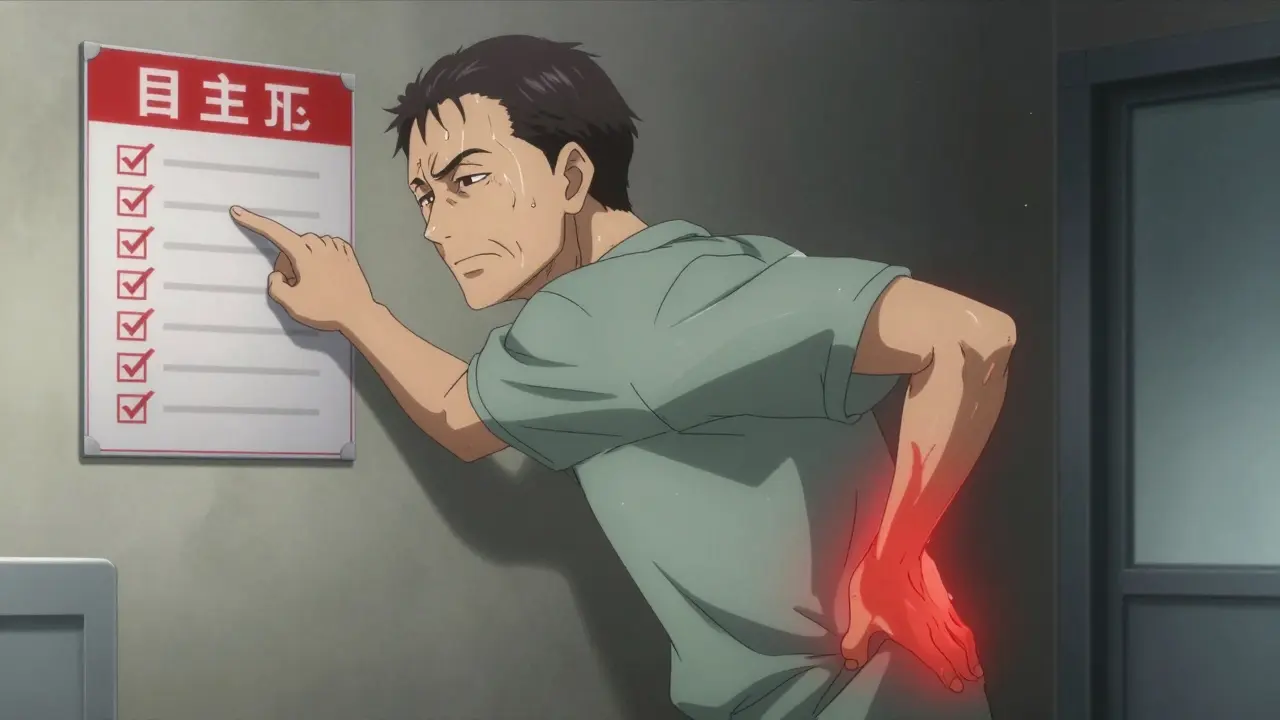

Most people will feel low back pain at least once in their life. It’s not rare-it’s normal. But not all back pain is the same. Some cases are just stiff muscles from sitting too long or lifting wrong. Others? They’re warning signs. And if you miss those signs, you could be risking something serious.
What Makes Low Back Pain Dangerous?
Out of every 100 people with low back pain, 97 have what’s called non-specific low back pain. That means no broken bone, no tumor, no infection. Just irritated nerves, tight muscles, or a misaligned joint. The other 3? They might have something dangerous hiding under the pain.
That’s why doctors use red flags. These aren’t fancy medical jargon-they’re clear warning signs that something more serious might be going on. The goal isn’t to scare you. It’s to catch the rare cases before they cause permanent damage.
There are four major red flag categories: cancer, fracture, infection, and cauda equina syndrome. Each has its own set of clues.
- History of cancer: If you’ve had cancer before-even 10 years ago-and now your back hurts, that’s a red flag. Cancer can spread to the spine silently.
- Unintentional weight loss: Losing weight without trying? That’s not just stress. It can mean cancer or infection is using up your body’s resources.
- Major trauma: A car crash, a fall from height, or a direct blow to your back? That’s not just soreness. You could have a fracture.
- Use of steroids or immunosuppressants: If you’re on long-term steroids for arthritis or after a transplant, your body can’t fight infections well. A spine infection can sneak up fast.
Then there’s cauda equina syndrome. This is rare but urgent. It happens when nerves at the bottom of your spine get squeezed. Symptoms? You might lose control of your bladder or bowels. You might feel numbness around your genitals or inner thighs-what doctors call saddle anesthesia. Or you might not be able to pee, even when your bladder feels full. If you have two or more of these, you need emergency care. Waiting even 48 hours can mean permanent nerve damage.
When Should You Get an X-Ray or MRI?
Here’s the truth: Most people with low back pain don’t need imaging at all. Not X-rays. Not MRIs. Not CT scans.
Studies show that in people under 50 with no red flags, imaging finds abnormalities in over 80% of cases-like bulging discs or arthritis. But guess what? Most of those changes are normal for their age. They’re not the cause of the pain. And treating them leads to unnecessary surgery, more tests, and more fear.
Guidelines from the American College of Radiology and the Canadian Family Physicians Association say this clearly: Don’t image unless there’s a red flag.
So when should you get imaging?
- For suspected cauda equina syndrome: MRI without contrast. Fast. No delays.
- For cancer suspicion: MRI without contrast. It shows bone and soft tissue better than anything else.
- For infection: MRI or a bone scan with SPECT/CT. Blood tests like CRP and ESR help too-if they’re high, it raises suspicion.
- For fracture: If trauma was severe, a CT scan gives the clearest picture of broken bones.
And here’s the kicker: Age alone isn’t a red flag. Just because you’re over 50 doesn’t mean you need an X-ray. That myth has cost the U.S. healthcare system billions. A 2023 update to UK guidelines removed “age over 55” as a red flag because research showed it added almost nothing to diagnosis.
One 2022 survey found that 68% of doctors still think age over 50 is a reason to image. That’s outdated. And dangerous. It leads to false alarms, more anxiety, and unnecessary procedures.
Exercise Therapy: The Most Proven Treatment
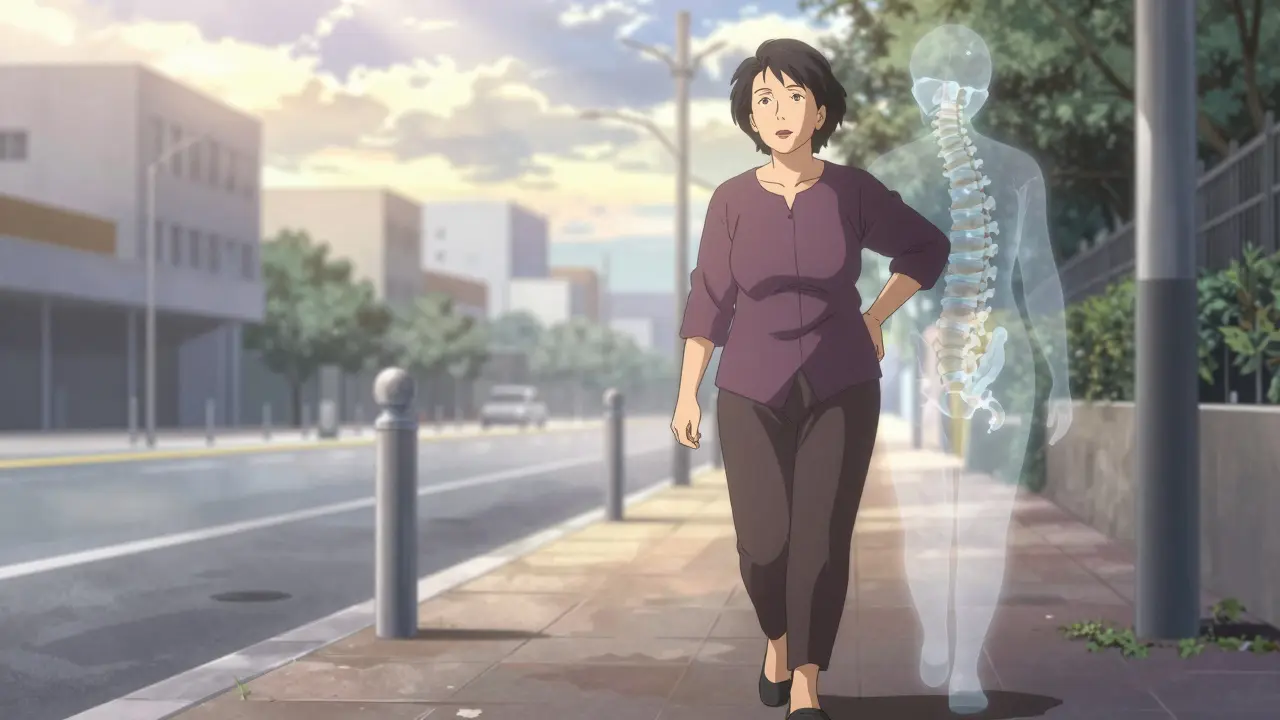
If you’ve got low back pain without red flags, the best thing you can do is move. Not rest. Not lie on the couch. Move.
A 2020 Cochrane Review looked at 97 studies with nearly 20,000 people. The result? Exercise therapy reduced pain by an average of 6.6 points on a 100-point scale and improved function by 6.7 points. That’s not small. That’s meaningful.
Not all exercises are equal. Some work better than others.
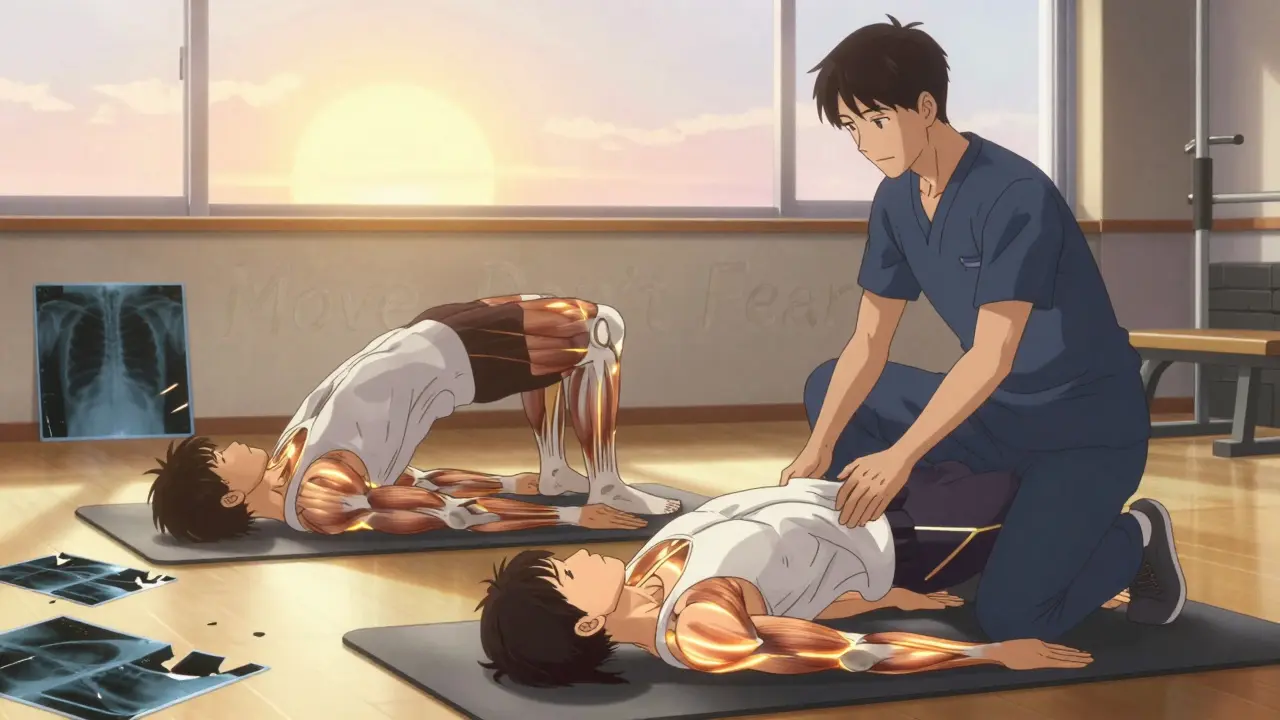
- Motor control exercises: These teach you how to activate deep core muscles-like the transverse abdominis-that stabilize your spine. Think gentle pelvic tilts, drawing your belly in, and slow bridging. Studies show these reduce pain by over half a standard deviation.
- Graded activity: This means slowly increasing how much you do each day. If you’ve been avoiding movement because it hurts, you start with 5 minutes of walking. Then 10. Then 15. You build tolerance, not strength. It’s especially helpful if fear of movement is holding you back.
- Combined programs: Mix of strengthening, aerobic, and flexibility work. Walking, swimming, or cycling 20-30 minutes three times a week, plus two days of core and back exercises. This is what most physical therapists recommend.
Intensity matters. You don’t need to lift heavy. But you do need to challenge yourself. Start at 40-60% of your max strength, then slowly go up to 70-85% over 8-12 weeks. Your heart rate should hit 60-80% of max during aerobic sessions. That’s not sprinting. It’s brisk walking or cycling where you can talk but not sing.
And here’s the hard truth: Adherence is everything. If you do exercises for two weeks and quit, you’ll get no lasting benefit. The best results come from sticking with it for at least 8-12 weeks. Supervised sessions twice a week help, but home programs work too-if you do them consistently.
Why Do So Many People Get Unnecessary Scans?
Doctors aren’t ignoring guidelines. They’re stuck.
A 2022 survey of over 1,200 primary care doctors found they spend just 12.7 minutes per low back pain visit. The recommended time? 18-22 minutes. That’s not enough to ask about weight loss, bladder changes, or trauma history. So they order an X-ray. It’s faster. It feels safer.
Patients want answers. When you’re in pain, you want to know what’s wrong. An image gives you something concrete. But here’s the problem: Most images show things that aren’t causing your pain. A bulging disc at L4-L5? Common in 60-year-olds. Arthritis? Normal with age. Finding them doesn’t fix your pain-it just makes you more anxious.
And then? The cascade begins. You get an MRI. They find a disc bulge. You see a specialist. They recommend surgery. You have surgery. The pain doesn’t go away. Now you’re stuck in a loop of more tests, more procedures, more cost.
The U.S. spends $3 billion a year on unnecessary imaging for back pain. That’s money that could go to physical therapy, pain education, or mental health support.
What You Can Do Right Now
If you have low back pain:
- Ask yourself: Do I have any red flags? Cancer history? Unexplained weight loss? Trouble peeing? Numbness in the groin? Trauma? Fever?
- If yes to any of those: Go to urgent care or the ER. Don’t wait.
- If no red flags: Stay active. Walk. Stretch. Avoid bed rest. Lie down only if you’re in severe pain-then get up as soon as you can.
- Start a simple exercise routine: 10 minutes of core work (planks, bird-dogs, glute bridges) 3 times a week. Add 20 minutes of walking daily.
- See a physiotherapist if pain lasts more than 2 weeks. They’ll tailor exercises to your body.
And if your doctor suggests an X-ray or MRI? Ask: What are you looking for? What happens if we don’t image? If they say, “Just to be safe,” push back. That’s not evidence-based.
What’s Changing in 2026?
AI is starting to help. A 2022 study in Nature Digital Medicine tested an algorithm that analyzed patient history, symptoms, and risk factors. It caught serious spine conditions 89% of the time-compared to 73% with traditional red flag checklists. That’s a big jump.
Also, the SPINE Act of 2022 is funding research into blood biomarkers. Soon, a simple test might tell us if back pain is likely due to infection or cancer-without an MRI.
But the biggest change? Shared decision-making. Doctors are learning to talk with patients-not at them. “Here’s what we know. Here’s what we don’t. Here’s what you want to do.” That reduces unnecessary scans by 28%, according to a 2021 trial.
You have more power than you think. You don’t need to accept every test. You don’t need to fear movement. And you don’t need to believe that pain means damage. Sometimes, pain just means you need to move differently.



marjorie arsenault
2 Mar 2026 at 21:29Just wanted to say this post saved me from going down a rabbit hole of unnecessary scans. I had back pain last year, my doctor wanted an MRI right away, but I remembered reading about red flags and pushed back. Turns out, it was just muscle tightness from sitting too much at my desk. Started walking daily and doing bird-dogs-no fancy gear, no clinic visits. Pain’s been gone for 8 months now.
Don’t let fear drive your health choices. Movement isn’t the enemy. Overtesting is.