




When chronic pain won’t go away with physical therapy, painkillers, or rest, what’s next? For many people, the answer lies in nerve blocks and radiofrequency ablation (RFA) - two minimally invasive procedures that target pain at its source instead of just masking it. These aren’t surgeries. There’s no major incision, no long hospital stay, and no weeks of recovery. But they’re not simple injections either. Understanding how they work - and who they work for - can help you decide if one might be right for you.
How Nerve Blocks Work: A Temporary Pause Button
A nerve block is exactly what it sounds like: a way to temporarily stop pain signals from reaching your brain. A doctor injects a local anesthetic - sometimes mixed with a steroid - near a specific nerve or group of nerves that are sending pain signals. Think of it like flipping a switch. The numbing effect kicks in within minutes, and pain drops sharply. For some, relief lasts a few hours. For others, it lasts days or even weeks.
This isn’t a cure. It’s a diagnostic tool and a short-term fix. If you’ve been struggling with lower back pain for months and your doctor suspects it’s coming from your facet joints (the small joints in your spine), they might start with a diagnostic nerve block. If your pain drops by 80% or more after the injection, that’s a strong clue the right nerve was targeted. But once the numbing wears off, the pain usually returns. That’s where RFA comes in.
Radiofrequency Ablation: Turning Off the Pain Signal Long-Term
RFA takes the idea of a nerve block and turns it into a longer-lasting solution. Instead of just numbing the nerve, RFA uses heat to gently damage the nerve tissue responsible for sending pain signals. It’s not destroying the nerve completely - just enough to disrupt the signal. The result? Pain relief that can last anywhere from 6 months to over 2 years.
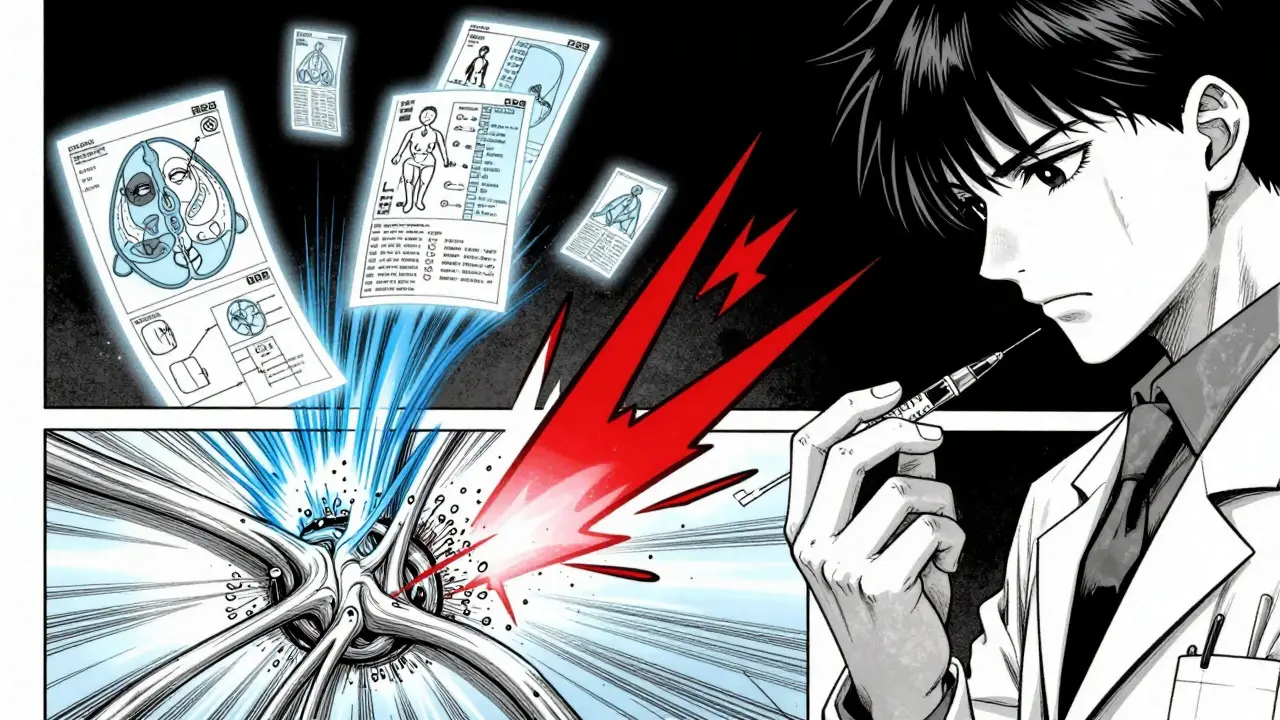
The procedure starts with you lying on an X-ray table. You’re awake but given light sedation so you’re relaxed. Using fluoroscopy - a real-time X-ray - the doctor guides a thin needle to the exact spot near the nerve. Before heating it up, they test the placement: a small electrical pulse checks if you feel tingling in the right area (to confirm it’s the right nerve) and ensures no motor nerves are nearby (to avoid muscle weakness). Once everything checks out, the radiofrequency generator turns on. The tip of the needle heats up to about 80-90°C for about 60-90 seconds. That’s hot enough to create a tiny lesion on the nerve, but not so hot that it burns surrounding tissue.
Afterward, you might feel soreness at the injection site for a few days. Full pain relief usually takes 2-4 weeks as the nerve heals around the lesion. Most people go home the same day and return to light activity within 24 hours. Back to work? Often within 3 days.
Why RFA Beats Nerve Blocks for Chronic Pain
Let’s compare them side by side:
| Feature | Nerve Block | Radiofrequency Ablation (RFA) |
|---|---|---|
| Duration of Relief | Hours to weeks | 6-24 months |
| How It Works | Chemical block with anesthetic | Thermal lesion on nerve |
| Procedure Time | 10-20 minutes | 20-45 minutes |
| Recovery Time | Same day | Same day, mild soreness for 3-7 days |
| Best For | Diagnostic testing, short-term relief | Chronic pain after successful nerve block |
| Success Rate (in appropriate candidates) | 30-50% beyond immediate relief | 70-85% with 50%+ pain reduction |
RFA isn’t magic. It only works if the nerve block worked first. If you don’t get significant pain relief from the diagnostic block, RFA won’t help. That’s why doctors insist on this step. Skipping it leads to unnecessary procedures and wasted time.
Where RFA Works Best
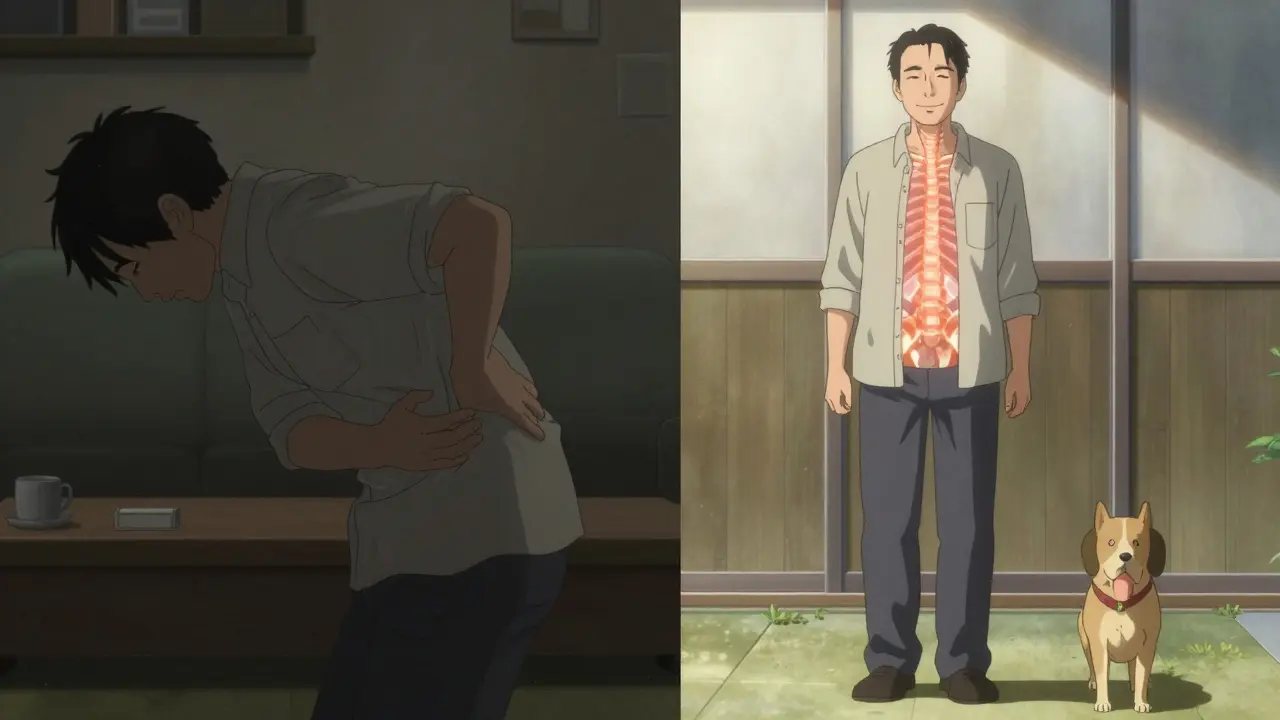
Originally used for back pain from facet joints, RFA’s use has exploded. Today, it’s proven effective for:
- Chronic low back pain from facet joints - the most common use. Success rates hit 75% in patients aged 45-65.
- Neck pain from cervical facet joints.
- Knee osteoarthritis - cooled RFA targets the genicular nerves around the knee. Studies show 65% of patients had pain relief at 6 months, compared to 45% with steroid shots.
- Sacroiliac joint pain - a major source of lower back and buttock pain. 70% success at 6 months.
- Occipital neuralgia - headaches caused by irritated nerves at the base of the skull.
- Plantar fasciitis - some clinics now use RFA on nerves in the heel when traditional treatments fail.
These aren’t experimental. They’re backed by clinical studies from institutions like the Mayo Clinic, Hospital for Special Surgery, and the NCBI Bookshelf. The FDA even approved a new pulsed-field ablation system in 2022 - a non-thermal version that may reduce recovery time even further.
Who Should Consider RFA?
RFA isn’t for everyone. It’s best for people who:
- Have chronic pain (lasting 3+ months) that hasn’t improved with physical therapy, NSAIDs, or other conservative treatments.
- Got significant pain relief (at least 80%) from a diagnostic nerve block.
- Want to avoid surgery or long-term opioid use.
- Are generally healthy and can tolerate a minor outpatient procedure.
It’s not a cure for arthritis, degeneration, or structural damage. It doesn’t fix the broken joint - it just silences the pain signal. That’s why it’s part of a bigger plan: physical therapy to strengthen muscles, weight management to reduce joint stress, and lifestyle changes to keep pain from coming back.
What to Expect After RFA
You’ll probably feel a bit sore where the needle went in. Some people get mild muscle spasms or temporary numbness. That’s normal and fades in a few days. Don’t rush back into heavy lifting or intense workouts. Give your body 24-48 hours to adjust.
Pain relief doesn’t show up overnight. It builds over 2-4 weeks. That’s because the nerve doesn’t die - it regenerates around the lesion. Think of it like a circuit breaker that’s been reset. The signal gets weaker, then fades.
Most patients report being able to do things they couldn’t for years: walking the dog, playing with grandkids, sleeping through the night. One study found 70% of patients reduced or stopped opioid use after RFA. That’s huge - especially with the opioid crisis still affecting millions.
Cost and Accessibility
RFA costs between $3,000 and $5,000 per session. That’s far less than spinal fusion surgery ($50,000+) or a spinal cord stimulator implant ($20,000-$50,000). Most insurance plans cover it - especially if you’ve already tried physical therapy and injections.
The number of RFA procedures in the U.S. has grown 15% each year since 2018. Over 350,000 are done annually. That’s not because it’s trendy - it’s because it works. And as technology improves - like cooled RFA that treats larger areas - its reach is expanding.
The Bottom Line
Nerve blocks and RFA are tools. Not solutions. Not magic. But for people with chronic pain that won’t quit, they’re among the most effective options available. Nerve blocks help you find the right nerve. RFA gives you months - sometimes years - of relief without surgery. The key is proper selection: if your pain doesn’t drop after a diagnostic block, RFA won’t help. If it does, you might finally get your life back.
It’s not about avoiding pain forever. It’s about managing it well enough to move, sleep, and live - without being tied to pills or sidelined by discomfort.
Are nerve blocks and RFA the same thing?
No. Nerve blocks use medication to temporarily numb a nerve - relief lasts hours to weeks. RFA uses heat to disrupt the nerve’s ability to send pain signals - relief lasts 6 to 24 months. RFA is usually only done after a successful nerve block confirms the right nerve is targeted.
Is RFA painful?
The procedure itself isn’t painful. You’re sedated and the area is numbed. Afterward, you may feel soreness or mild burning at the injection site for a few days. That’s normal. Most people describe it as similar to a bad muscle ache.
How many RFA treatments can I have?
There’s no hard limit. Nerves regenerate over time, so pain can return. Most people get 1-3 treatments over several years. Each one follows the same process: diagnostic block first, then RFA if it works. Your doctor will monitor your progress and adjust based on your response.
Can RFA be used for neck pain?
Yes. RFA is commonly used for chronic neck pain caused by facet joint arthritis. The nerves involved are the medial branches of the cervical spine. Success rates are similar to those for lower back pain - around 70-80% in well-selected patients.
Does RFA work for knee pain from arthritis?
Yes. Cooled RFA targets the genicular nerves around the knee. A 2023 NCBI study showed 65% of patients had significant pain relief at 6 months, compared to 45% with cortisone shots. It’s now a recommended option for patients who don’t respond to physical therapy or injections.
What are the risks of RFA?
Serious complications are rare. The most common issues are temporary soreness (5-10% of cases), minor bruising, or nerve irritation that lasts 1-2 weeks. The biggest risk is doing RFA on the wrong nerve - which is why a diagnostic nerve block is required. Without it, the success rate drops dramatically.
If you’ve tried everything else and your pain still won’t let up, talk to a pain specialist. Ask about a diagnostic nerve block. If it works, RFA might be the next step - not a last resort, but a smart, targeted way to take control of your pain.





Ethan Zeeb
4 Mar 2026 at 15:54Had RFA on my L4-L5 last year after 5 years of back pain. Nerve block gave me 3 days. RFA? 18 months and counting. No more opioids. No more PT that felt like torture. Just walked my dog yesterday for the first time in years without wincing. This isn't hype - it's life-changing if you're the right candidate.