



DILI Symptom Timing Calculator
How This Tool Works
This tool analyzes the timing between when you started your medication and when symptoms appeared. It compares your timeline against known patterns for drug-induced liver injury (DILI). Remember: this is informational only and should not replace medical advice.
Your Risk Assessment
Note: DILI symptoms often appear within 1-8 weeks for antibiotics, 30-60 days for anticonvulsants, within 24-72 hours for acetaminophen overdose, and 1 week to 12 months for herbal supplements.
Key Symptoms to Watch For
- Yellow skin or eyes (jaundice)
- Dark urine (tea or cola-colored)
- Light-colored stools
- Severe itching (no rash)
- Right rib pain
- Unexplained nausea/vomiting
- Extreme fatigue
If you experience jaundice plus any other symptom, go to the ER immediately.
Every year, thousands of people end up in the hospital not because of a virus or bad food, but because of something they took to feel better. Medication-related liver damage is more common than most people realize, and it doesn’t always come with a warning label. The truth is, your liver doesn’t scream when it’s under attack-it whispers. And by the time you hear it, it might be too late.
What Exactly Is Medication-Related Liver Damage?
It’s called drug-induced liver injury, or DILI. It happens when a medicine-prescription, over-the-counter, or even something you think is "natural" like herbal supplements-hurts your liver. This isn’t rare. Around 13 to 19 out of every 100,000 people in Western countries experience it each year. Antibiotics like amoxicillin-clavulanate, painkillers like acetaminophen, and anticonvulsants are the usual suspects. But here’s the twist: herbal products and dietary supplements are now responsible for nearly 1 in 5 cases in the UK and 20% in the U.S., according to the Drug-Induced Liver Injury Network (DILIN).
And it’s not just about taking too much. Sometimes, even the right dose can cause damage if your body reacts badly. That’s called idiosyncratic DILI. It’s unpredictable. One person takes the same pill as another and walks away fine. The other ends up in the ICU. Genetics play a role too. People with the HLA-B*57:01 gene are 80 times more likely to get liver damage from flucloxacillin, an antibiotic. That’s why some doctors now test for it before prescribing.
How Do You Know If Your Liver Is in Trouble?
The liver doesn’t hurt like a sprained ankle. It’s silent. That’s why so many people don’t realize something’s wrong until it’s serious. But there are signs-if you know what to look for.
- Yellow skin or eyes (jaundice): This is the classic red flag. Your liver can’t process bilirubin anymore, so it builds up and turns you yellow.
- Dark urine: It looks like tea or cola. That’s because your liver is dumping bilirubin into your kidneys instead of your bile.
- Light-colored stools: If your poop looks pale or clay-colored, your bile ducts might be blocked.
- Severe itching: No rash, no bug bites-just relentless itching, especially at night. This happens because toxins build up in your skin.
- Pain under your right ribs: Not a sharp stab, but a dull, constant ache. Your liver is swollen.
- Unexplained nausea or vomiting: Especially if it shows up after starting a new medication.
- Extreme fatigue: Not just "I stayed up late" tired. This is the kind where you can’t get out of bed, even after sleeping 10 hours.
These symptoms don’t always show up together. Sometimes, it’s just itching for two weeks. Or dark urine for a few days. That’s why doctors often miss it. A 2023 survey found that 68% of DILI patients were first told they had the flu, stress, or just needed more sleep.
When Do Symptoms Show Up?
Timing matters. The clock starts ticking the moment you take the drug.
- Antibiotics (like amoxicillin-clavulanate): Symptoms usually appear within 1 to 8 weeks. Average? About 15 days.
- Anticonvulsants (like valproate or carbamazepine): These take longer. Often 30 to 60 days.
- Acetaminophen (Tylenol): This is different. If you overdose, liver enzymes spike within 24 hours. Peak damage hits at 72 hours. If you don’t get treatment within 8 hours, your chances of survival drop fast.
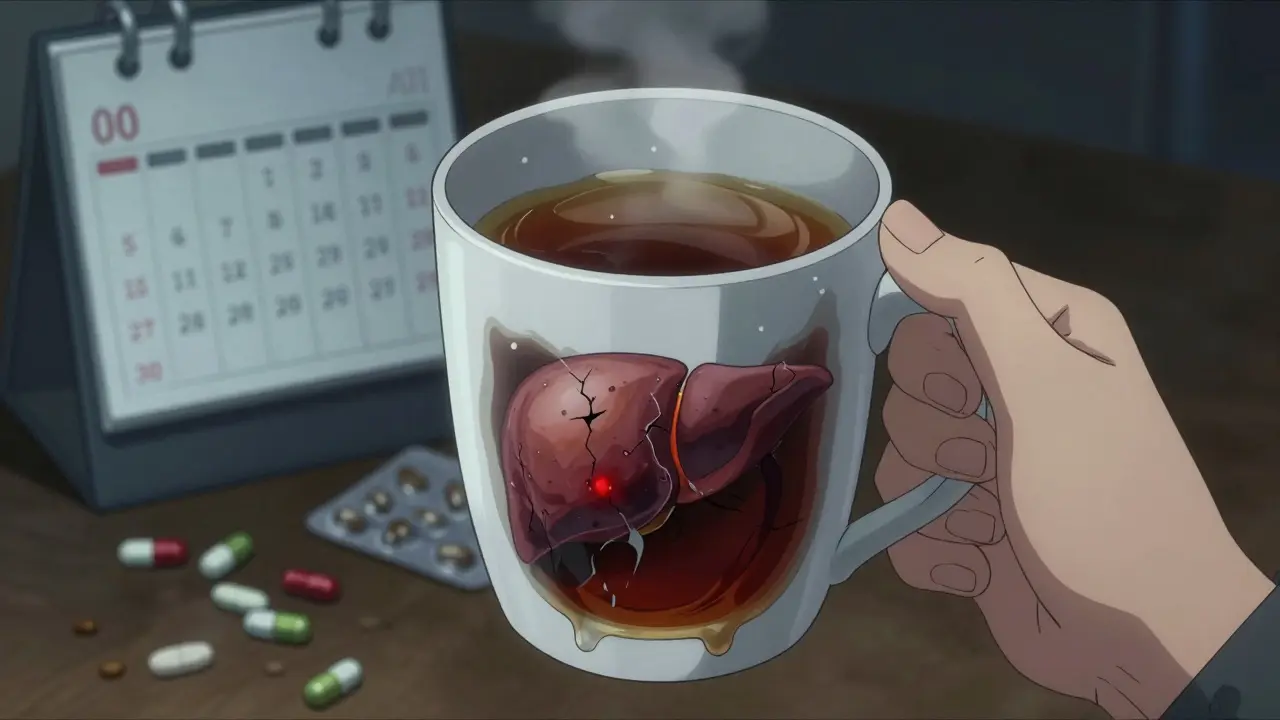
- Herbal supplements: The wild card. Green tea extract, kava, and turmeric can cause damage anytime-from 1 week to 12 months after starting. Some people take them for years before their liver gives out.
That’s why it’s so hard to connect the dots. You might start a new supplement in January, feel fine in February, and by April, you’re jaundiced. You don’t think back to that little bottle of turmeric pills.
What Happens If You Wait Too Long?
Delaying care is dangerous. In the U.S., DILI is now the leading cause of acute liver failure, surpassing viral hepatitis since 2015. About 13% of all acute liver failure cases come from medications. And if you wait until you’re vomiting, yellow, and confused? You could need a liver transplant.
Acetaminophen overdose is the most preventable. N-acetylcysteine (NAC) can save your life-but only if you get it within 8 hours. Every hour you wait, the treatment loses 10% of its effectiveness. After 24 hours, it’s mostly useless.
For other drugs, stopping the medicine is the first step. But if damage is advanced, you might need hospitalization, IV fluids, or even intensive care. The average hospital stay for DILI is over 5 days. The cost? Around $18,500 per admission.
What Should You Do Right Now?
You don’t need to panic. But you do need to be smart.
If you’ve started a new medication in the last 8 weeks and you have:
- Jaundice plus dark urine
- Jaundice plus right-sided pain
- Jaundice plus nausea or vomiting
Go to the emergency room. Now.
Don’t wait for your doctor’s appointment. Don’t call your pharmacist. Don’t Google it. Go to the ER. Tell them: "I started a new medication, and I think it might be hurting my liver." Say the name of the drug. Bring the bottle. If you’re taking supplements, bring those too.
For acetaminophen overdose, even if you’re not yellow yet-if you took more than 4,000 mg in 24 hours, or more than 2,000 mg if you have liver disease-go to the ER immediately. Don’t wait for symptoms.
How to Prevent It
Most cases of severe liver damage from medication are preventable. Here’s how:
- Know your limits for acetaminophen: Maximum 3,000 mg per day for healthy adults. Only 2,000 mg if you have liver disease, drink alcohol, or are over 65. That’s less than six 500 mg tablets. Many cold medicines contain acetaminophen-check the label.
- Avoid alcohol with liver-toxic drugs: Alcohol increases the risk of damage by 3 to 5 times. That includes wine, beer, and spirits.
- Keep a medication log: Write down everything you take-prescriptions, supplements, vitamins, herbal teas. Even "natural" things like milk thistle, green tea extract, or kava. Show it to your doctor every visit.
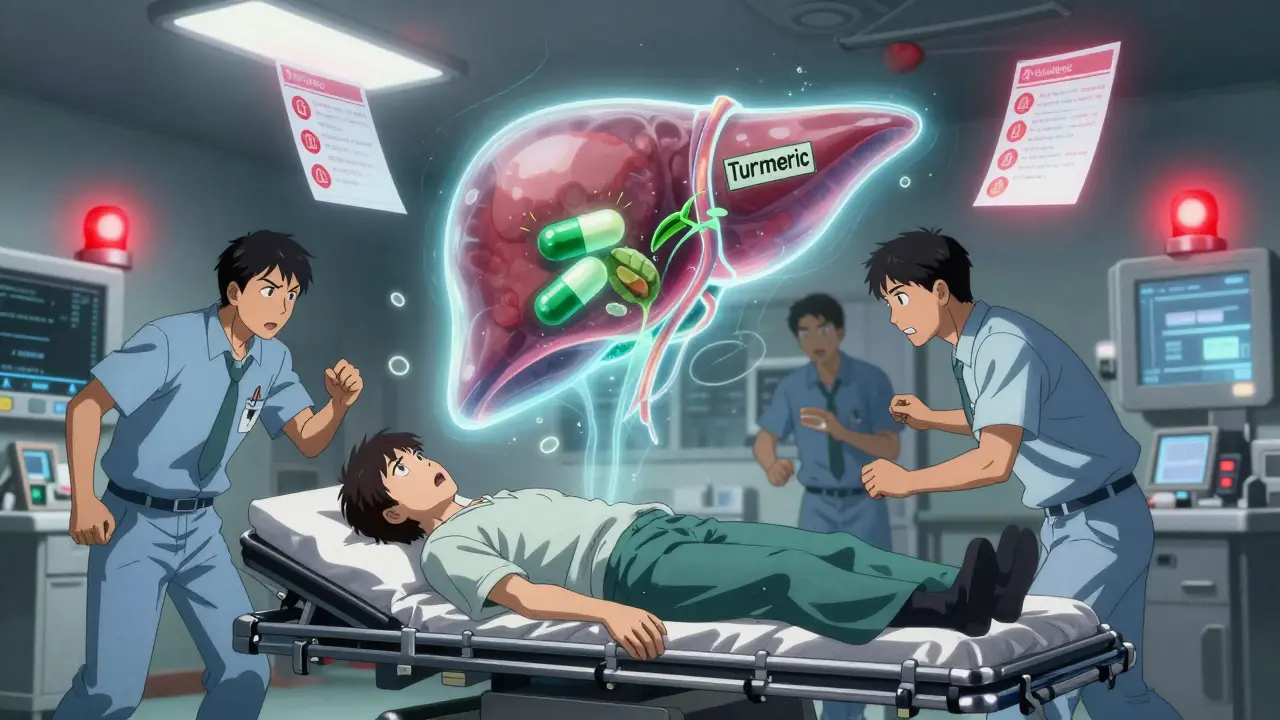
- Don’t assume supplements are safe: The FDA doesn’t test them for safety before they hit the shelf. Green tea extract alone caused 37% of supplement-related liver injuries in the UK. Turmeric? It’s not just for curry-it’s a potent liver stressor.
- Ask your doctor about liver tests: If you’re on high-risk meds like isoniazid (for TB), statins, or anticonvulsants, ask if you need a baseline liver test-and if you should get one every 4 to 6 weeks.
And if you’re on a new drug and feel weird-just weird, not sick, just off-don’t brush it off. Call your doctor. Say: "I think this medicine might be affecting my liver." That’s enough to trigger a blood test.
What’s Changing in 2025?
Things are shifting. The FDA now requires black box warnings on antibiotics for liver risk. The European Union now forces herbal products to carry liver injury labels. And new tools are emerging.
There’s an app called DILI-Alert that scans your meds and tells you if any are linked to liver damage. It’s not perfect, but it’s a start. AI systems are cutting diagnosis time by 35% in pilot hospitals. That means fewer people wait weeks to get help.
But the biggest threat? Unregulated supplements. Experts predict 24,000 new DILI cases from supplements alone by 2025. Most people don’t know they’re at risk. They think "natural" means "safe." It doesn’t.
One patient on Reddit wrote: "My naturopath said my liver enzymes were high because I was 'detoxing.' I almost died before a real doctor figured it out."
Don’t be that person.
Can over-the-counter painkillers like ibuprofen cause liver damage?
Ibuprofen and other NSAIDs like naproxen are more likely to hurt your kidneys than your liver. But in rare cases, especially with long-term use or existing liver disease, they can cause liver injury. It’s uncommon-only about 7% of DILI cases involve NSAIDs-but it’s possible. If you’re taking them daily for months and start feeling fatigued or notice yellowing skin, get tested.
Is it safe to take turmeric or milk thistle for liver health?
No, not necessarily. Turmeric supplements have caused liver injury in dozens of documented cases. Milk thistle is often marketed as a liver protector, but studies show mixed results-and some people develop liver damage from it too. Just because something is sold as "natural" or "for liver support" doesn’t mean it’s safe. The liver doesn’t distinguish between "medicine" and "supplement." It just reacts to chemicals.
How do doctors diagnose medication-related liver damage?
There’s no single test. Doctors use the RUCAM scale-a scoring system that looks at timing, symptoms, lab results, and whether other causes (like hepatitis or alcohol) are ruled out. Blood tests show elevated ALT, AST, or alkaline phosphatase. Imaging like ultrasound or MRI might be used to rule out gallstones or tumors. But the key is connecting the drug to the injury. If symptoms started after you began a new medication and no other cause is found, DILI is the likely answer.
Can liver damage from medication be reversed?
Yes, if caught early. Stopping the offending drug is the most important step. In many cases, liver enzymes return to normal within weeks. But if damage is severe-like if you develop liver failure-you may need a transplant. The earlier you act, the better your chances. Waiting even a few days can mean the difference between full recovery and lifelong illness.
Should I stop taking my medication if I suspect liver damage?
Don’t stop cold turkey without talking to your doctor. Some medications, like anticonvulsants or blood pressure drugs, can cause dangerous withdrawal symptoms if stopped suddenly. But don’t wait either. Call your doctor immediately. Say you’re worried about liver damage. They’ll tell you whether to stop, reduce, or switch the drug-and when to get tested.
Are statins safe for the liver?
Statins can raise liver enzymes slightly in a small number of people-but this almost never leads to serious injury. The European Association for the Study of the Liver says less than 0.01% of users develop true hepatotoxicity. The FDA warns of a 0.5-2% chance of enzyme elevation, but most cases are mild and go away on their own. Unless you have severe symptoms, don’t stop your statin without talking to your doctor. The heart benefits far outweigh the tiny liver risk.
Can children get medication-related liver damage?
Yes. Children are not just small adults. They metabolize drugs differently. Acetaminophen overdose is the most common cause in kids. Antibiotics and anticonvulsants are also risks. Parents should never give adult doses to children and should always check labels for liver warnings. If a child develops unexplained jaundice, vomiting, or extreme fatigue after starting a new medication, seek medical help immediately.
Final Thought: Your Liver Can’t Talk. You Have to Listen.
Your liver doesn’t call you. It doesn’t send a text. It doesn’t leave a voicemail. It just stops working. And by then, it’s often too late.
The best defense isn’t a fancy test or a new app. It’s awareness. It’s asking, "Could this medicine be hurting me?" It’s knowing that "natural" doesn’t mean safe. It’s keeping a list of everything you take-and showing it to your doctor.
One extra question at your next appointment could save your life. Don’t wait for yellow eyes. Don’t wait for the pain. If you feel off after starting something new-act. Fast.






Swapneel Mehta
21 Dec 2025 at 15:20Been taking turmeric for inflammation and just realized I had no idea it could hurt the liver. This post scared me into stopping it. No more "natural" = safe assumptions for me.