


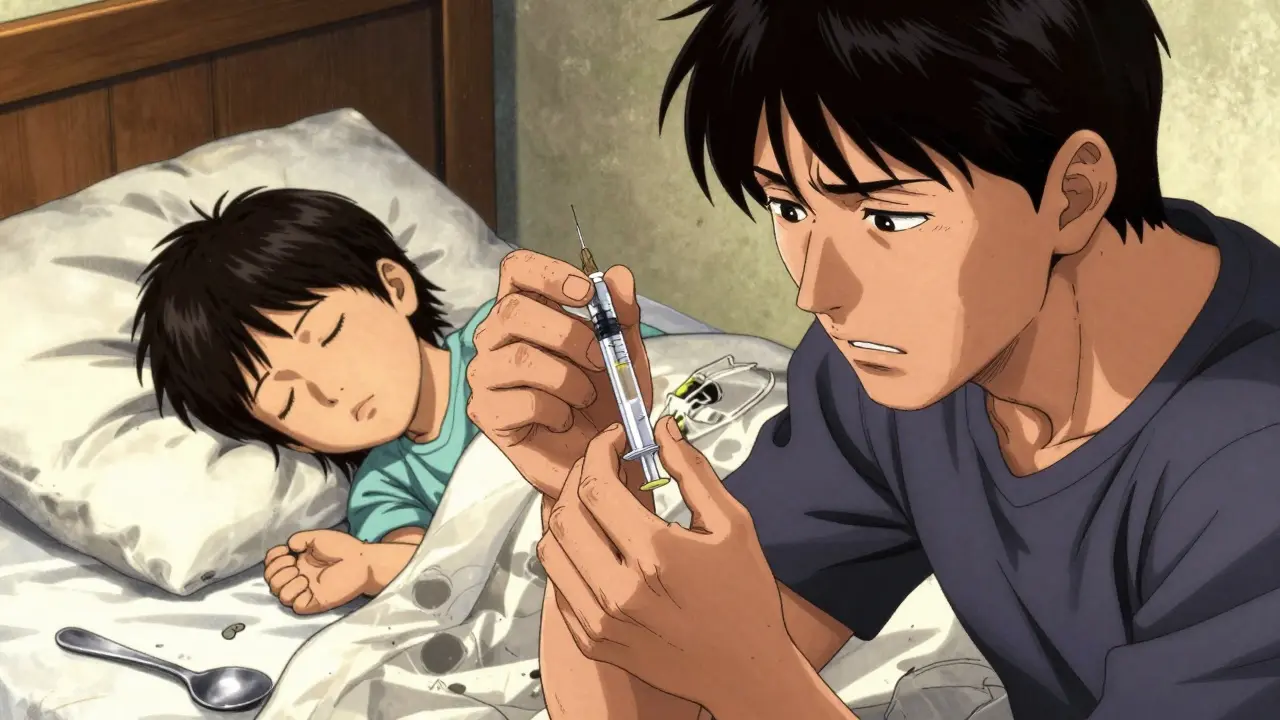

Getting the right amount of liquid medicine isn’t just about following the label-it’s about avoiding real harm. A child given too much acetaminophen because a parent used a kitchen spoon instead of a proper measuring tool could end up in the emergency room. Too little, and the infection won’t clear. The problem isn’t carelessness-it’s confusion. And it’s widespread. Studies show that 15% to 43% of caregivers make dangerous mistakes when measuring liquid meds, often because the device they’re given doesn’t match the label, or worse, doesn’t have clear markings at all.
Why Household Spoons Are Dangerous
You’ve probably heard it before: "Just use a teaspoon." But a kitchen teaspoon isn’t a medical tool. It varies in size-from 3 mL to over 7 mL depending on the spoon. A 2020 report from the Institute for Safe Medication Practices found that household spoons cause about 40% of all pediatric liquid medication errors. Parents think they’re being careful. They’re not. A 2014 study in JAMA Pediatrics showed that when labels used "teaspoon" instead of "mL," caregivers made 42% more dosing errors. Even small differences add up. A 5 mL dose measured with a spoon that holds 6 mL is a 20% overdose. For a baby, that’s serious.The Right Device: Oral Syringes Win Every Time
When accuracy matters, oral syringes are the gold standard. They’re not perfect, but they’re the most reliable. A 2009 study in the Annals of Pharmacotherapy found that when measuring a 5 mL dose, 66.7% of people got it right with a syringe. With a dosing cup? Only 14.6% got it right. The difference? Syringes have fine markings-often down to 0.1 mL-and you can see the liquid level clearly without parallax error. Cups force you to look at the side at an angle, which changes how the liquid appears. That’s called parallax, and it’s why so many people pour too much or too little.What Makes a Dosing Device Accurate?
The U.S. Pharmacopeia (USP) sets the standard: any device used to measure liquid medicine must be accurate within 10% of the intended dose. That means if the prescription says 2.5 mL, the device should deliver between 2.25 mL and 2.75 mL. Here’s what makes a device meet that standard:- Only milliliters (mL)-no teaspoons, tablespoons, or cc’s. The FDA and American Academy of Pediatrics both require this.
- Leading zeros-write "0.5 mL," not ".5 mL." The extra zero prevents misreading.
- No trailing zeros-"5 mL," not "5.0 mL." That decimal suggests precision that doesn’t exist on most devices.
- Minimal markings-if the dose is 1.2 mL, the device shouldn’t have markings for 2 mL, 4 mL, and 8 mL. Too many numbers confuse people. A 2013 JAMA Network study found that 81.1% of dosing cups had unnecessary markings, which increased errors.
- Correct size-a dosing cup shouldn’t hold more than two or three times the largest dose. A 30 mL cup for a 5 mL dose is overkill and invites mistakes.

How Device Type Affects Accuracy
Not all devices are created equal. Here’s how they stack up based on real-world testing:| Device | Error Rate | Best For |
|---|---|---|
| Oral Syringe | 4% (for 2.5 mL doses) | All doses under 10 mL, especially under 5 mL |
| Dosing Cup | 37-43% (for 15-30 mL cups) | Only if designed for the exact dose, no extra markings |
| Dosing Spoon | 15% average deviation | Not recommended-too inconsistent |
| Dropper | 22% error for 2.5 mL | Small doses, but unreliable for larger volumes |
Oral syringes win because they’re precise. But many caregivers resist them. Why? Because they feel awkward. A 2009 study found that only 63% of people thought syringes were easy to use, compared to 87% for cups. That’s the biggest barrier-not performance, but perception. The fix? Training.
How to Teach Proper Use
Giving someone a syringe isn’t enough. You have to show them how to use it. The "teach-back" method works best: ask the caregiver to demonstrate the process before they leave the pharmacy or clinic. A 2021 study in Patient Education and Counseling found this reduces errors by 35%.Here’s how to do it right:
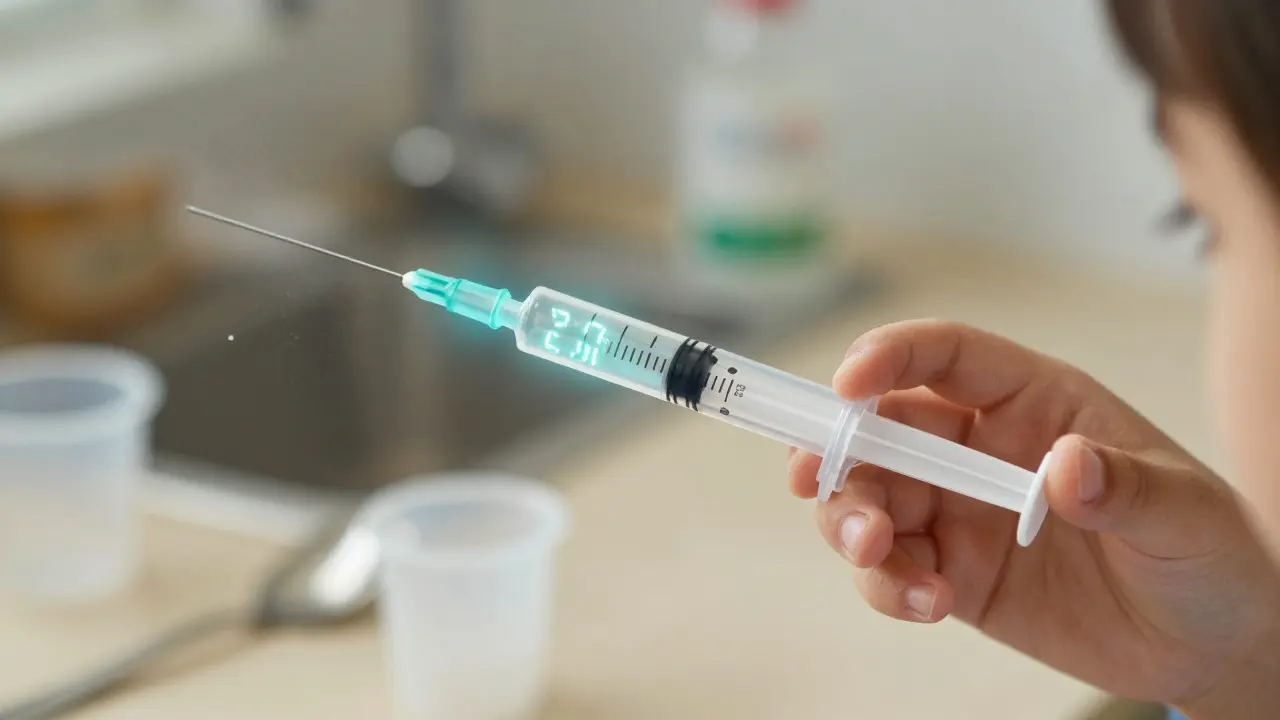
- Draw air into the syringe equal to the dose (e.g., 1.6 mL).
- Insert the tip under the liquid surface.
- Slowly pull back to the exact dose mark.
- Tap the side gently to bring any air bubbles to the top.
- Push the plunger slightly to expel the air.
- Hold the syringe at eye level and read the mark at the bottom of the meniscus (the curved surface of the liquid).
Practice with water first. Let them do it themselves. Then check with a scale if possible. Even a kitchen scale that measures in grams can help-1 mL of water = 1 gram. If they get it right twice in a row, they’ve got it.
What Pharmacies and Providers Should Do
Pharmacists are on the front line. The American Pharmacists Association recommends giving an oral syringe for all liquid prescriptions under 10 mL. In a multicenter trial, this cut dosing errors by 28%. But right now, only 35% of pediatric prescriptions come with a syringe. Cups are still handed out 58% of the time.Pharmacies need to change their default. Here’s what works:
- Always include a syringe with pediatric prescriptions.
- Print clear instructions on the label: "Use only the syringe provided. Do not use a spoon."
- Add a QR code that links to a 60-second video showing proper technique. Kaiser Permanente started this in 2020-errors dropped.
- Use the NCPDP’s standardized label template. Facilities using it saw 92% compliance with best practices.
It’s not just about the device-it’s about the label. A 2022 FDA audit found that only 41% of prescription labels had clear dosing instructions. That’s unacceptable. Labels must say "5 mL," not "1 tsp." And they must match the device exactly. If the label says 2.5 mL, the syringe must have a 2.5 mL mark.
The Bigger Picture: Progress and Gaps
There’s been real progress. Between 2015 and 2022, pediatric liquid medication errors dropped by 37% in U.S. emergency rooms. That’s thanks to FDA guidelines, state laws (34 states now ban teaspoon labeling), and better device standards. But big gaps remain.- 28% of liquid medications still use "teaspoon" on labels.
- Only 12 states check pharmacy compliance regularly.
- Low-income families get lower-quality devices 63% of the time.
- Antacids and antibiotics are the least likely to come with proper dosing tools.
Technology is helping. CVS’s "DoseRight" and Walgreens’s "PrecisionDose" now offer Bluetooth-enabled syringes that sync with apps to confirm the right dose was given. These aren’t for everyone-but they’re a step forward.
What You Can Do Today
If you’re giving liquid medicine to a child:- Ask for an oral syringe-even if the prescription came with a cup.
- Throw away the kitchen spoon. Seriously.
- Check the label and the syringe: do they both say "mL" and match the dose?
- Practice with water. If you’re unsure, call your pharmacist.
- Don’t assume the pharmacy gave you the right tool. Many didn’t.
Accurate dosing isn’t complicated. It’s just not common. The tools exist. The science is clear. What’s missing is consistent action-from pharmacies, from providers, and from families. Start with the syringe. Stop guessing. Get it right.








Lance Nickie
15 Jan 2026 at 02:18Oral syringes? Nah, I just use a dinner fork and eyeball it. Works fine.