



When you pick up a prescription at the pharmacy and see a generic version of your brand-name drug, you’re seeing the result of one of the most efficient regulatory systems in modern medicine. The FDA generic drug approval process isn’t just paperwork-it’s a precise, science-driven pathway that gets life-saving medications to patients at a fraction of the cost. But how does it actually work? If you’ve ever wondered why a generic pill looks different, costs less, or takes months to hit shelves after a brand-name patent expires, here’s the full breakdown.
What Is an ANDA, and Why Does It Matter?
The shortcut the FDA uses to approve generic drugs is called an Abbreviated New Drug Application, or ANDA. Unlike brand-name drugs, which go through a full New Drug Application (NDA) with years of clinical trials, generics don’t need to prove they’re safe or effective again. They already are-because they’re copying a drug that’s been used by millions of patients for years. The ANDA system was created by the Hatch-Waxman Act of 1984. Before that, generic manufacturers had to repeat every single study the original company did. That made generics too expensive and rare. Hatch-Waxman changed everything. It said: if you can prove your drug is the same as the approved brand-name version-called the Reference Listed Drug, or RLD-you can skip the clinical trials. The result? Today, 90% of prescriptions in the U.S. are filled with generics, saving the healthcare system over $370 billion a year.The Five Core Requirements for Approval
The FDA doesn’t approve a generic drug just because it looks similar. It demands proof in five key areas:- Same active ingredient-The generic must contain the exact same medicine in the same amount. No more, no less.
- Same strength, dosage form, and route-If the brand is a 500mg tablet taken by mouth, the generic must be too. No capsules, no injections, no patches unless the original is.
- Pharmaceutical equivalence-The inactive ingredients (fillers, dyes, preservatives) can be different, but they must be safe and not affect how the drug works.
- Bioequivalence-This is the most critical part. The generic must deliver the same amount of medicine into your bloodstream at the same speed as the brand. The FDA requires a bioequivalence study with 24 to 36 healthy volunteers. Blood samples are taken over hours to compare how fast and how much of the drug enters the system. The generic’s rate and extent of absorption must fall within 80% to 125% of the brand’s. If it’s outside that range, the FDA rejects it.
- Identical labeling-The package insert, warnings, and usage instructions must match the brand’s exactly, except for the manufacturer’s name and the generic’s inactive ingredients.
The ANDA Submission Process: From Paperwork to Approval
Submitting an ANDA isn’t a simple form. It’s a massive document, often thousands of pages long, organized into five modules using the electronic Common Technical Document (eCTD) format:- Module 1: Administrative info-company details, application type, patent certifications.
- Module 2: Summaries-overview of quality, nonclinical, and clinical data.
- Module 3: Chemistry, Manufacturing, and Controls (CMC)-the most detailed section. Shows how the drug is made, tested, and controlled. Includes raw material specs, equipment validation, stability data, and batch records.
- Module 4: Nonclinical studies-usually minimal for generics, unless the drug has unusual safety concerns.
- Module 5: Clinical data-just the bioequivalence study report, not full clinical trials.
What Happens When the FDA Says No?
About 25% of ANDAs get a Complete Response Letter (CRL). This isn’t a final rejection-it’s a list of problems that need fixing. Common reasons:- CMC issues (32% of CRLs)-incomplete process validation, unstable drug formulation, or unclear control methods.
- Bioequivalence problems (28%)-poor study design, wrong statistical analysis, or unexpected variability in absorption.
- Manufacturing site concerns (22%)-the facility hasn’t passed inspection, or there are past violations.
- Labeling errors (18%)-missing warnings, incorrect dosage instructions, or mismatched language.
Inspections Are Non-Negotiable
The FDA doesn’t approve a drug based on paper alone. Before approval, they inspect every facility involved: where the drug is made, packaged, tested, and stored. These inspections follow the same standards as brand-name drugs-Current Good Manufacturing Practices (cGMP). The FDA has inspectors in India, China, the U.S., and Europe. A single failed inspection can delay approval for over a year. That’s why major generic manufacturers invest heavily in quality control teams and audit readiness.Patents and Exclusivity: The Hidden Roadblocks
Just because a drug is off-patent doesn’t mean a generic can jump in immediately. The brand-name company might have additional protections:- Patent expiration-The original patent lasts 20 years from filing. But it’s often extended for clinical testing delays.
- Market exclusivity-Some drugs get 5 years of exclusivity if they’re new chemical entities, or 3 years for new uses.
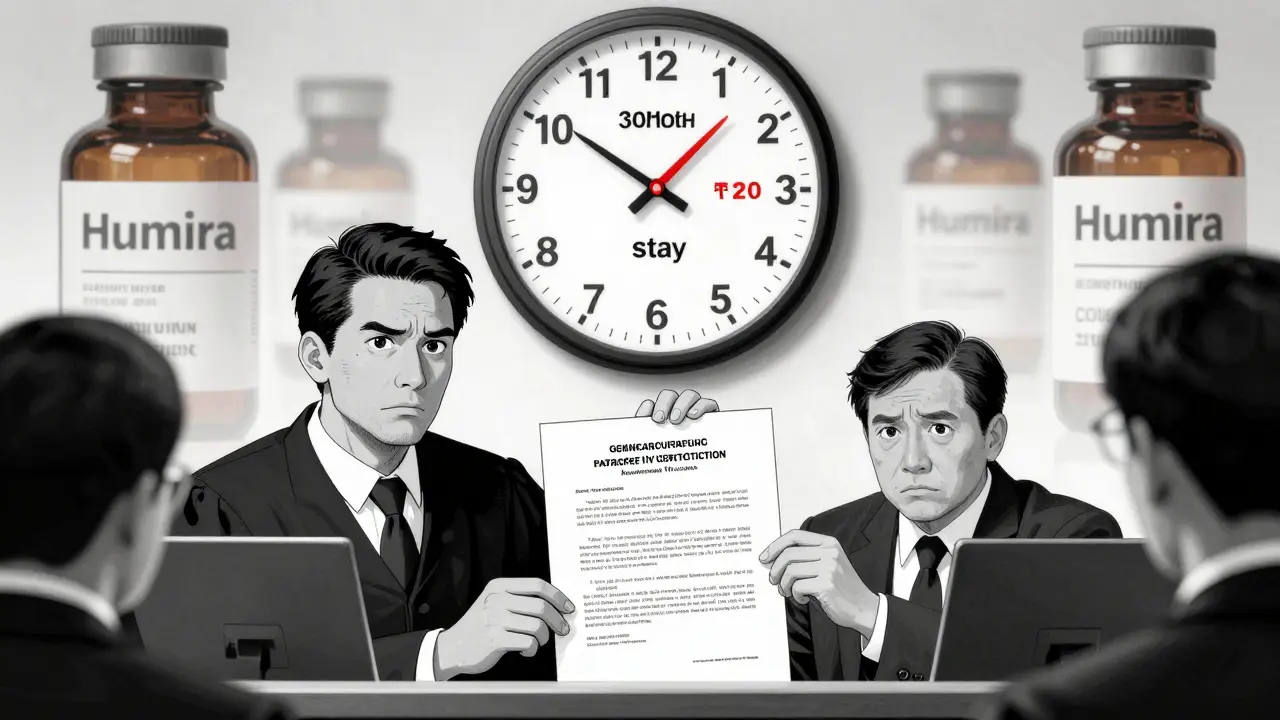
- 180-day exclusivity-The first generic company to file an ANDA with a Paragraph IV certification (claiming the brand’s patent is invalid or won’t be infringed) gets 180 days of exclusive marketing rights. This is a huge financial incentive. The first generic version of Humira made over $1.2 billion in its exclusivity window.
Why Some Generics Are Harder to Approve
Not all drugs are created equal. Simple pills? Easy. Complex products? Not so much. The FDA has identified 27 types of complex generics that need special review:- Inhalers
- Nasal sprays
- Topical creams and ointments
- Transdermal patches
- Injectable suspensions
How Long Does It Really Take?
The official timeline is 10 months. But real-world experience varies:- Simple drug, clean submission-8 to 10 months from filing to approval.
- Drug with patent litigation-Can take 2-5 years, depending on court outcomes.
- Complex product-18 to 36 months, especially with multiple CRLs.
Who’s Winning the Generic Race?
The U.S. generic market is crowded but dominated by a few big players:- Teva Pharmaceutical Industries-15.2% market share
- Viatris (formerly Mylan)-12.7%
- Sandoz-10.3%
What’s Next for Generic Drugs?
The FDA is pushing forward with new tools:- AI in review-Piloting AI to sort through documents faster, aiming to cut administrative time by 25% by 2025.
- Biosimilars growth-Biologic drugs (like Humira, Enbrel) are next in line. The FDA approved 5-7 biosimilars in 2023 and expects 10-15 annually by 2026.
- Backlog reduction-The FDA cut its ANDA backlog from 1,200 in 2020 to under 300 by 2025, thanks to GDUFA IV funding.
Are generic drugs as safe as brand-name drugs?
Yes. The FDA requires generics to meet the same strict standards for quality, strength, purity, and stability as brand-name drugs. The only difference is the cost. Over 90% of U.S. prescriptions are filled with generics, and studies show they perform the same in real-world use. While rare cases of variability have been reported-especially with narrow therapeutic index drugs like warfarin or levothyroxine-the FDA monitors these closely and takes action if safety issues arise.
Why do generic pills look different from brand-name pills?
By law, generic drugs can’t look identical to the brand-name version because of trademark rules. That means the shape, color, or markings may differ. But the active ingredient, dose, and how it works in your body are exactly the same. The differences in appearance are only in inactive ingredients like dyes or fillers, which don’t affect the drug’s performance.
How long does it take for a generic to become available after a brand-name drug’s patent expires?
It can take anywhere from a few months to several years. If no one challenges the patent, a generic can launch immediately after expiration. But if another company files a Paragraph IV certification, legal battles can delay approval for up to 30 months. The first generic to file often gets 180 days of exclusivity, so companies race to be first. On average, generics appear 6 to 18 months after patent expiry.
Can a generic drug be pulled from the market after approval?
Yes. The FDA can withdraw approval if new safety data emerges, if manufacturing standards drop, or if the company fails inspections. In 2022, the FDA recalled several generic versions of the blood pressure drug valsartan due to contamination with cancer-causing impurities. Even approved generics are subject to ongoing monitoring and can be pulled if they no longer meet safety or quality standards.
Do all generic manufacturers follow the same rules?
Yes. All generic manufacturers-whether based in the U.S., India, or China-must comply with the same cGMP standards. The FDA inspects all facilities, foreign and domestic, with the same rigor. There’s no special treatment for foreign plants. In fact, over half of the active pharmaceutical ingredients used in U.S. generics come from overseas, and the FDA has increased inspections in India and China over the past decade to ensure compliance.


steve ker
12 Jan 2026 at 05:08Generic drugs work. Stop overthinking it. The FDA isn't broken.