




If you have recent African ancestry, you might carry a genetic variation that quietly raises your risk for kidney disease - even if you feel fine right now. This isn’t about race. It’s about ancestry. And it’s one of the most powerful genetic risk factors ever found for a common disease.
What Is APOL1, and Why Does It Matter?
The APOL1 gene makes a protein that helps your body fight off certain parasites. Thousands of years ago, in parts of West and Central Africa, people who carried specific versions of this gene - called G1 and G2 - were more likely to survive African sleeping sickness, a deadly disease caused by a parasite spread by tsetse flies. Those who survived passed these variants on. Over time, they became common in populations with African roots. But here’s the twist: those same gene variants, while helpful against parasites, can damage your kidneys. They don’t cause disease on their own. Instead, they create a hidden vulnerability. If something else stresses your kidneys - like high blood pressure, HIV, or even obesity - that vulnerability can turn into real damage.Who Carries These Risk Variants?
About 30% of people with recent West African ancestry carry at least one copy of G1 or G2. But you need two copies - either two G1s, two G2s, or one of each - to be at high risk. That’s about 13% of African Americans in the U.S. That means roughly 1 in 8 people in this group have the genetic setup that raises their kidney disease risk. These variants are almost never found in people of European, Asian, or Indigenous American ancestry. That’s why kidney failure rates are 3 to 4 times higher in African Americans than in white Americans. APOL1 explains about 70% of that gap.What Kidney Diseases Are Linked to APOL1?
People with high-risk APOL1 genotypes are far more likely to develop certain types of kidney damage:- Focal segmental glomerulosclerosis (FSGS) - a scarring disease that destroys the kidney’s filtering units
- Collapsing glomerulopathy - often seen in people with HIV, but much more common and severe in those with APOL1 risk variants
- Hypertensive kidney disease - high blood pressure doesn’t just cause kidney damage; in people with APOL1, it triggers faster, more aggressive damage
Most People With APOL1 Risk Don’t Get Sick - Why?
Here’s the confusing part: about 80 to 85% of people with two high-risk APOL1 variants never develop kidney disease. So what makes the difference? It’s called “incomplete penetrance.” Think of APOL1 as a loaded gun. Most people never pull the trigger. But if something else happens - an infection, uncontrolled blood pressure, obesity, or even certain medications - that’s when the damage can start. This is why doctors now say you need a “second hit.” APOL1 gives you the risk. Something else turns it into disease.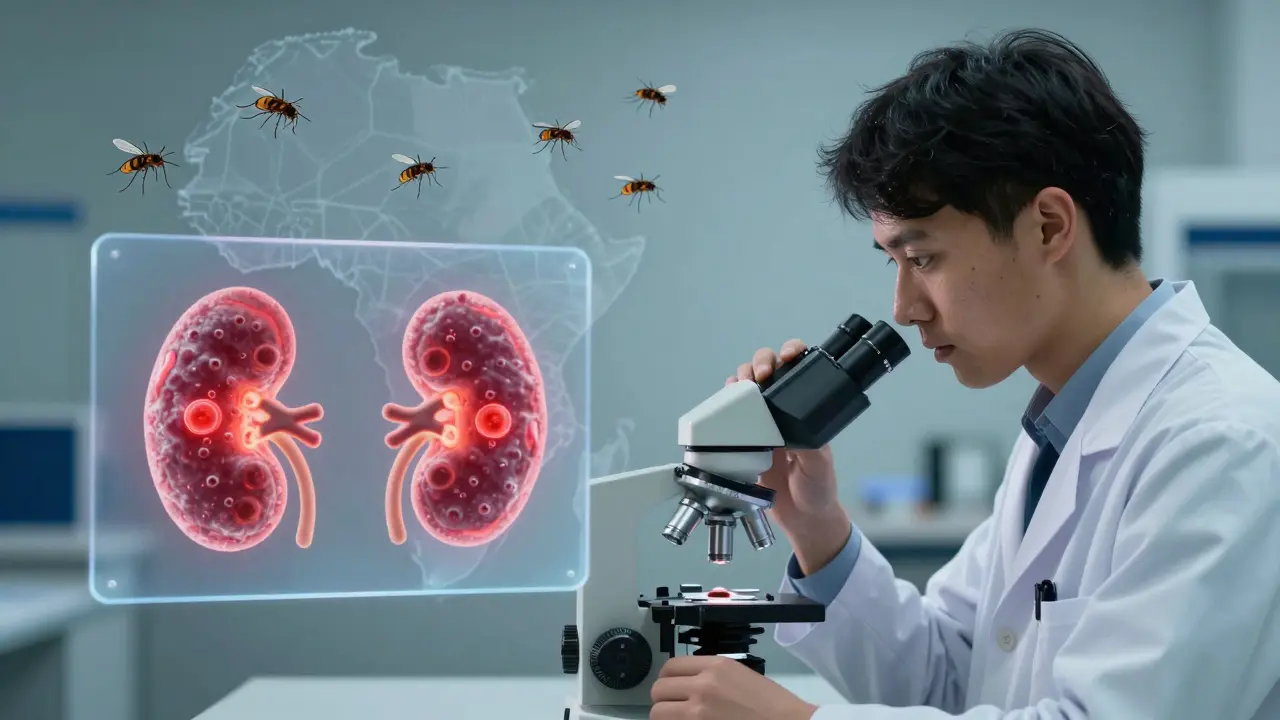
How Is APOL1 Tested?
Genetic testing for APOL1 became available in 2016. It’s a simple blood or saliva test that checks for the G1 and G2 variants. Costs range from $250 to $450 without insurance, though some clinical trials and research programs offer it for free. Testing is recommended in three main situations:- If you have kidney disease and African ancestry - to understand the cause
- If you’re considering being a living kidney donor with African ancestry - to protect your own health
- If you have a family history of unexplained kidney failure
What Should You Do If You Have High-Risk APOL1?
If you find out you have two high-risk variants, don’t panic. You’re not doomed. But you should take action. The American Society of Nephrology’s 2023 guidelines say:- Get your blood pressure checked every 3 to 6 months. Target: below 130/80
- Have a urine test once a year to check for protein (albumin-to-creatinine ratio)
- Avoid NSAIDs like ibuprofen and naproxen - they can stress kidneys
- Control diabetes if you have it - even mild high blood sugar can be dangerous
- Maintain a healthy weight and stay active
What About New Treatments?
For decades, there was no drug that targeted APOL1 directly. That’s changing. In October 2023, Vertex Pharmaceuticals released early results from a Phase 2 trial of a drug called VX-147. In just 13 weeks, it reduced protein in the urine by 37% compared to placebo. That’s a big deal - less protein means slower kidney damage. Other companies are working on similar drugs. The NIH has invested over $125 million in APOL1 research since 2020. By 2025, we could have the first approved therapy specifically for APOL1-mediated kidney disease.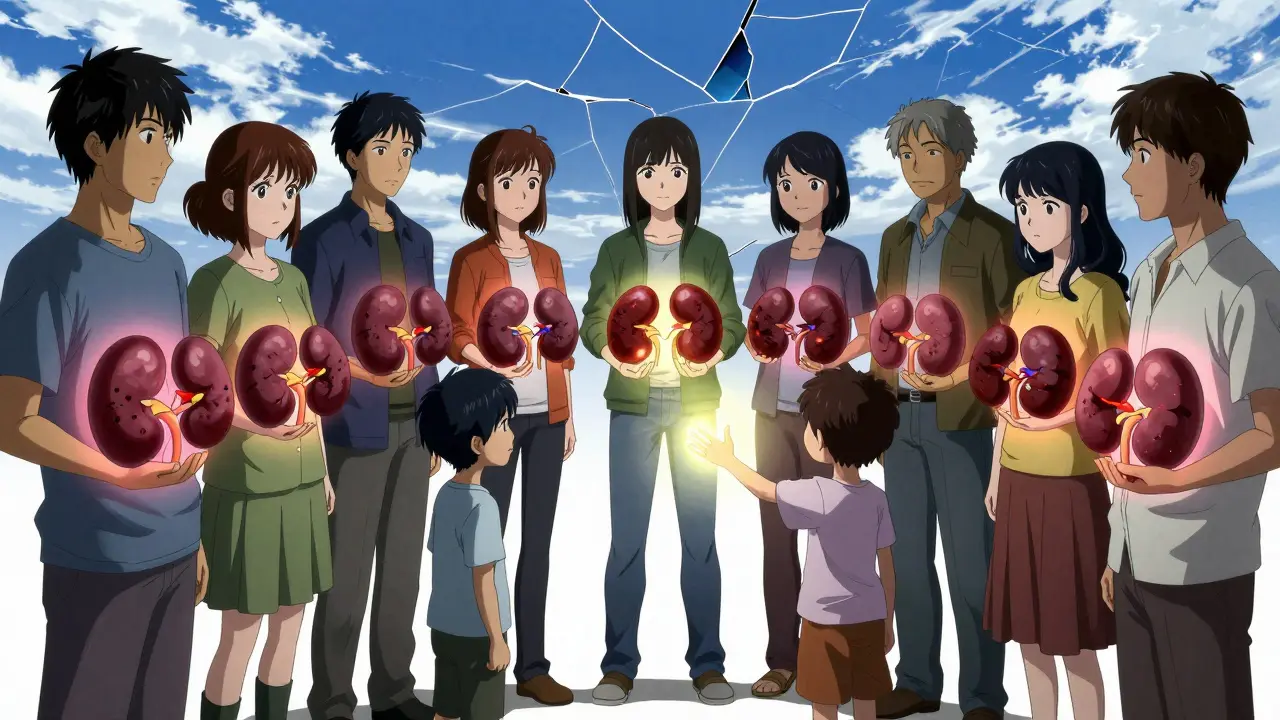
Why This Isn’t About Race
You’ll hear people say “Black people are at higher risk.” That’s misleading. The risk isn’t tied to skin color. It’s tied to ancestry from specific parts of Africa - mainly West and Central Africa. Someone with Nigerian roots carries the same risk as someone with Jamaican or African American roots. Someone with mixed ancestry - say, half African and half European - might carry one copy or none. The key is the gene, not the label. Experts warn that calling this a “racial” issue leads to harmful misunderstandings. Doctors might assume all Black patients have APOL1 risk and miss other causes of kidney disease. Or worse, they might dismiss symptoms in someone without African ancestry who actually has kidney disease.Real Stories: The Emotional Side
One woman, Emani, found out she had two APOL1 risk variants after her mother went on dialysis. She was 32, felt fine, and had no symptoms. But her urine test showed early protein leakage. She started monitoring her blood pressure, cut back on salt, and got regular checkups. Five years later, her kidneys are still strong. Another person, a medical student, shared online: “I test my blood pressure every week. I’m proactive - but I’m also scared. What if I’m the one in five who gets sick?” That anxiety is real. Many people feel guilt, fear, or confusion after testing. Some face discrimination - doctors dismissing their concerns as “just high blood pressure” before they knew about APOL1.What’s Next?
In 2023, the NIH launched a 10-year study tracking 5,000 people with high-risk APOL1. They want to know: What triggers disease? Who stays healthy? Can we predict who’s most at risk? By 2026, experts hope to have clear guidelines for screening. By 2027, they want to make testing affordable and accessible everywhere - not just in wealthy countries. Right now, only 12% of low- and middle-income countries can test for APOL1. The goal isn’t just to treat disease. It’s to prevent it. To give people with African ancestry the same chance at healthy kidneys as everyone else.Final Thoughts
APOL1 doesn’t define your health. But knowing about it gives you power. If you have African ancestry and a family history of kidney disease, ask your doctor about testing. If you’re healthy, get checked annually. If you’re already diagnosed, work with your care team to protect your kidneys. This isn’t about fear. It’s about awareness. And awareness saves kidneys - and lives.What does it mean to have two APOL1 risk variants?
Having two high-risk APOL1 variants (G1/G1, G2/G2, or G1/G2) means you carry a genetic setup that increases your risk for certain types of kidney disease. But it doesn’t mean you will definitely get sick. Only about 15-20% of people with this genotype develop kidney disease in their lifetime. Other factors - like infections, high blood pressure, or obesity - usually need to be present to trigger damage.
Can I get tested for APOL1 even if I don’t have kidney disease?
Yes. Testing is recommended if you have African ancestry and a family history of unexplained kidney failure, or if you’re considering being a living kidney donor. Even if you’re healthy, knowing your status helps you take preventive steps - like monitoring blood pressure and avoiding kidney-stressing medications.
Does APOL1 testing affect my health insurance?
In the U.S., the Genetic Information Nondiscrimination Act (GINA) protects you from health insurance discrimination based on genetic test results. It doesn’t cover life, disability, or long-term care insurance, but your health plan can’t deny you coverage or raise your rates because of APOL1 results.
Why are APOL1 variants common in African ancestry populations?
The G1 and G2 variants evolved in West and Central Africa over 5,000-10,000 years ago because they protected people from African sleeping sickness, a deadly parasite disease. People with these variants were more likely to survive and pass them on. This is called natural selection. The trade-off? These same variants can damage kidney cells decades later.
Is APOL1 testing covered by insurance?
Coverage varies. Many insurance plans cover APOL1 testing if it’s ordered for diagnostic reasons - like unexplained kidney disease or before a kidney transplant. For screening or donor evaluation, coverage is less consistent. Check with your provider. Some labs offer payment plans or financial aid through nonprofit programs like the American Kidney Fund.
Can I pass APOL1 risk to my children?
Yes. APOL1 risk follows an autosomal recessive pattern. If you have two high-risk variants, each of your children will inherit one risk variant from you. They’ll only be at high risk if they also inherit a second risk variant from the other parent. If your partner doesn’t carry any APOL1 risk variants, your children will be carriers but not at high risk themselves.


Iona Jane
15 Jan 2026 at 16:22This is all a cover-up. The government knows APOL1 is just a distraction from the real cause: water fluoridation. They don't want you to know that kidney damage comes from the pipes, not your genes. They've been suppressing studies since 2012. I saw the leaked memo. They're afraid if people find out, they'll stop drinking tap water. And then what? No more profit for the pharmaceutical giants. Wake up.
They're testing you. They're watching your urine. They're tracking your blood pressure. They want you scared. They want you dependent. Don't be fooled.
I tested myself. I have two variants. I stopped drinking water. I drink only rainwater now. My kidneys are fine. They can't prove otherwise.
They call it science. I call it control.