




Simvastatin Interaction Checker
Check Your Simvastatin Safety
This tool identifies dangerous combinations with simvastatin based on FDA guidelines. Enter your current dose and medications.
Results
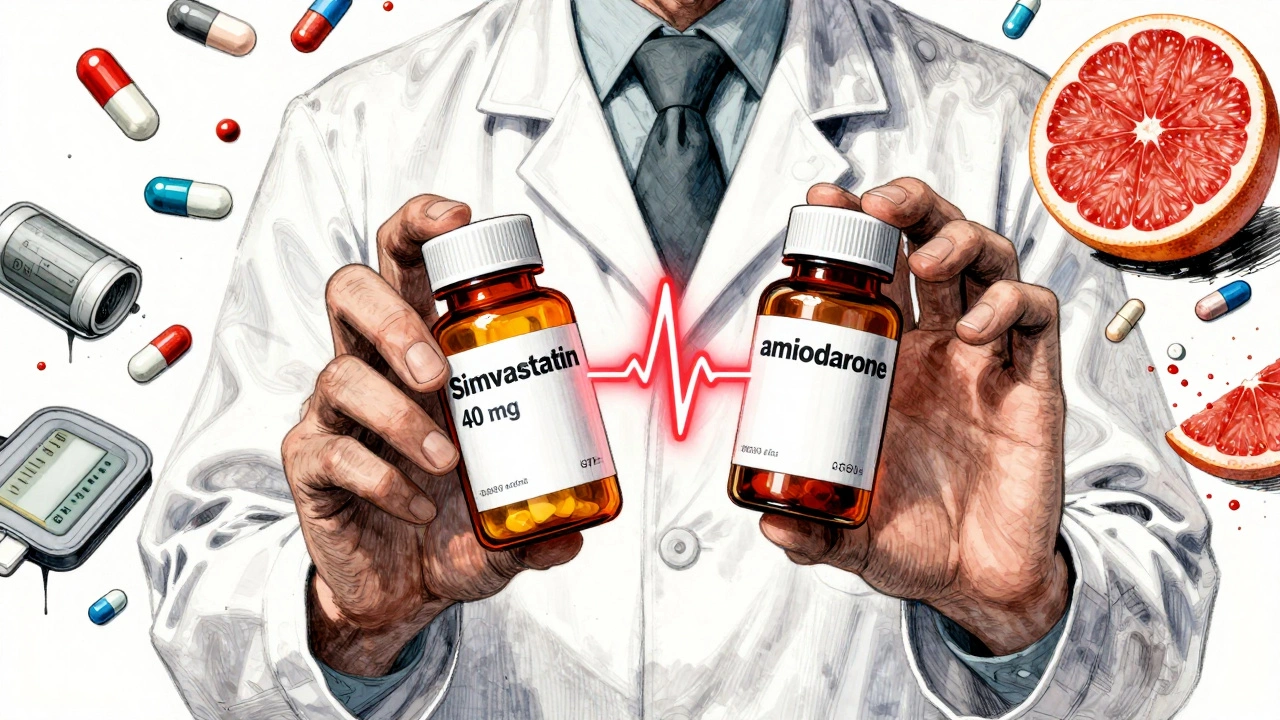
When you’re on simvastatin, especially at 40 mg or 80 mg daily, you’re not just managing cholesterol-you’re playing a high-stakes game with your muscles and liver. The FDA warned about this over a decade ago, and the data hasn’t changed. In fact, it’s gotten worse in some ways because people still don’t know what’s dangerous. Simvastatin is cheap, effective, and widely prescribed. But it’s also one of the most dangerous statins when mixed with common medications, supplements, or even your morning glass of grapefruit juice.
Why Simvastatin Is Different From Other Statins
Not all statins are made the same. Simvastatin is broken down in your liver by an enzyme called CYP3A4. That’s fine-until something blocks that enzyme. When that happens, simvastatin builds up in your blood like a traffic jam. And when levels get too high, your muscles start breaking down. That’s called rhabdomyolysis. It’s rare, but when it happens, it can lead to kidney failure or death.
Compare that to pravastatin or rosuvastatin. They don’t rely as heavily on CYP3A4. That’s why doctors now avoid starting new patients on simvastatin 80 mg. The 2011 FDA safety update was clear: the 80 mg dose has a 0.61% risk of muscle damage. At 20-40 mg, it’s just 0.08%. That’s more than a sevenfold increase in risk. And it’s not theoretical. The SEARCH trial and FDA’s own adverse event database showed more deaths from rhabdomyolysis with simvastatin 80 mg than with any other statin at any dose.
The Top 5 Dangerous Drug Interactions
If you’re taking simvastatin, here are the five most dangerous drugs you might be on-and you probably don’t realize it.
- Clarithromycin and erythromycin - These antibiotics are prescribed for sinus infections, bronchitis, or pneumonia. They’re strong CYP3A4 inhibitors. One study found patients on simvastatin who took clarithromycin had a 5x higher risk of muscle damage. Hospitalizations spiked within 72 hours.
- Cyclosporine - Used after organ transplants. Even low doses can skyrocket simvastatin levels. There are documented cases of rhabdomyolysis in transplant patients who were on simvastatin 40 mg and cyclosporine. The fix? Switch to pravastatin.
- Ketoconazole, itraconazole, voriconazole - Antifungals for yeast infections or fungal skin conditions. These are so potent they’re banned with simvastatin 80 mg entirely. Even 10 mg of simvastatin becomes risky.
- Diltiazem and verapamil - These blood pressure meds are common in older adults. The FDA says if you’re on either, don’t exceed 10 mg of simvastatin per day. Many doctors miss this. Patients think, “I’ve been on this combo for years-it’s fine.” It’s not.
- Amiodarone - A heart rhythm drug. The maximum safe simvastatin dose with amiodarone is 5 mg. But many patients are still on 20 mg or 40 mg. That’s a ticking time bomb.
And don’t forget colchicine. It’s used for gout. Even though it’s not a strong CYP3A4 blocker, it’s been linked to muscle damage when paired with simvastatin. The risk is lower than with antibiotics, but it’s real.
Grapefruit Juice: The Silent Killer
You’ve heard it before: don’t drink grapefruit juice with statins. But most people think it’s just a “maybe” warning. It’s not. A single 8-ounce glass of grapefruit juice can increase simvastatin levels by up to 260%. That’s not a little bump-it’s a full-blown overdose.
A 2023 study found 43% of patients on high-dose simvastatin still drank grapefruit juice regularly. Some said they didn’t know it was dangerous. Others thought “a little bit” was okay. Neither is true. The effect lasts more than 24 hours. Even if you drink it at breakfast and take your pill at night, you’re still at risk.
It’s not just juice. Grapefruit fruit, pomelos, and Seville oranges (used in marmalade) do the same thing. If you’re on simvastatin, avoid them completely. No exceptions.
Why the 80 mg Dose Is Almost Never Right
The 80 mg dose of simvastatin was once considered a “powerhouse” for cholesterol. But since the FDA’s 2011 update, prescribing it has dropped by 82%. Why? Because the risks outweigh the benefits.
Studies like the Heart Protection Study showed that even 40 mg of simvastatin lowered heart attacks and strokes. But the muscle damage risk didn’t drop proportionally. The 80 mg dose gave only a 5% extra reduction in LDL cholesterol compared to 40 mg-but tripled the chance of rhabdomyolysis.
Today, the American College of Cardiology says: don’t start anyone on simvastatin 80 mg. If you’re already on it, your doctor should be discussing a switch. There are better options: rosuvastatin, atorvastatin, or pitavastatin. They’re just as effective, safer, and less likely to interact with other drugs.
And cost? Simvastatin 20 mg costs about $4 a month. Rosuvastatin 10 mg? Also around $4. The price difference is negligible. The safety difference? Massive.
What You Should Do Right Now
If you’re taking simvastatin, here’s what to do today:
- Check your dose. If you’re on 80 mg, ask your doctor if you can switch. It’s not a personal failure-it’s standard medical advice now.
- Review every medication. Include over-the-counter pills, supplements, and antibiotics. Don’t assume your pharmacist caught it. Ask: “Is anything I’m taking dangerous with simvastatin?”
- Stop grapefruit. No juice, no fruit, no marmalade. If you love it, switch to orange or apple juice.
- Know the warning signs. Muscle pain, weakness, or dark urine? Call your doctor immediately. Don’t wait. Rhabdomyolysis gets worse fast.
- Ask about genetic testing. The SLCO1B1 gene test can show if you’re at higher risk for muscle damage. It’s not routine-but if you’ve had side effects before, it’s worth it.

What Your Pharmacist Should Be Doing
Pharmacists are your last line of defense. They’re trained to catch dangerous combinations. But they can’t read your mind. If you fill a prescription for clarithromycin while on simvastatin, they should flag it. If you’re on amiodarone and simvastatin 40 mg, they should call your doctor.
Studies show pharmacy-based intervention programs cut dangerous interactions by 67% in older adults. But that only works if you tell them everything you’re taking-including vitamins, herbal supplements, and painkillers.
Don’t assume they know. Bring a list. Or better yet, take a photo of all your pill bottles and show it to them. They’ll thank you.
The Bottom Line
Simvastatin isn’t evil. It’s saved lives. But it’s not safe for everyone. The 80 mg dose is a relic. Grapefruit juice isn’t a myth. Antibiotics like clarithromycin aren’t harmless. And your doctor might not know all the risks unless you ask.
If you’re on simvastatin, especially at 40 mg or higher, you need to be proactive. Don’t wait for muscle pain. Don’t assume you’re fine because you’ve been on it for years. The risks are real, measurable, and preventable.
Switch to a safer statin. Avoid grapefruit. Tell your pharmacist everything. And if you feel unexplained muscle soreness or dark urine-don’t ignore it. It could save your life.








Shashank Vira
2 Dec 2025 at 07:00Let’s be real-this isn’t just medical advice, it’s a survival guide for the pharmacologically uninitiated. Simvastatin 80 mg? That’s not a prescription, it’s a dare. And grapefruit juice? A slow-motion suicide pact wrapped in a citrusy illusion. I’ve seen patients on this combo walk into the ER with urine the color of motor oil. No drama, just data. The body doesn’t lie. And neither does CYP3A4.