


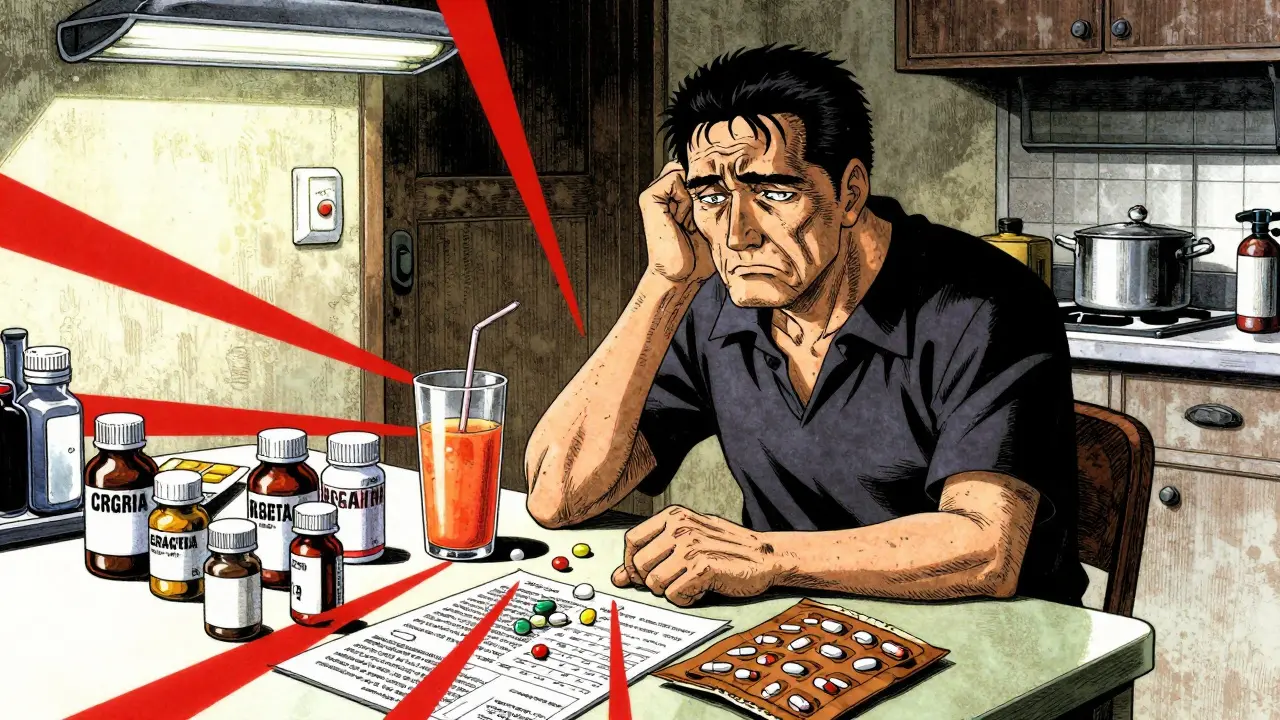

When you’re managing heart disease, taking multiple medications is often necessary. But each pill you add doesn’t just help-it also adds risk. Heart medication interactions aren’t rare accidents. They’re common, dangerous, and often preventable. If you’re on three or more heart drugs, your chance of a harmful interaction jumps from 13% to over 38%. With seven or more, it’s nearly 8 in 10. This isn’t theoretical. It’s happening right now to people just like you.
Why Heart Medications Are Especially Risky
Heart medications work in delicate balance. They control blood pressure, slow heart rate, thin blood, lower cholesterol, and manage fluid buildup. When two or more of these drugs interact, they don’t just cancel each other out-they can amplify danger. One drug might block how another is broken down, causing toxic levels to build up. Another might speed up metabolism, making the drug useless. The result? A heart attack, kidney failure, dangerous bleeding, or sudden drop in blood pressure.Older adults are most at risk. About 92% of seniors with cancer take multiple medications, and heart patients often have the same complex mix. The average 70-year-old with heart failure might be on five or six drugs: a beta blocker, an ACE inhibitor, a diuretic, a statin, and an anticoagulant. Add in over-the-counter painkillers or supplements, and the risk explodes.
Unsafe Combinations You Must Avoid
- Grapefruit juice and statins: Even one quart a day can stop your body from breaking down atorvastatin, simvastatin, or lovastatin. This causes statin levels to spike, increasing the risk of rhabdomyolysis-a condition where muscle tissue breaks down and damages your kidneys. The FDA says this interaction is strong enough to require a warning label on statin bottles.
- St. John’s wort and heart drugs: This popular supplement for mood swings speeds up liver enzymes that clear medications from your blood. It can cut the effectiveness of beta blockers, calcium channel blockers, and even blood thinners like warfarin. One study showed it reduced blood levels of some cardiac drugs by up to 60%.
- Black licorice and blood pressure meds: Real licorice (not the candy-flavored kind) contains glycyrrhizin, which raises blood pressure and lowers potassium. When taken with diuretics, beta blockers, or calcium channel blockers, it can cause dangerous spikes in blood pressure and irregular heart rhythms.
- Alcohol and heart medications: Alcohol doesn’t just add calories-it interferes with how your liver processes nearly every heart drug. It can make blood pressure meds less effective, worsen the dizziness from beta blockers, and increase bleeding risk when combined with anticoagulants. The National Institute on Alcohol Abuse and Alcoholism lists over 150 medications with dangerous alcohol interactions, and heart drugs are among the top.
- NSAIDs and blood pressure drugs: Ibuprofen, naproxen, and other common painkillers block kidney enzymes that help regulate blood pressure. When taken with ACE inhibitors, ARBs, or diuretics, they can make those drugs useless. They also raise the risk of kidney damage and internal bleeding, especially if you’re on aspirin or warfarin.
- Antacids and cardiac drugs: Calcium- or magnesium-based antacids can bind to drugs like digoxin or certain antibiotics, preventing them from being absorbed. If you take them together, your heart meds may not work at all.
- First-generation antihistamines and QT-prolonging drugs: Diphenhydramine (Benadryl) and similar OTC sleep aids can cause a dangerous heart rhythm called torsades de pointes when taken with amiodarone, sotalol, or other drugs that affect heart electrical activity.
Safe Combinations and When They Work
Not all combinations are dangerous. Many heart drug pairs are standard, life-saving, and carefully studied. For example:- ACE inhibitors and diuretics are often paired to reduce fluid overload and lower blood pressure together.
- Statins and ezetimibe are commonly used together for stronger cholesterol control.
- Beta blockers and calcium channel blockers can be safely combined in some patients with high blood pressure or angina, though only under close supervision.
What makes the difference? Timing, dosage, and monitoring. Your doctor chooses these combinations because the benefits outweigh the risks-and they adjust based on your response. But that only works if you tell them everything you’re taking.
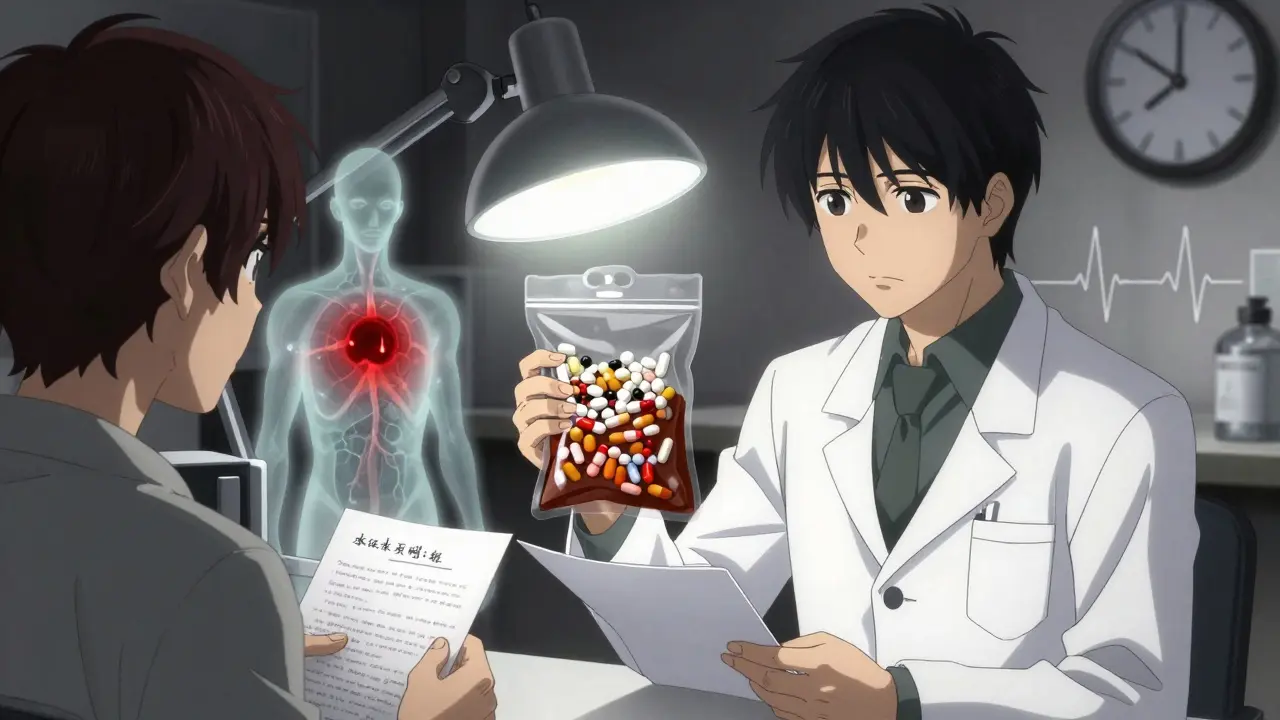
What You’re Probably Not Telling Your Doctor
Most people forget to mention supplements, OTC meds, or even herbal teas. But these are often the hidden triggers.- Turmeric: Often taken for inflammation, it can thin the blood and interact with warfarin or aspirin.
- Coenzyme Q10: Some heart patients take it to offset statin side effects, but it might reduce the effectiveness of warfarin.
- Garlic supplements: Can increase bleeding risk when taken with anticoagulants.
- Green tea extract: Contains compounds that interfere with how some heart drugs are processed.
Even foods matter. If you’re on warfarin, sudden changes in vitamin K intake-from eating more kale or spinach-can throw off your blood thinning. If you’re on a beta blocker, eating large amounts of salt can undo its effect.
How to Protect Yourself
There are four proven steps to avoid dangerous interactions:
- Use one pharmacy for all prescriptions. Pharmacists run interaction checks across every drug you take, including supplements and OTCs. If you switch pharmacies, those checks stop.
- Do a brown bag review at least once a year. Take every pill, capsule, gummy, and bottle-including vitamins, CBD oil, and herbal teas-to your doctor or pharmacist. They’ll spot hidden risks you didn’t know existed.
- Keep an updated list. Write down every medication, the dose, and why you take it. Update it after every doctor visit. Carry it with you. In an emergency, this could save your life.
- Ask before you add anything. Even if something seems harmless-like a new supplement or a cold medicine-ask your pharmacist: "Will this interfere with my heart meds?" Don’t assume it’s safe because it’s "natural."
Why Technology Isn’t Enough
Electronic health records flag many interactions, but they miss about 23% of serious ones. Why? They don’t know your genetics, your liver function, or whether you drink grapefruit juice every morning. They also don’t track supplements unless you enter them manually.
Some people have genetic variations that make them slow or fast metabolizers of certain drugs. For example, if you’re a poor metabolizer of CYP3A4, even small amounts of grapefruit juice can be dangerous. This isn’t something a computer can guess-it requires testing.
The Emotional Side of Deprescribing
Many patients are afraid to stop a medication-even if it’s unnecessary. They worry their doctor is giving up on them. Or they think if a pill was prescribed, it must be essential.
But taking too many drugs can lead to falls, confusion, fatigue, and even death. A 2022 study found that older adults on five or more medications had a 40% higher risk of hospitalization from drug reactions. Deprescribing-safely reducing or stopping drugs-isn’t failure. It’s smart care.
Start the conversation: "I’ve been on this for years. Do we still need it?" Your doctor might find a safer alternative-or realize you don’t need it at all.
Bottom Line: You’re the Most Important Safety Net
No app, no pharmacist, no AI can replace your awareness. You’re the one who takes the pills. You’re the one who notices the dizziness, the muscle pain, the odd heartbeat. If something feels off, speak up.
Heart medication interactions aren’t a mystery. They’re predictable. And they’re preventable. The key isn’t just knowing the dangerous combos-it’s knowing how to protect yourself every single day.
Can I drink grapefruit juice if I take a statin?
No. Grapefruit juice blocks the enzyme that breaks down certain statins, causing dangerous buildup in your blood. This increases the risk of muscle damage and kidney failure. Even one quart a day can cause this. If you take atorvastatin, simvastatin, or lovastatin, avoid grapefruit juice entirely. Other statins like pravastatin or rosuvastatin are safer, but check with your pharmacist first.
Is it safe to take ibuprofen with my blood pressure medication?
Not usually. Ibuprofen and other NSAIDs can reduce how well your blood pressure meds work and increase your risk of kidney damage. They also raise bleeding risk if you’re on a blood thinner. For pain relief, acetaminophen (Tylenol) is usually a safer choice-but talk to your doctor before switching.
Can I take St. John’s wort for depression if I have heart disease?
No. St. John’s wort speeds up how your body clears many heart medications, including beta blockers, calcium channel blockers, and blood thinners. This can make them ineffective, putting you at risk for heart attack, stroke, or dangerous clots. There are safer depression treatments for heart patients-ask your doctor.
What over-the-counter meds should I avoid with heart drugs?
Avoid decongestants like pseudoephedrine (Sudafed), which raise blood pressure. Skip first-generation antihistamines like diphenhydramine (Benadryl), which can cause irregular heart rhythms. Stay away from NSAIDs like ibuprofen or naproxen if you’re on blood pressure or heart failure meds. Even some cough syrups and sleep aids contain hidden ingredients that interact with your heart drugs.
How do I know if a supplement is safe with my heart meds?
There’s no reliable way to know unless you check. Many supplements-like garlic, ginkgo, coenzyme Q10, and turmeric-can interfere with blood thinners, blood pressure drugs, or statins. Always bring your supplement bottle to your pharmacist or doctor. Don’t assume "natural" means safe. The safest approach is to avoid all supplements unless your doctor approves them.
Should I stop taking my meds if I think they’re interacting?
Never stop a heart medication without talking to your doctor. Stopping suddenly can cause rebound high blood pressure, chest pain, or heart rhythm problems. If you feel side effects-like dizziness, muscle pain, swelling, or irregular heartbeat-call your doctor. They can adjust your dose, switch medications, or check for interactions.
Next Steps: What to Do Today
- Find every pill, capsule, and bottle in your medicine cabinet.
- Write down the name, dose, and reason for each one-including vitamins and herbal teas.
- Bring that list to your next doctor or pharmacist visit.
- Ask: "Which of these could be interacting with my heart meds?"
- If you drink grapefruit juice or take St. John’s wort, tell them right away.
Every medication you take is a decision. Some save your life. Others could end it. You hold the power to make sure the balance stays on your side.


kenneth pillet
17 Jan 2026 at 08:23Been on 6 heart meds for 5 years. Learned the hard way about grapefruit juice after my CK levels spiked. Now I use orange juice instead. Simple fix, big difference. Also, always use one pharmacy-pharmacist caught a dangerous interaction between my statin and a random sleep aid I didn’t even think was a drug.