


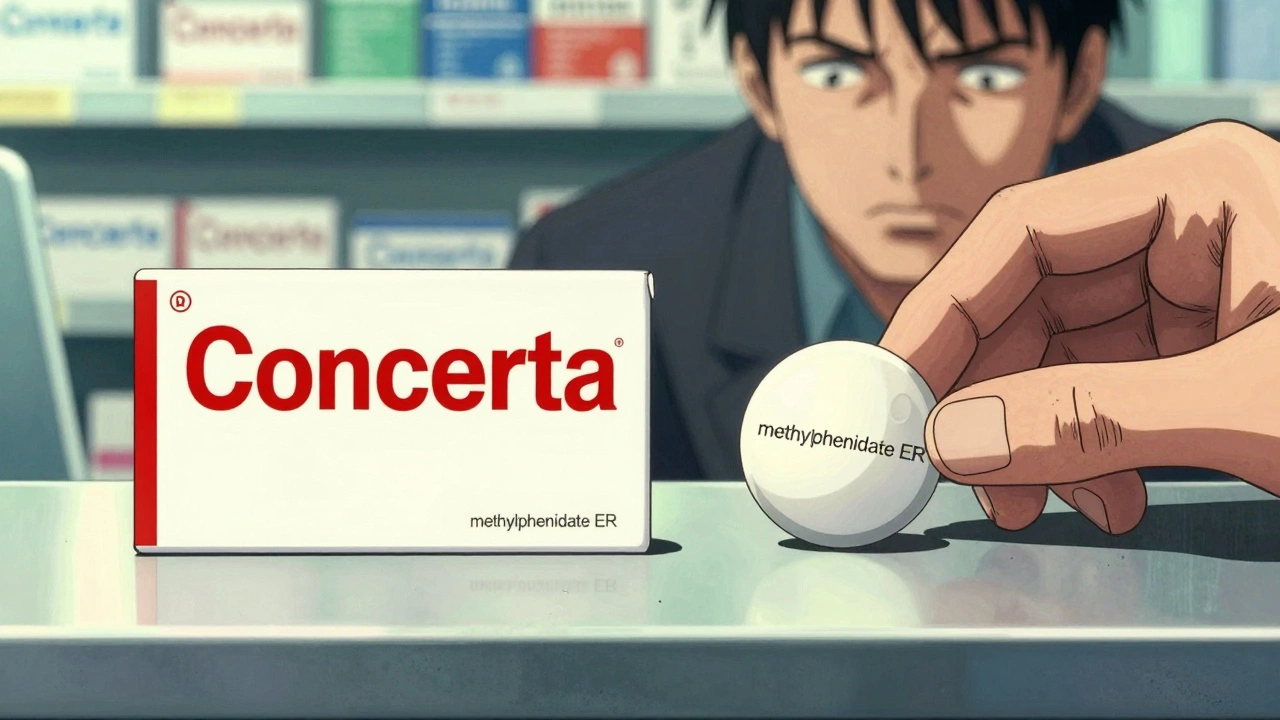

When you fill a prescription for a brand-name drug like Concerta or Celebrex, you might be surprised to get a pill that looks identical but has a different label - maybe even a different color or shape. That’s not a mistake. That’s an authorized generic.
It’s not the same as a regular generic. And it’s not the brand-name drug either. It’s something in between. And if you’re trying to save money on prescriptions, knowing the difference could save you hundreds a year.
What Exactly Is an Authorized Generic?
An authorized generic is the exact same drug as the brand-name version - same active ingredient, same inactive ingredients, same manufacturing process, same quality control. The only difference? No brand name on the label.
The U.S. Food and Drug Administration (FDA) defines it clearly: an approved brand-name drug sold without the brand name on its packaging. It’s not a copy. It’s the real thing, just repackaged.
For example, if you take Concerta (methylphenidate extended-release), the authorized generic is made by the same company - Janssen - using the same factory, same equipment, same formula. The only change is the label says “methylphenidate ER” instead of “Concerta.”
This isn’t a loophole. It’s built into the system. Authorized generics are produced under the original brand’s New Drug Application (NDA), not the Abbreviated New Drug Application (ANDA) that regular generics use. That means they don’t need to prove they’re bioequivalent - because they’re not equivalent. They’re identical.
How Are Authorized Generics Different From Regular Generics?
Regular generics have to meet the same standards as brand-name drugs - same active ingredient, same strength, same dosage form. But they can - and often do - use different inactive ingredients. That’s the key.
Think of it like two identical cars. One is a Ford Mustang built by Ford. The other is a Mustang built by a different company, using Ford’s blueprints, but with slightly different seat fabric or a different radio brand. That’s a regular generic.
An authorized generic? It’s the same car. Same factory. Same parts. Same assembly line. Just without the Ford logo.
Here’s the breakdown:
- Regular generic: Same active ingredient. May have different fillers, dyes, or binders. Must prove bioequivalence to the brand. Listed in the FDA’s Orange Book.
- Authorized generic: Same active ingredient. Same inactive ingredients. Same packaging process. No bioequivalence testing needed. Not listed in the Orange Book.
Why does this matter? For some people, even small changes in inactive ingredients can cause reactions - stomach upset, allergies, or just a feeling that the medication “doesn’t work as well.” With an authorized generic, that’s not a risk.
Who Makes Authorized Generics?
There are two ways this works:
- The brand-name company makes it themselves and sells it under a different label.
- The brand-name company licenses the formula to another manufacturer - but that manufacturer must use the exact same formula, same process, same facility.
For example:
- Colcrys (colchicine) → Authorized generic by Prasco Laboratories (made by the original manufacturer, Takeda)
- Celebrex (celecoxib) → Authorized generic by Greenstone Pharmaceuticals (a subsidiary of Pfizer)
- Unithroid (levothyroxine) → Authorized generic by Jerome Stevens Pharmaceuticals (produced under license from the original maker)
In each case, the authorized generic is physically indistinguishable from the brand-name drug - unless you check the label.

Why Do Companies Make Authorized Generics?
It seems counterintuitive. Why would a company that just spent billions developing a drug turn around and sell a cheaper version of it?
The answer is strategy - and money.
When a brand-name drug’s patent expires, other companies can legally make generics. But those generics often undercut the brand price by 80% or more. That’s a huge loss.
So here’s what happens: the brand company launches its own authorized generic - at a price lower than the brand, but higher than the competition. They keep their market share. They keep their profits. And they stop the other generics from taking over entirely.
A 2022 study in Health Affairs found that between 2010 and 2019, there were 854 authorized generic launches. In 75% of cases, the authorized generic came out after a regular generic had already entered the market. That’s not random. That’s a defense move.
And in markets where a single generic manufacturer gets 180 days of exclusivity (a rule under the Hatch-Waxman Act), nearly 70% of authorized generics launched either before or during that window. That’s not coincidence. That’s a calculated play.
It’s not about helping patients. It’s about keeping revenue flowing.
How Much Do Authorized Generics Cost?
Prices vary. But here’s the general pattern:
- Brand-name drug: $150-$400 per month
- Authorized generic: $80-$200 per month (usually 15-30% cheaper than brand)
- Regular generic (after market saturation): $10-$40 per month
So yes - authorized generics are cheaper than the brand. But they’re not the cheapest option.
Many patients don’t even know they’re getting an authorized generic. Pharmacists often dispense them without explanation. If your insurance prefers generics, they might just give you the lowest-cost version - even if it’s not the one you’re used to.
That’s why it’s worth asking: “Is this the brand, a regular generic, or an authorized generic?”
What Are the Downsides?
There are two big ones.
First, they’re not always the cheapest. Once multiple regular generics flood the market, their prices drop dramatically. Authorized generics don’t drop as fast - because the original manufacturer controls them.
Second, they’re confusing. Patients often get them without warning. One month they get a blue pill labeled “Concerta.” The next month, they get a white pill labeled “methylphenidate ER.” They think it’s a different drug. Or worse - they think it’s fake.
Pharmacists have to spend extra time explaining: “It’s the same thing. Just no brand name.”
And because authorized generics aren’t listed in the FDA’s Orange Book, prescribers and pharmacists have to rely on separate FDA notifications or third-party databases to track them. That adds complexity to an already complicated system.
How Do You Know If You’re Getting One?
Check the label. If the drug name matches your brand-name prescription - but the company name is different - it’s likely an authorized generic.
Look for:
- The same active ingredient as your brand-name drug
- A different manufacturer name
- No brand name on the label
- Same pill shape, color, or imprint as your brand (this is a strong clue)
You can also ask your pharmacist directly. Or check the FDA’s official List of Authorized Generic Drugs, updated as recently as October 2025.
Some pharmacy apps and websites now flag authorized generics in your prescription history. But not all do. So don’t assume.
Should You Choose an Authorized Generic?
If you’ve had trouble with regular generics - nausea, headaches, or a feeling the medication isn’t working - an authorized generic might be your best bet. No formulation changes. No surprises.
If you’re on a tight budget and your insurance doesn’t cover the brand, it’s still a good option - better than paying full price for the brand.
But if you’re looking for the absolute lowest price, wait for the regular generics to catch up. They’ll eventually win on cost.
The bottom line? Authorized generics aren’t a scam. They’re not a fraud. They’re the real drug, just sold under a different name. But they’re also a business tactic - one that keeps brand manufacturers profitable while giving patients a middle-ground option.
Know what you’re getting. Ask questions. Don’t just accept what’s handed to you.
What’s Next for Authorized Generics?
They’re not going away. In fact, they’re growing.
As more brand-name drugs lose patent protection, manufacturers will keep using authorized generics as a shield. Regulators are watching. Some lawmakers are asking: Is this fair? Are these drugs really helping patients - or just protecting profits?
For now, they’re legal. They’re safe. And they’re here to stay.
If you’re paying for prescriptions, you need to understand them. Because the next time your pill looks different, it might not be a mistake. It might be a strategy - and you deserve to know why.
Are authorized generics the same as brand-name drugs?
Yes. Authorized generics are chemically and physically identical to the brand-name drug - same active ingredient, same inactive ingredients, same manufacturing process. The only difference is the label doesn’t include the brand name.
Are authorized generics cheaper than brand-name drugs?
Yes, usually. Authorized generics typically cost 15-30% less than the brand-name version. But they’re often more expensive than regular generics once multiple competitors enter the market.
Why aren’t authorized generics listed in the FDA’s Orange Book?
Because they’re not approved under the Abbreviated New Drug Application (ANDA) process. Authorized generics are marketed under the original brand’s New Drug Application (NDA), so they don’t need to be evaluated for therapeutic equivalence - they’re already approved as identical.
Can I ask my pharmacist for an authorized generic?
Yes. If you’ve had issues with regular generics - like side effects or inconsistent results - you can ask for the authorized version. Pharmacists can often switch your prescription if it’s available and covered by your insurance.
Do authorized generics have the same side effects as the brand?
Yes. Since they’re made with the exact same ingredients and process, side effects are identical. If you tolerated the brand-name drug well, you’ll likely tolerate the authorized generic just as well.
How do I find out if my drug has an authorized generic?
Check the FDA’s official List of Authorized Generic Drugs, updated periodically. You can also ask your pharmacist or search online using your drug’s active ingredient name plus “authorized generic.” Many pharmacy benefit managers now track and list them in their formularies.





Chad Kennedy
3 Dec 2025 at 12:23So… you’re telling me the blue pill I’ve been taking for years is now a white one and it’s still the same thing? 😑 I don’t trust this. My anxiety went up just reading this.