



Vitamin K Intake Calculator for Warfarin
How to Use This Calculator
Enter your daily food portions to calculate your vitamin K intake. The goal is to maintain consistent intake between 90-120 micrograms (µg) per day to keep your INR stable.
Your Vitamin K Intake
When you're on warfarin, your body is walking a tightrope. Too much blood thinning, and you risk dangerous bleeding. Too little, and clots can form - leading to stroke, heart attack, or pulmonary embolism. The key to staying balanced isn't avoiding vitamin K-rich foods. It's consistency. This isn't about restriction. It's about routine.
Why Vitamin K Matters on Warfarin
Warfarin works by blocking vitamin K from helping your blood clot. That’s why it’s effective. But vitamin K isn’t your enemy. It’s a necessary nutrient. Your liver needs it to make proteins that help your blood clot normally. Warfarin doesn’t eliminate vitamin K. It just makes your body less efficient at using it. So if your vitamin K intake jumps around, your INR - the measure of how long your blood takes to clot - goes up and down with it.A 2010 study in Pharmacogenomics found that people eating more than 250 micrograms (µg) of vitamin K per day needed higher warfarin doses just to stay in range. Meanwhile, those who kept their intake steady - even if it was high - had far more stable INRs. The goal isn’t to eat less vitamin K. It’s to eat the same amount every day.
What Foods Have the Most Vitamin K?
Not all greens are created equal. Some pack a punch. Others are mild. Here’s what you need to know:- 1 cup cooked spinach: 889 µg
- 1 cup cooked kale: 547 µg
- 1 cup cooked collard greens: 772 µg
- 1 cup cooked broccoli: 220 µg
- 1/2 cup asparagus: 70 µg
- 1/2 cup green beans: 14 µg
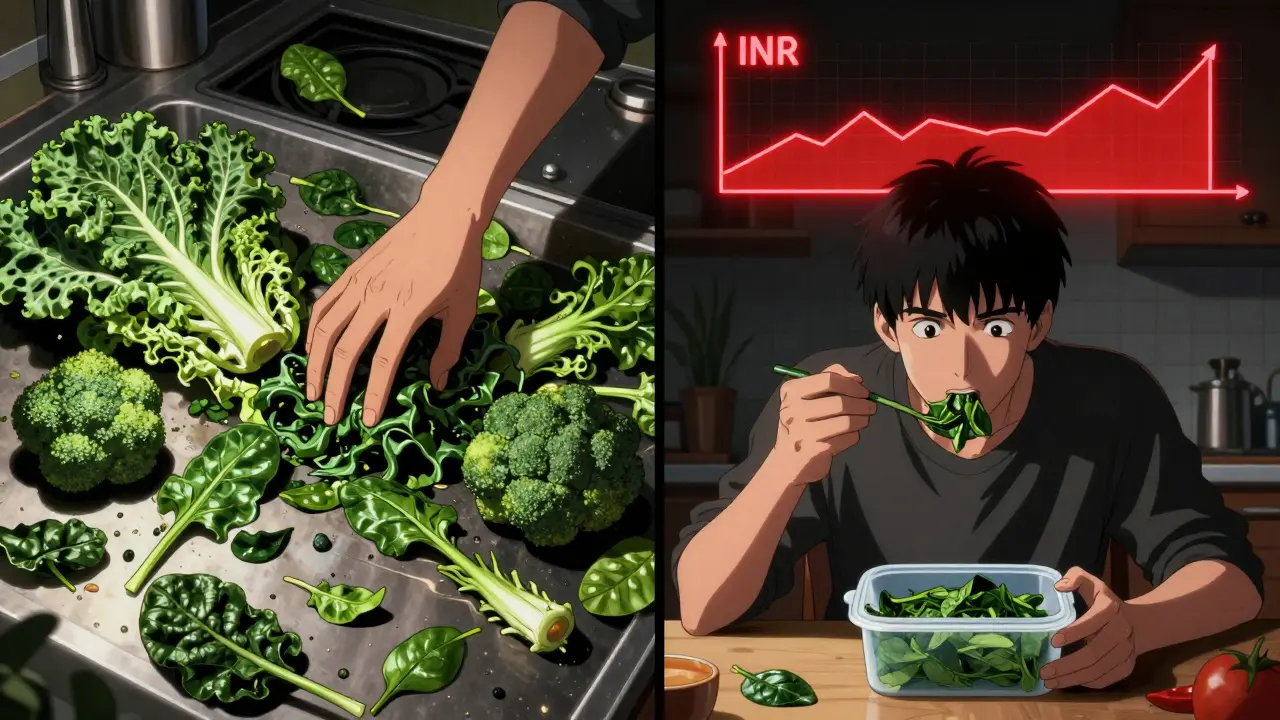
Notice something? Cooking changes everything. Raw spinach has about 145 µg per cup. Cooked? Nearly 900 µg. That’s because cooking reduces volume - you’re packing more leaves into the same spoonful. If you switch from raw to cooked without adjusting your portion, your vitamin K intake skyrockets.
Don’t panic about these numbers. You don’t need to avoid them. But you do need to know which ones are high-risk. Kale, spinach, collards, and broccoli are the usual suspects. If you eat one of these, eat the same amount every day. No more, no less.
Consistency Beats Restriction - Every Time
For years, doctors told patients to avoid green vegetables entirely. That advice is outdated. The American Heart Association, American College of Cardiology, and American Society of Hematology all agree: don’t restrict vitamin K. Maintain it.A 2019 analysis from the WARIS II trial showed that patients who kept their daily vitamin K intake between 90-120 µg - with little day-to-day variation - spent 75-80% of their time in the therapeutic INR range (2.0-3.0). Those who ate wildly different amounts each day? Only 55-65% time in range. That’s the difference between safe and risky.
One patient on the American Heart Association’s support network said: “I eat exactly one cup of baby spinach at breakfast every morning. My INR stability jumped from 52% to 81% in six months.” That’s not luck. That’s routine.
On the flip side, a Reddit user shared: “I had three servings of kale salad one day. Normally I eat almost none. My INR dropped from 2.5 to 1.8 overnight. I had to go to the ER.” That’s what inconsistency looks like - and it’s dangerous.
How to Build a Consistent Routine
You don’t need to be a nutritionist. You need a plan. Here’s how to make it stick:- Pick one high-vitamin K food. Choose one - spinach, kale, broccoli, or Brussels sprouts. Not all of them. Just one. Eat the same portion every day. One cup cooked? Fine. Half a cup? Fine. But stick to it.
- Don’t swap foods. If you eat spinach Monday, don’t switch to kale Tuesday. Even if both are “greens,” their vitamin K levels are wildly different. Stick to your one.
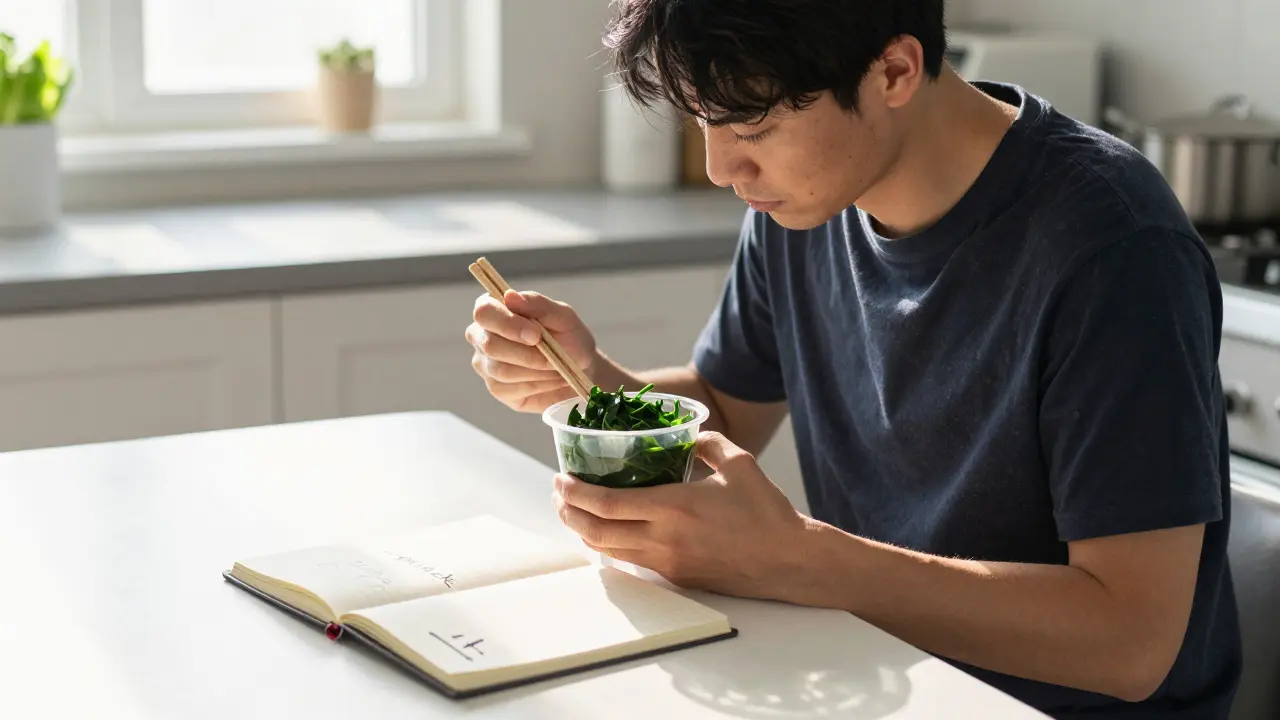
- Use a food diary. Write down what you eat. Not for perfection. For pattern recognition. The 2023 National Anticoagulation Registry found that 89% of clinics recommend this. You don’t need an app. A notebook works.
- Plan meals weekly. If you know you’re eating spinach every morning, prep it ahead. Cook a big batch. Portion it. Freeze it. That way, even on busy days, you’re still getting your 90 µg.
- Avoid supplements. Many protein shakes (like Ensure® and Boost®) contain 50-55 µg of vitamin K per serving. Multivitamins? Some have it too. Check labels. If you’re on warfarin, skip anything with added vitamin K.
What About Other Factors?
Vitamin K isn’t the only thing affecting your INR. Other things matter too:- Antibiotics can kill the good bacteria in your gut that make vitamin K2. This can cause your INR to rise unexpectedly. If you’re on antibiotics, tell your anticoagulation clinic. You may need more frequent INR checks.
- Illness - especially vomiting, diarrhea, or loss of appetite - can lower your vitamin K intake. That can cause your INR to climb. Don’t ignore a cold or stomach bug. Call your provider if you’re not eating normally for more than two days.
- Alcohol can interfere with how warfarin is broken down. A drink or two occasionally? Fine. Daily? That’s a problem. Keep it consistent - or cut it out.
Why Do So Many People Get It Wrong?
A 2022 study found that 63% of warfarin patients got conflicting advice from different doctors. One said “avoid all greens.” Another said “eat them daily.” The truth? Only one approach works: consistency.Older patients - especially those over 65 - are more likely to be given outdated advice. A 2023 national survey showed 72% of warfarin users in this group were told to restrict vitamin K. Meanwhile, younger patients were more likely to get current guidelines. That’s why older adults have 15% lower time in therapeutic range.
Even some hospital handouts still say “avoid spinach.” That’s wrong. The FDA now requires all warfarin packaging to include instructions on consistent intake - not restriction. But many providers haven’t updated their training.

Tools That Actually Help
Technology is making this easier. Apps like CoumaDiet have over 20,000 downloads and track vitamin K in over 1,000 foods. They sync with USDA databases and give you real-time numbers. One study in JAMA Internal Medicine showed that patients using smartphone tracking improved their time in range by 12.3% over six months.But you don’t need an app. You need a habit. Pick your food. Eat it daily. Write it down. Talk to your clinic. That’s the whole system.
What If You’re Still Struggling?
Some people have unstable INRs even with perfect diet habits. That’s rare - but it happens. If your INR keeps swinging despite consistency, talk to your doctor. A 2020 meta-analysis found that adding a small daily vitamin K supplement (100-150 µg) actually stabilized anticoagulation in these cases. It sounds backwards. But it works. Your body gets used to the steady dose - and stops reacting to small changes.Never start a supplement on your own. But if your INR is still unpredictable, ask your anticoagulation team: “Could a small, consistent vitamin K supplement help me?”
The Bottom Line
Warfarin isn’t going away. It’s cheap. It’s reversible. And for millions of people, it’s the best option. But it demands respect. You can’t eat kale one day and skip it the next. You can’t switch from spinach to broccoli without warning. Your body needs predictability.Find your one food. Eat the same amount every day. Track it. Talk to your team. Avoid supplements unless advised. And don’t let outdated advice scare you away from healthy foods. Vitamin K isn’t the enemy. Inconsistency is.
Can I eat spinach if I’m on warfarin?
Yes - but only if you eat the same amount every day. One cup of cooked spinach has nearly 900 µg of vitamin K. If you eat that daily, your body adapts. If you eat it one day and skip it the next, your INR will swing dangerously. Consistency is the rule. Avoidance is outdated.
Should I avoid all green vegetables on warfarin?
No. That advice is outdated and harmful. The American Heart Association, American College of Cardiology, and American Society of Hematology all recommend consistent intake - not avoidance. Leafy greens are nutritious. The problem isn’t the food. It’s the inconsistency. Pick one and stick to it.
What’s the ideal daily vitamin K intake on warfarin?
There’s no universal number, but most stable patients consume between 90-120 µg per day. That’s roughly one cup of cooked spinach, or two cups of raw spinach, or a small portion of broccoli. The goal isn’t to hit a target - it’s to hit the same target every day. Your clinic can help you find your personal sweet spot.
Can I use a vitamin K supplement to stabilize my INR?
Some patients with unstable INRs benefit from a daily 100-150 µg vitamin K supplement - but only under medical supervision. This isn’t about adding more vitamin K. It’s about removing variability. Your body reacts less to small changes when it’s used to a steady dose. Never start a supplement without talking to your anticoagulation clinic first.
Why does my INR change when I’m sick?
When you’re sick - especially with vomiting, diarrhea, or loss of appetite - you eat less. That means less vitamin K. That can cause your INR to rise. The 2020 WARFARIN-ILLNESS trial found that illness could raise INR by 0.3-0.6 units in 48 hours. Call your clinic if you’re not eating normally for more than two days.
Do antibiotics affect warfarin?
Yes. Antibiotics can kill gut bacteria that make vitamin K2, which can cause your INR to rise unexpectedly. Some antibiotics, like ciprofloxacin and metronidazole, have a stronger effect. Always tell your doctor you’re on warfarin when prescribed antibiotics. You may need an INR check within 3-5 days.
Is it okay to drink alcohol while on warfarin?
Occasional alcohol - one drink a day - is usually fine. But daily drinking can interfere with how warfarin is processed. It can raise your INR and increase bleeding risk. Stick to moderate, consistent amounts. If you drink heavily on weekends and not at all during the week, your INR will swing. Consistency matters here too.









Steven Pam
25 Feb 2026 at 05:11Man, I wish I'd known this 5 years ago. I used to panic every time I ate a salad. Now I just have one cup of cooked spinach every morning like clockwork. My INR hasn't budged in over a year. It's not rocket science - just show up for your body every day.
Consistency isn't sexy, but it's the only thing that actually works when your life depends on it.