


What Is Seasonal Affective Disorder?
Seasonal Affective Disorder, or SAD, isn’t just feeling a little down in winter. It’s a real type of depression that shows up every year at the same time-usually in late fall or early winter-and lifts again in spring. People with SAD don’t just dislike the cold or miss summer sunshine. They feel exhausted, sluggish, and emotionally drained. Simple tasks feel overwhelming. They sleep more, crave carbs, gain weight, and pull away from friends and family. Some even feel hopeless.
In the U.S., about 5% of adults experience this pattern each year, according to the American Psychiatric Association. In places like Alaska, where daylight drops to just a few hours a day in December, rates are even higher-over 5%. In Florida, where winters are bright and warm, it’s closer to 1.4%. The closer you live to the poles, the more likely you are to be affected.
Women between 25 and 45 are most commonly diagnosed, and about two-thirds of people with SAD have tried antidepressants before. But many find that medication alone doesn’t fix the root problem: lack of natural light.
How Light Therapy Works
Light therapy isn’t just sitting near a bright lamp. It’s a targeted treatment designed to trick your brain into thinking it’s still summer. Your body’s internal clock, or circadian rhythm, runs on light cues. When days get short, your brain makes more melatonin (the sleep hormone) and less serotonin (the mood booster). That’s why you feel sleepy and low.
Bright Light Therapy (BLT) uses a special device that emits 10,000 lux of full-spectrum white light-about 20 times brighter than a typical indoor light. You sit about 16 to 24 inches away from it for 30 minutes each morning, right after waking up. You don’t stare at the light. You just read, drink coffee, or scroll on your phone while it shines near your eyes.
The light enters through your retina and signals your brain to cut back on melatonin and ramp up serotonin. That shift can happen fast. Many people notice better energy and mood within just 3 to 5 days. By the end of two weeks, symptoms often drop significantly.
What the Science Says
Light therapy isn’t a fad. It’s been studied for over 40 years. The first major trial, led by Dr. Norman Rosenthal in 1984, proved it worked. Since then, dozens of studies have confirmed it.
A 2024 meta-analysis in JAMA Psychiatry looked at 850 people across 11 clinical trials. It found that BLT was twice as likely as a placebo to help people recover from winter depression. About 50 to 60% of users saw their symptoms go into remission-meaning they felt normal again.
In head-to-head tests with antidepressants like fluoxetine (Prozac), light therapy worked faster. One study showed people using light therapy felt better by week two, while those on medication didn’t catch up until week eight. And unlike pills, light therapy doesn’t cause weight gain, sexual side effects, or nausea.
Even for people without seasonal depression, light therapy helped. The same 2024 study found a 41% remission rate in non-seasonal major depression, compared to 23% in the control group. That’s why the FDA approved the first prescription light therapy device for treatment-resistant depression in early 2024.
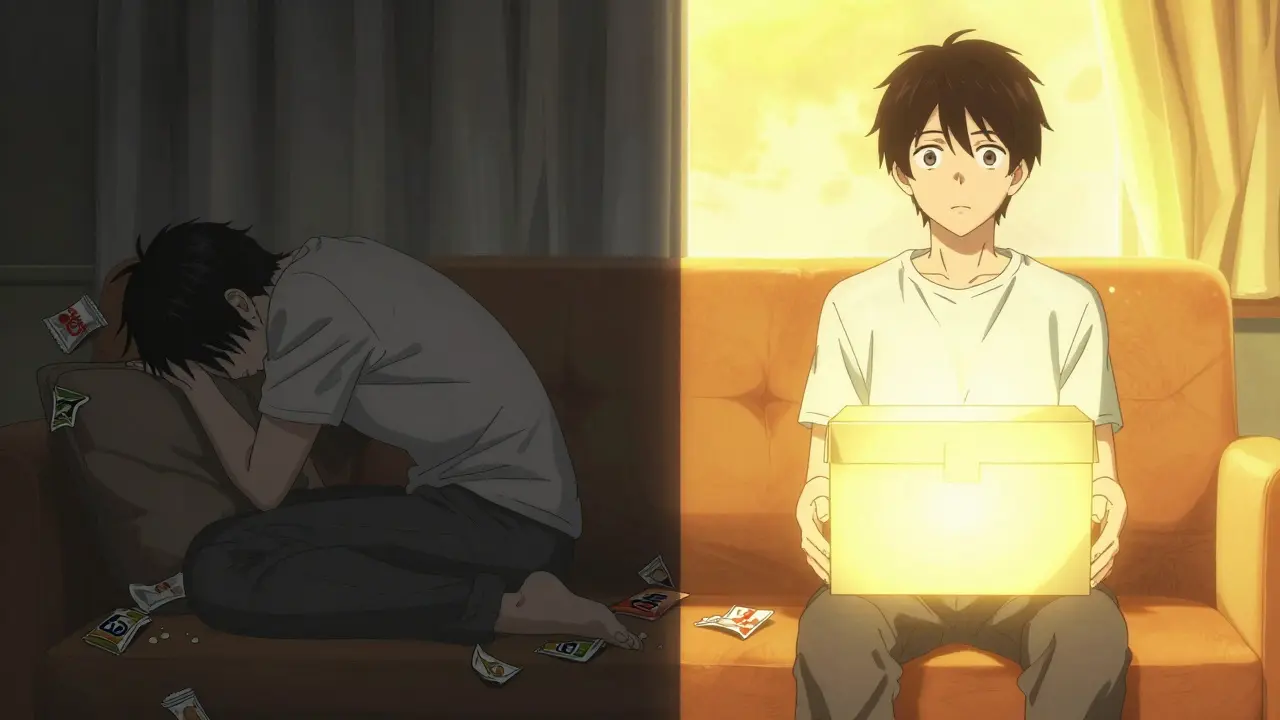
Choosing the Right Light Box
Not all bright lights are created equal. A regular LED desk lamp won’t cut it. You need a device built for therapy.
Look for these features:
- 10,000 lux output-this is the standard used in most clinical trials. Lower intensity (like 2,500 lux) requires longer sessions-up to 2 hours-and isn’t as reliable.
- UV-free-harmful ultraviolet rays can damage your eyes. Reputable devices filter out 99% of UV light.
- Full-spectrum white light-some newer models use blue light (460-480 nm), which may be more efficient, but white light is still the clinical gold standard.
- Size and placement-the light should be large enough to cover your peripheral vision. Position it slightly off to the side, not directly in front of your face.
Prices range from $100 to $300. The Carex Day-Light Classic Plus, a popular model with over 2,800 Amazon reviews, has a 4.4-star rating. About 68% of users report clear mood improvement within two weeks. But don’t buy cheap knockoffs. A 2024 Consumer Reports test found that 37% of non-certified light boxes didn’t deliver the advertised brightness.
For those who struggle with morning routines, dawn simulators (which slowly brighten your room before you wake up) or portable light visors (worn like sunglasses) are alternatives. But they’re less proven.
When Light Therapy Doesn’t Work
It’s not magic. About 40 to 60% of people respond well. The rest don’t. Why?
Timing matters. If you use the light box at 6 p.m. instead of 7 a.m., you might not get the same benefit. Morning exposure is key. One study showed 68% of people who used light therapy in the morning went into remission, compared to just 47% who used it in the evening.
Consistency is just as important. Skipping a day or two can undo progress. People who stick with it long-term say the hardest part isn’t the light-it’s making themselves sit in front of it every morning, especially when it’s cold and dark outside.
Some people get side effects: eye strain, headaches, or nausea. These are usually mild and go away after a few days. If they don’t, lower the intensity or shorten the session.
And here’s a big warning: if you have bipolar disorder, light therapy can trigger mania. About 5 to 10% of people with bipolar disorder experience this. Always talk to a doctor before starting if you’ve ever had manic episodes.

Real People, Real Results
Reddit’s r/SAD community has over 145,000 members. One user, WinterSurvivor89, wrote: “After using my light box every morning since October, my energy jumped in five days. My depression score dropped from 22 to 8 on the SIGH-SAD scale.”
Another, LightBoxSkeptic, said: “I tried three different boxes over two winters. Nothing changed. Just eye strain and frustration.”
That’s the reality. For some, it’s life-changing. For others, it does nothing. The difference often comes down to how well the treatment is used-not the device itself.
A 2023 survey by NAMI found that 61% of people who tried light therapy kept using it. The main reason? “It actually worked.” The 39% who quit said it was too hard to stick with or they didn’t feel better.
What Comes Next?
Light therapy is expanding beyond winter depression. Early studies show promise for perinatal depression in pregnant women-54% went into remission with daily light exposure, compared to 31% in the control group.
Companies are now building smart light systems that sync with your phone or smart home. Stanford University is testing AI-powered devices that adjust light intensity based on your body’s natural rhythms. Those won’t be widely available until late 2025.
Insurance coverage is still rare. Only 18% of U.S. plans cover light boxes. But Aetna and a few others now reimburse up to $200 with a doctor’s note. As evidence grows, more insurers are likely to follow.
For now, if you’re struggling with winter blues that won’t go away, light therapy is one of the safest, fastest, and most effective options you can try without a prescription.
How to Start
Here’s a simple plan:
- Get a certified 10,000 lux light box (avoid cheap, uncertified models).
- Use it every morning within one hour of waking up.
- Sit 16-24 inches away, eyes open, but don’t stare at the light.
- Do something calm-read, eat breakfast, or work on your laptop.
- Stick with it for at least two weeks before judging results.
- If you have bipolar disorder, eye disease, or are pregnant, talk to your doctor first.
You don’t need to be perfect. Even 20 minutes a day can help. But if you skip days, you’ll likely feel the difference.
Winter doesn’t have to be a season of darkness. With the right light, you can reclaim your energy, your mood, and your days.
Is light therapy safe for everyone?
Light therapy is generally safe for most people, but it’s not for everyone. People with bipolar disorder have a 5-10% risk of triggering mania or hypomania, especially if the light is used too late in the day. Those with eye conditions like glaucoma, diabetic retinopathy, or macular degeneration should consult an ophthalmologist first. Also, avoid light therapy if you’re taking photosensitizing medications like certain antibiotics or acne treatments. Always check with your doctor if you’re unsure.
How long until I feel better with light therapy?
Most people notice improvements within 3 to 7 days. Energy levels often rise first, followed by mood. By the end of two weeks, many report significant relief from fatigue, oversleeping, and cravings. If you don’t feel any change after 14 days, you may need to adjust the timing, intensity, or duration-or consider other treatments.
Can I use a regular bright lamp or LED bulb instead of a light box?
No. Regular lamps don’t provide enough intensity. A typical indoor light is around 500 lux. Light therapy requires 10,000 lux-20 times brighter. Even a bright desk lamp won’t deliver the same effect. Also, most household lights emit UV radiation or have the wrong color spectrum. Only devices designed for therapeutic use are proven to work.
Do I need a prescription for a light therapy device?
No, you don’t need a prescription to buy a light box. They’re available over the counter. But if you want insurance to cover part of the cost, you’ll need a doctor’s note. Some plans, like Aetna, now reimburse up to $200 with a diagnosis of SAD. Even without insurance, most devices cost between $100 and $200-less than a month’s supply of antidepressants.
Can light therapy help with non-seasonal depression?
Yes. A major 2024 study in JAMA Psychiatry found that light therapy helped 41% of people with non-seasonal major depression go into remission, compared to 23% in the control group. It’s not yet a first-line treatment for this group, but evidence is growing. Doctors are increasingly using it as an add-on to medication or therapy, especially for people who can’t tolerate drugs or want faster results.








Doreen Pachificus
5 Jan 2026 at 06:17I tried light therapy last winter and honestly? It didn't do squat for me. Just sat there staring at a box like a weirdo while drinking coffee. My mood stayed the same. Maybe I did it wrong, but I'm not buying the hype.