


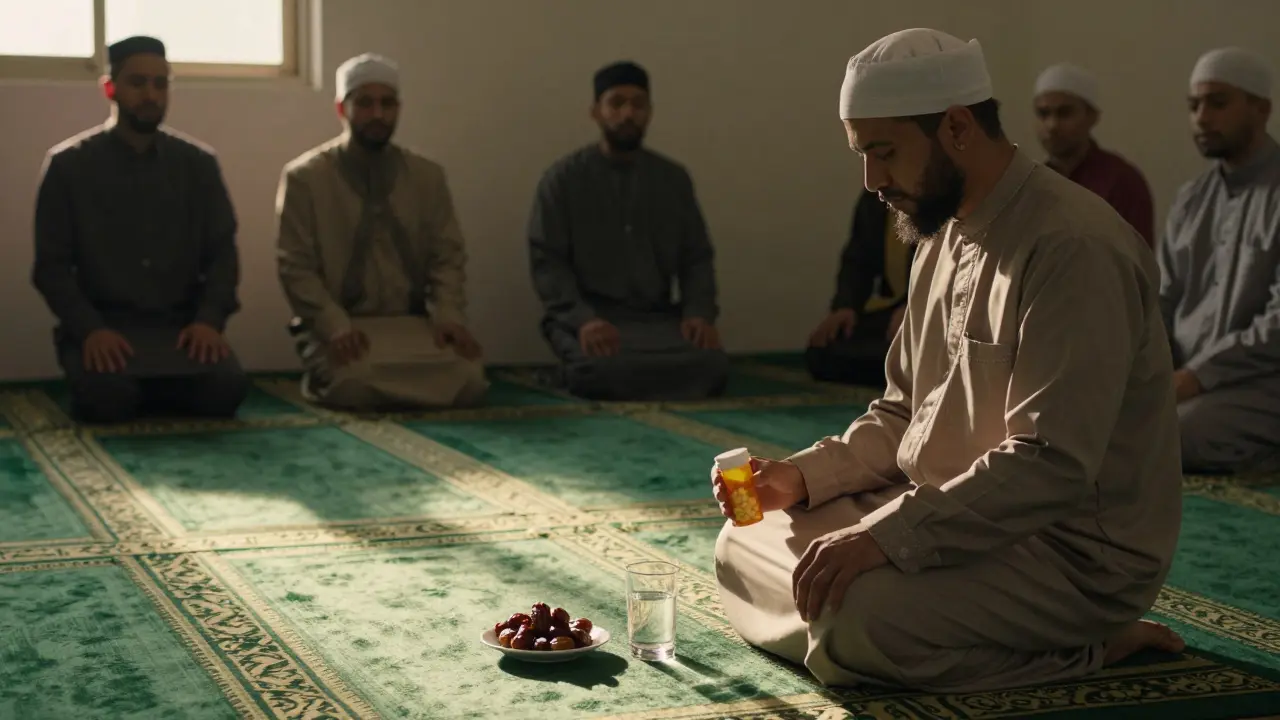

Fasting Medication Planner
Your Fasting Medication Guide
This tool helps you safely adjust your medication schedule during religious fasts. Always consult your doctor before making changes.
Medication Information
Recommended Schedule
Suhoor (Pre-Dawn)
[Recommended time]
Iftar (Sunset)
[Recommended time]
Religious Fasting and Medication Timing: Safe Dosing During Fasts
If you take daily medication and observe a religious fast-like Ramadan, Yom Kippur, or Lent-you’ve probably asked yourself: Can I still take my pills without breaking my fast? It’s not just about willpower. Skipping doses can be dangerous. Taking them at the wrong time can make them useless-or even harmful.
Millions of people worldwide fast for religious reasons. For Muslims alone, that’s over 1.8 billion people. During Ramadan, fasting lasts from dawn to sunset, and that means no food, no water, and no oral medications during those hours. But what about blood pressure meds? Insulin? Thyroid pills? These aren’t optional. Stopping them can lead to hospital visits, heart issues, or worse.
The good news? You don’t have to choose between faith and health. With the right planning, you can fast safely while staying on track with your treatment. It’s not guesswork. It’s science-and it’s been studied for years.
How Fasting Changes How Your Body Uses Medicine
Your body doesn’t stop working when you fast. It just shifts. When you eat, your stomach acid rises, your liver starts processing things differently, and your blood flow changes. All of that affects how your meds work.
Take a simple example: antibiotics. Some need to be taken on an empty stomach. Others need food to be absorbed properly. If you’re only eating twice a day-once before sunrise and once after sunset-you have to time those doses exactly. Take an antibiotic meant for food at dawn, and it might not work. Take one that needs an empty stomach right after dinner, and you could get stomach pain or nausea.
Same goes for blood pressure pills. If you normally take one in the morning and one at night, but now you’re only eating at night and before dawn, you need to shift those doses. Do it wrong, and your blood pressure could spike during the day when you’re not medicated.
Even something as simple as levothyroxine for thyroid problems has rules. It needs to be taken on an empty stomach, at least 30 minutes before anything else. Many people take it first thing in the morning. But during Ramadan, that’s not possible. Studies show that taking it at night, right before Iftar, works just as well-and keeps thyroid levels stable. Some doctors even increase the dose slightly during Ramadan to prevent TSH spikes.
Medication Schedule Adjustments: What Works
There’s no one-size-fits-all plan. But there are clear, evidence-based rules based on how often you take your meds.
- Once-daily meds: Take them either at Suhoor (pre-dawn) or Iftar (sunset). For most people, Iftar works better because it’s easier to remember after a long day. But if your pill needs to be taken on an empty stomach, Suhoor is the safer choice.
- Twice-daily meds: Split them. One dose at Suhoor, one at Iftar. This is the standard for most chronic conditions like high blood pressure, diabetes, or depression. Studies show this keeps drug levels steady without breaking the fast.
- Three or more times a day: This is the tricky one. If you’re supposed to take a pill every 8 hours, fasting makes that impossible. Your doctor may switch you to a longer-acting version. For example, switching from a three-times-daily painkiller to a 12-hour extended-release version. Or switching from propylthiouracil (needed every 4-6 hours) to methimazole (only twice daily) for thyroid disease.
Some meds can’t be adjusted. If you’re on insulin or certain heart medications, skipping doses isn’t safe. But there’s often a workaround. Long-acting insulin can be given once a day. Some blood thinners can be switched to once-daily versions. Your pharmacist can help you find alternatives.

What Medications Are Allowed During Fasting?
Not all meds are created equal. And not all religious traditions treat them the same way.
Oral pills and liquids? Usually not allowed during fasting hours. But what about other forms?
- Injections: Allowed. This includes insulin, epinephrine, vaccines, and hormone shots.
- Inhalers: Allowed. Asthma inhalers don’t count as eating or drinking.
- Eye drops, ear drops, nasal sprays: Generally allowed. They don’t reach the stomach.
- Topical creams and patches: Fine. Skin absorption doesn’t break the fast.
- Suppositories: Often permitted. They’re not swallowed.
But here’s the catch: religious interpretations vary. Some scholars say even eye drops are a gray area. Others say anything that doesn’t enter the digestive tract is okay. That’s why talking to your religious leader is just as important as talking to your doctor.
And don’t assume your pharmacist knows your faith’s rules. Most don’t. But they do know the science. So bring both conversations together.
Special Cases: Diabetes, Heart Disease, and Mental Health
Some conditions need extra care.
Diabetes: This is the most studied. About 24% of Muslims with diabetes experience low blood sugar during Ramadan, even with adjusted meds. If you’re on insulin or sulfonylureas, you’re at higher risk. Your doctor may reduce your dose, switch you to metformin or GLP-1 agonists (which are safer), or recommend checking your blood sugar more often. Never skip your glucose checks just because you’re fasting.
Heart disease: Blood pressure and cholesterol meds need steady levels. Missing doses can raise your risk of stroke or heart attack. Twice-daily meds are usually fine. But if you’re on a beta-blocker or diuretic, your doctor might adjust the timing to avoid nighttime trips to the bathroom or dizziness during the day.
Mental health: Antidepressants, antipsychotics, and anti-anxiety meds shouldn’t be stopped. Skipping them can trigger relapse. Many can be safely taken at Suhoor and Iftar. But some, like lithium, need blood level monitoring. If you’re on lithium, your doctor will likely want to check your levels before and after Ramadan.
What to Do Before Ramadan Starts
Waiting until the first day of fasting to think about meds is risky. You need time.
Here’s your checklist:
- Book a pharmacy appointment 4-6 weeks before Ramadan. Bring your full med list. Ask: Can I adjust timing? Are there longer-acting versions?
- Ask about non-oral options. Can your insulin be switched to a once-daily long-acting type? Can your pain meds be changed to a patch?
- Test your new schedule. Try your adjusted dosing times for a few days before Ramadan. See how you feel. Any dizziness? Nausea? Low energy? Tell your doctor.
- Talk to your religious leader. Get written confirmation if possible. Some mosques have fatwas (religious rulings) on meds during fasting.
- Set up a reminder system. Use your phone, a pill organizer, or apps like MedZed (launched in 2024) that sync with your EHR.
Don’t skip this step. Over 68% of major pharmaceutical companies now include Ramadan guidance in their patient materials. Your meds aren’t an afterthought-they’re part of your faith journey.

What If You Feel Sick During the Fast?
Religious fasting isn’t meant to harm you. Most faiths allow you to break the fast if your health is at risk.
If you feel dizzy, confused, chest pain, extreme thirst, or your blood sugar drops below 70 mg/dL-break the fast. Take your meds. Eat. Drink. Then make up the day later.
There’s no shame in this. In Islam, the Quran says: “And do not kill yourselves [or one another].” The same applies in Judaism, Christianity, and other traditions. Your health is sacred too.
Many people feel guilty about breaking their fast. But if you’re taking your meds safely and still need to eat, that’s not failure. That’s wisdom.
Tools and Resources to Help
You’re not alone. The healthcare world is catching up.
- MedZed Solutions: A Ramadan medication scheduler app launched in early 2024. It syncs with most electronic health records and sends alerts for Suhoor and Iftar doses.
- CVS Health: Offers Ramadan-specific pharmacist consultations and printed guides in multiple languages.
- Islamic Medical Association of North America: Is releasing standardized medication timing guidelines in late 2024.
- UK NHS and American Diabetes Association: Both have published official guidelines for fasting and chronic disease.
Pharmacy schools in the U.S. now teach this in 73% of their programs. That means your pharmacist might actually know what you’re going through. Ask them.
Final Thought: Faith and Science Can Work Together
Fasting isn’t about suffering. It’s about discipline, reflection, and connection. Medicine isn’t about control. It’s about support.
You don’t have to choose between them. With smart planning, you can honor your faith and protect your health at the same time. It’s not magic. It’s just good medicine.
Can I take my pills during fasting hours if I really need them?
Oral medications break the fast in most religious traditions because they enter the digestive system. But if your health is at risk, you’re allowed-and often encouraged-to break the fast to take your medicine. Your faith doesn’t require you to endanger yourself. Talk to your doctor and religious leader to find a safe balance.
What if my medication needs to be taken three times a day?
If you need to take a pill every 8 hours, fasting makes that impossible. Your doctor may switch you to a once- or twice-daily version. For example, switching from a short-acting painkiller to an extended-release one, or from propylthiouracil to methimazole for thyroid disease. Never stop your meds-ask for alternatives.
Are injections and inhalers allowed during fasting?
Yes. Injections, insulin pens, asthma inhalers, nasal sprays, eye drops, and skin patches don’t break the fast because they don’t enter the digestive tract. Most religious authorities agree on this. But confirm with your spiritual leader if you’re unsure.
Should I stop my blood pressure meds during Ramadan?
No. Stopping blood pressure medication can lead to dangerous spikes. Instead, adjust the timing. Take one dose at Suhoor and one at Iftar. Avoid changing doses unless your doctor advises it. Monitoring your blood pressure at home during Ramadan is strongly recommended.
How do I know if my fasting is affecting my medication?
Watch for signs like dizziness, extreme fatigue, confusion, rapid heartbeat, or unusual swelling. If you have diabetes, check your blood sugar more often. If your symptoms are new or worse, contact your doctor. A simple blood test can tell if your medication levels are too high or too low.
Can I fast if I’m on antidepressants?
Yes, but only with planning. Most antidepressants can be taken at Suhoor and Iftar. But if you’re on lithium or certain mood stabilizers, you’ll need blood tests before and after Ramadan. Never stop your meds. Talk to your psychiatrist and pharmacist to adjust timing safely.
Is it safe to fast with kidney disease?
It depends. If you’re on dialysis or have advanced kidney disease, fasting can be dangerous. Dehydration and electrolyte imbalances can worsen your condition. Many doctors advise against fasting in these cases. Always consult your nephrologist before deciding.









Katherine Blumhardt
24 Dec 2025 at 20:20I took my blood pressure meds at suhoor last year and nearly passed out by 2pm. 🤦♀️ Turned out my doc didn’t know Ramadan even existed. Now I take one at suhoor, one at iftar. Life changed.