Grief vs. Depression: How to Tell Them Apart and Support Real Recovery

Grief vs. Depression: How to Tell Them Apart and Support Real Recovery

When someone you love dies, it’s normal to feel broken. You cry. You can’t sleep. You don’t want to eat. You feel like the world has stopped. But is this grief-or is it depression? The difference isn’t just academic. It changes everything: how you heal, who helps you, and whether you find your way back to life-or get stuck in the dark.

What grief actually feels like

Grief isn’t a straight line. It doesn’t follow stages like denial, anger, bargaining, depression, acceptance. That model was never meant to be a roadmap. Real grief comes in waves. One minute you’re laughing at a memory of your partner singing off-key in the kitchen. The next, you’re on the floor, gasping for air because you forgot they were gone.

The pain is sharp, but it’s tied to something specific: the person you lost. You miss their voice. You keep reaching for your phone to text them. You notice their favorite coffee shop is still open. You feel guilty for smiling. But you also feel grateful-for the time you had, for the way they made you feel seen.

Research from Columbia University shows that 87% of people with prolonged grief report this intense, persistent longing as their main symptom. It’s not just sadness. It’s a physical ache. A hollow space where someone used to be. And it doesn’t go away because you’re supposed to ‘get over it.’ It changes because you learn to carry it differently.

What depression looks like when it’s not tied to loss

Depression doesn’t ask for permission. It doesn’t wait for a funeral. It just shows up one day, heavy and silent, and stays. You wake up and there’s no spark. No joy in anything-not the coffee, not the sun, not your dog’s goofy face. You feel worthless. Not because you miss someone, but because you feel like you’re nothing at all.

The National Institute of Mental Health says over 17 million American adults have major depressive disorder each year. The symptoms are clear: low mood most of the day, nearly every day. Loss of interest in almost everything. Weight changes. Trouble sleeping or sleeping too much. Fatigue that doesn’t go away. Trouble concentrating. Feelings of guilt-not tied to a specific event, but just… there. Like you’re a burden.

A 2017 study found that 93% of people with depression reported feelings of worthlessness. That’s not grief. That’s a different kind of pain. Grief is about missing someone. Depression is about feeling like you don’t matter.

The key difference: Where does the pain point?

Here’s the simplest way to tell them apart: Is the pain about the person you lost-or about yourself?

If you’re grieving, your thoughts go to them. You replay conversations. You imagine what they’d say if they were here. You feel sadness mixed with love. Even in the worst moments, there’s a flicker of warmth-because you remember them.

If you’re depressed, your thoughts turn inward. You blame yourself. You think you’re broken. You feel empty, not just sad. You don’t want to talk about the person who died because even thinking about them feels like another weight. You don’t smile at memories. You don’t feel grateful. You just feel numb.

A 2020 meta-analysis of over 25,000 people confirmed this: grief has waves. Depression is a flat line. One has light in it. The other doesn’t.
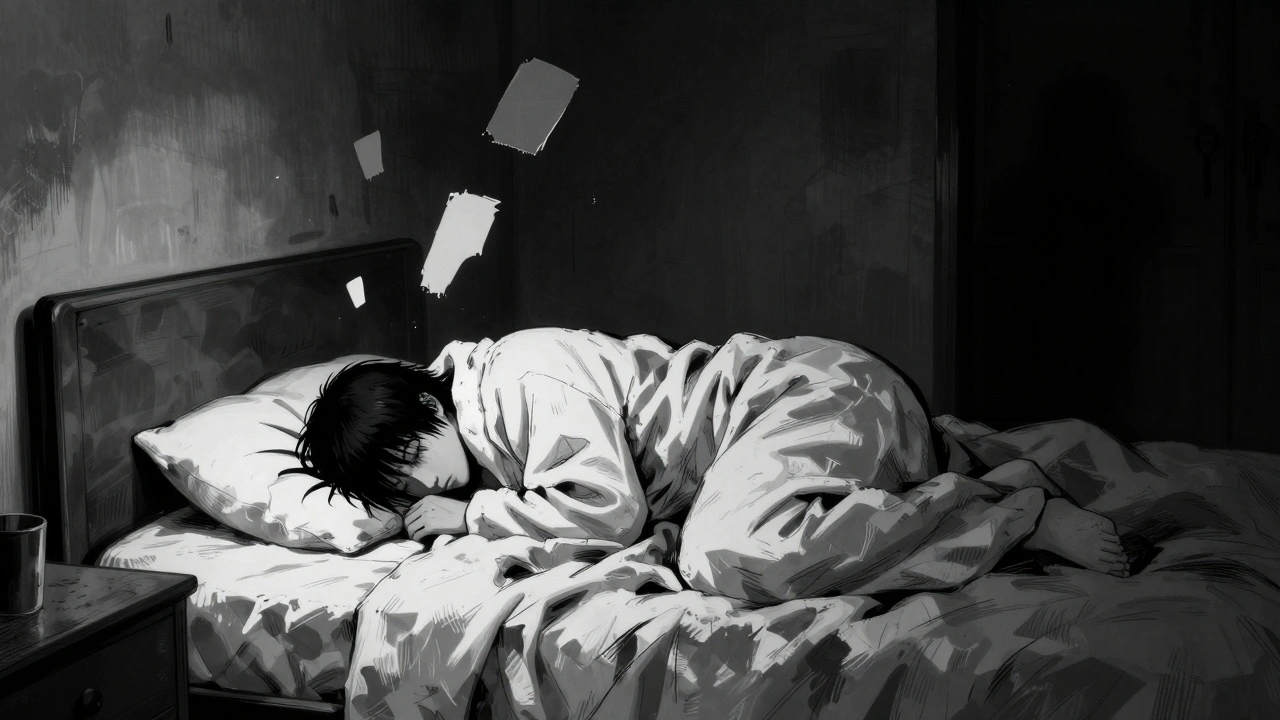
A person curled in bed in darkness, surrounded by abstract shadows representing emotional numbness and worthlessness.

When grief becomes something more

Grief doesn’t always stay grief. Sometimes, it turns into something called Prolonged Grief Disorder. This isn’t just ‘being sad for a long time.’ It’s when the pain doesn’t soften. When you can’t accept the death. When you avoid anything that reminds you they’re gone-or cling to everything that reminds you they’re not.

The World Health Organization and the American Psychiatric Association now recognize this as a real condition. You’re diagnosed if, after six months (or a year for kids), you still have:

  • Intense yearning for the deceased
  • Preoccupation with thoughts or images of them
  • Emotional pain so deep it stops you from living
  • Difficulty accepting the death
  • Feeling numb or detached from life
  • Loss of purpose or identity
And it’s not rare. Studies show about 1 in 10 people who lose a loved one develop this. That’s 100,000 Australians alone each year. But most don’t know it has a name. Or that it can be treated.

How treatment is different

Antidepressants don’t fix grief. They might help with sleep or appetite, but they won’t bring back the missing person. And they won’t help you learn to live with the loss.

For uncomplicated grief, the best medicine is time-and connection. Talking to friends. Sharing stories. Lighting a candle on their birthday. Writing letters you’ll never send. Most people start to feel better within six months, even without therapy.

But if it’s Prolonged Grief Disorder? That’s where specialized therapy works. Complicated Grief Treatment (CGT), developed by Columbia University, is the gold standard. It’s 16 weekly sessions focused on:

  • Retelling the story of the death
  • Reconnecting with memories-not avoiding them
  • Rebuilding a sense of purpose
  • Re-engaging with life
One study found 70% of people who did CGT saw their symptoms drop by half or more.

Depression? That’s different. It responds to cognitive behavioral therapy (CBT) and often to medication like sertraline. The STAR*D trial showed that combining therapy and medication gives the best results. But if you’re grieving and you’re given antidepressants without talking about the loss-you’re being treated for the wrong thing.

What to do if you’re not sure

If you’re unsure whether you’re grieving or depressed, ask yourself:

  • Do I still feel joy when I remember them?
  • Do I feel worthless, or just heartbroken?
  • Do I want to be around people, or do I want to disappear?
  • Has this lasted more than six months and is it getting worse?

If you answered ‘no’ to joy, ‘yes’ to worthlessness, ‘no’ to wanting connection, and ‘yes’ to lasting longer than six months-you might be dealing with depression or Prolonged Grief Disorder.

Talk to your doctor. Or a therapist who specializes in grief. Don’t wait. Don’t assume it’s ‘just grief.’ If you’re stuck, you deserve help.

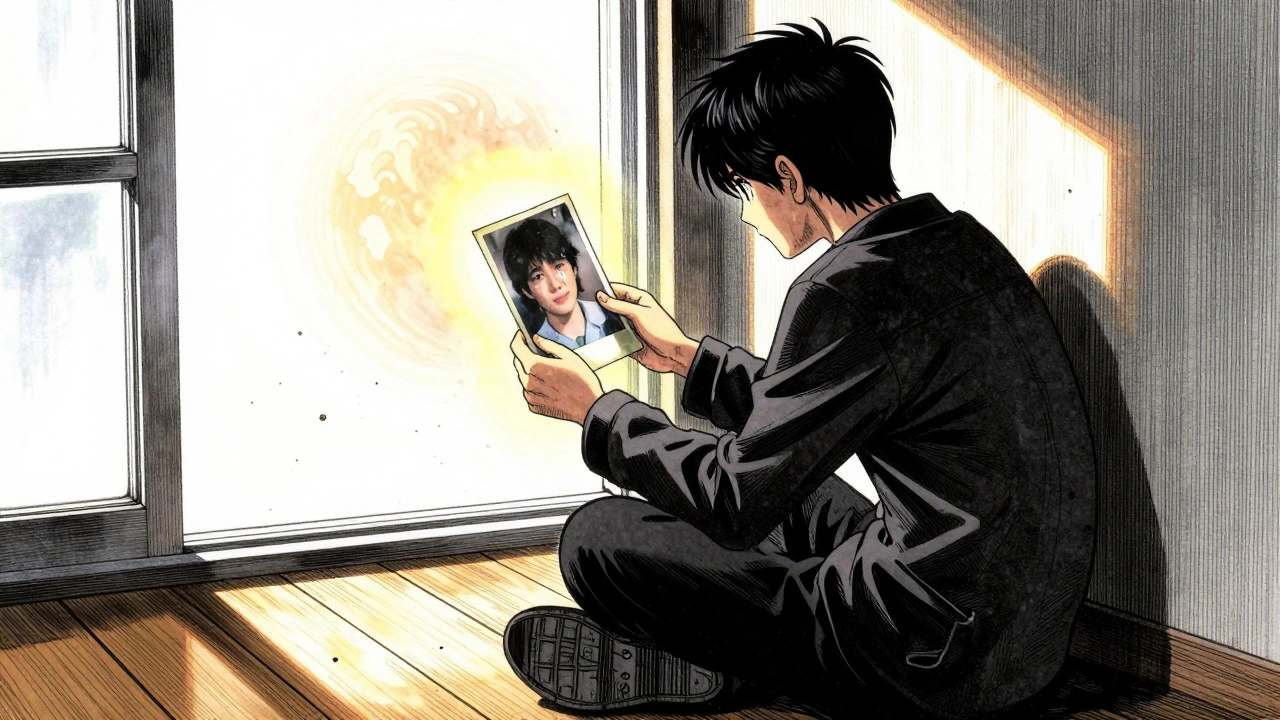
A therapist and grieving person connected by golden light, with floating memories of the lost loved one around them.

How to support someone who’s grieving

Don’t say, ‘They’re in a better place.’ Don’t say, ‘You’ll get over it.’ Don’t say, ‘At least they’re not suffering.’

Say this instead:

  • ‘I’m here.’
  • ‘I remember when they…’
  • ‘It’s okay to not be okay.’
  • ‘Would you like to talk about them?’
Bring food. Sit in silence. Don’t fix it. Just be there. People who are grieving need connection, not solutions.

If someone you care about is withdrawing, sleeping all day, or talking about not wanting to live-don’t brush it off. Ask directly: ‘Are you thinking about hurting yourself?’ That question doesn’t plant the idea. It opens the door.

The rise of grief support

The mental health world is finally catching up. In 2023, the U.S. government spent $285 million on grief services-up 42% since 2020. Telehealth platforms like BetterHelp saw grief-related therapy sessions jump 127% between 2019 and 2022.

New tools are emerging. An app called GriefShare, tested in a 2023 clinical trial, reduced symptoms of Prolonged Grief Disorder by 42% in 12 weeks. That’s not a cure. But it’s a lifeline.

And there are now over 4,200 certified grief counselors in the U.S. alone. You don’t have to suffer alone. Help exists.

Recovery isn’t about forgetting

You won’t ‘get over’ losing someone you love. You’ll learn to carry them with you. That’s not weakness. That’s love.

Grief is the price of connection. Depression is the weight of isolation.

If you’re grieving, you’re not broken. You’re human.

If you’re depressed, you’re not lazy. You’re sick.

And if you’re not sure which one you’re feeling? That’s okay. Ask for help. It doesn’t make you weak. It makes you brave.

grief vs depression prolonged grief disorder major depressive disorder bereavement support grief therapy
Eldon Beauchamp
Eldon Beauchamp
Hello, my name is Eldon Beauchamp, and I am an expert in pharmaceuticals with a passion for writing about medication and diseases. Over the years, I have dedicated my time to researching and understanding the complexities of drug interactions and their impact on various health conditions. I strive to educate and inform others about the importance of proper medication use and the latest advancements in drug therapy. My goal is to empower patients and healthcare professionals with the knowledge needed to make informed decisions regarding treatment options. Additionally, I enjoy exploring lesser-known diseases and shedding light on the challenges they present to the medical community.
  • Maria Elisha
    Maria Elisha
    9 Dec 2025 at 05:06

    ive been through this and honestly the line between grief and depression is so blurry sometimes. i thought i was just grieving my mom but turns out i was depressed too. no joy in anything, not even when i heard her favorite song. it took a year and a therapist who actually knew what they were doing to figure it out. dont wait like i did.

  • Katherine Chan
    Katherine Chan
    9 Dec 2025 at 08:09

    thank you for writing this i needed to read this today. i lost my brother last year and people keep telling me to move on but i dont want to move on i want to carry him with me too. the part about grief being the price of connection hit me right in the chest. youre not alone if you feel this way. love you all

  • Olivia Portier
    Olivia Portier
    9 Dec 2025 at 10:45

    omg yes this is so real i work as a hospice volunteer and so many people think grief is just sadness for a few months but no its a whole new language you have to learn how to speak. the waves thing is so accurate one day you laugh at a dumb memory next day you cant get out of bed. and please stop saying theyre in a better place just say i remember when they did that thing with the socks lol

  • Steve Sullivan
    Steve Sullivan
    11 Dec 2025 at 02:46

    so many people dont realize grief can turn into p.g.d. and its not weakness its biology. i had it after my wife died. antidepressants did nothing. cgt saved my life. 16 sessions. no magic. just structure. now i coach others through it. if you're reading this and stuck? reach out. you deserve to feel alive again 🌱

  • George Taylor
    George Taylor
    12 Dec 2025 at 13:30

    ...this article is... overly simplistic... and dangerously misleading... the DSM-5-TR doesn't even fully endorse Prolonged Grief Disorder as a standalone diagnosis... and you're just telling people to go to therapy? what about biological factors? neurotransmitter imbalances? pharmaceutical industry influence? you're ignoring the complexity... and promoting a narrative... that's... commercially convenient... and... emotionally manipulative...

  • Ajit Kumar Singh
    Ajit Kumar Singh
    13 Dec 2025 at 08:32

    in india we dont have words for grief or depression we just say dard hai or man lagta hai. my sister lost her husband and everyone said time will heal. but she stopped eating stopped talking stopped living. no one knew what to do. finally a counselor came from delhi and said this is not normal sadness. this is grief that turned into something else. we need more awareness here. not just in usa

  • Lisa Whitesel
    Lisa Whitesel
    14 Dec 2025 at 13:33

    Stop romanticizing grief. Depression is depression. Grief is an emotional response. Stop pretending they’re different diseases. You’re just giving people excuses to avoid taking responsibility for their mental health. If you’re not functioning, get help. Stop labeling everything as grief so you don’t have to face the truth. You’re not special. You’re just sad.

  • Larry Lieberman
    Larry Lieberman
    14 Dec 2025 at 17:03

    wait so if you still cry at their favorite song after 2 years is that grief or depression? 🤔

Write a comment