


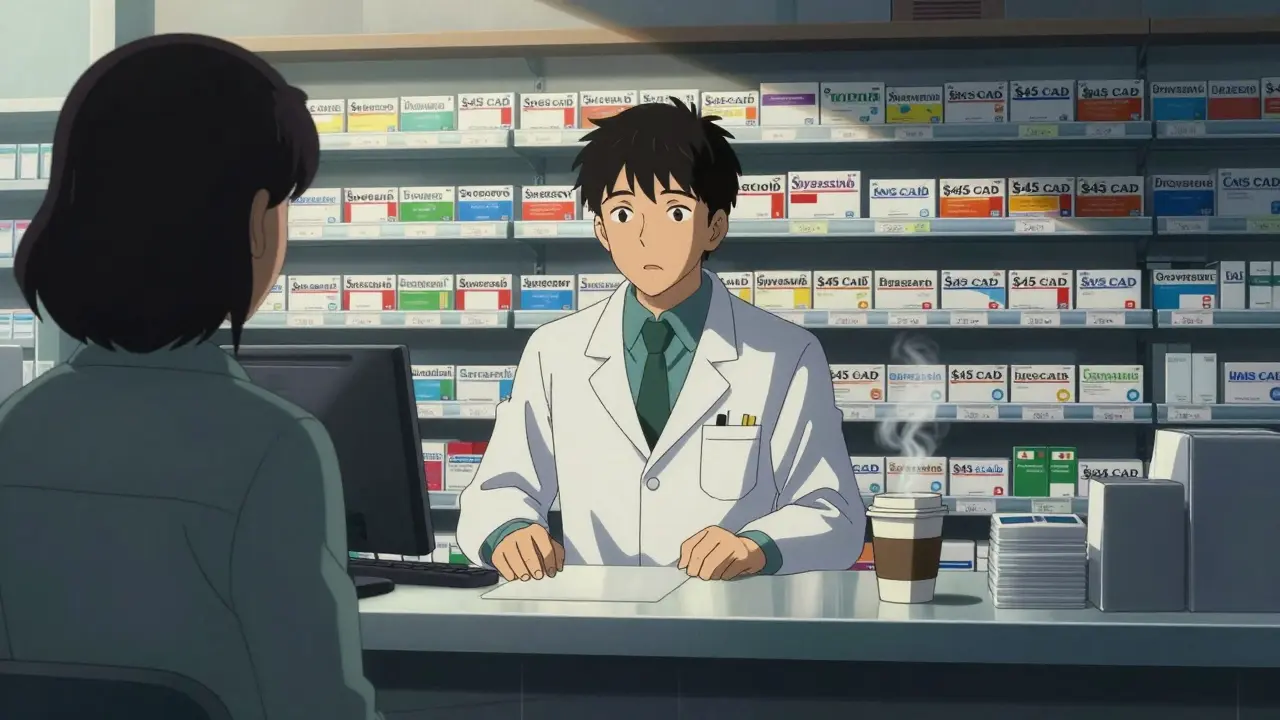

When you walk into a pharmacy in Canada or the United States, you might expect the same generic pills at similar prices. But the reality is far from it. In Canada, a 90-day supply of generic atorvastatin might cost you $45 CAD. In the U.S., the same dose from a mail-order pharmacy can be as low as $12. Why? Because Canada and the U.S. don’t just have different drug prices-they have completely different systems for how generics work.
How Canada Controls Generic Drug Prices
Canada doesn’t let the market decide how much generic drugs cost. Instead, it uses a centralized system called the pan-Canadian Pharmaceutical Alliance (pCPA) a collaborative body of provincial and territorial health ministries that negotiates drug prices on behalf of public drug plans. This group talks to drug makers after a brand-name drug’s patent expires and sets a maximum price for generics. This price then becomes the benchmark for public insurance plans across the country.The pCPA doesn’t just set one price. It uses a tiered system based on how many companies make the same generic drug. If only one company sells it, the price is higher. If five companies are competing, the price drops. This system was renewed in October 2023, and since 2010, it’s saved Canadian public drug plans over $4 billion.
But here’s the twist: the Patented Medicine Prices Review Board (PMPRB) a federal agency that regulates the prices of brand-name drugs in Canada to prevent excessive pricing only controls prices for drugs still under patent. Once a drug becomes generic, the PMPRB has no say. That means generic prices are entirely managed by the pCPA and provincial rules.
The U.S. System: Competition Over Control
The United States does the opposite. There’s no federal agency setting prices for generics. Instead, the market decides. When a brand-name drug loses its patent, any company can make a copy. The first one to file gets 180 days of exclusive rights. After that, dozens of companies jump in.That’s why the average U.S. generic drug has 7.3 manufacturers making it. In Canada, it’s only 3.8. More companies mean more competition, which drives prices down fast. In the U.S., generic prices often drop 80-90% within six months of launch. In Canada, it takes 18 to 24 months for the same price drop to happen because of the negotiation process.
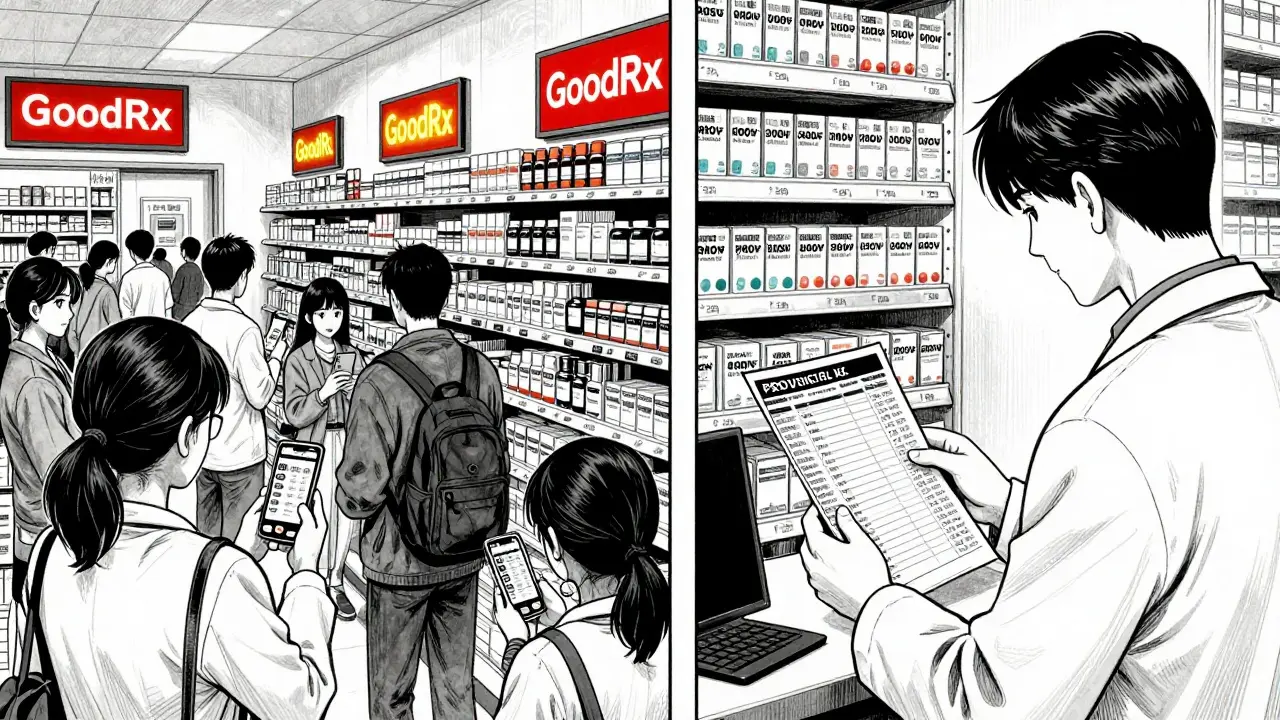
U.S. pharmacies rely on tools like GoodRx to help patients find the lowest price. But that means consumers have to shop around. A 2022 study found that 63% of Americans need to check three or more pharmacies to get the best deal. In Canada, because prices are standardized across public plans, patients usually only need to check one pharmacy.
Why Canadian Generics Are Sometimes More Expensive
It sounds backwards, but Canada’s system sometimes results in higher generic prices than the U.S. PharmacyChecker’s 2023 study found that 88% of the top 34 prescribed generics were cheaper in the U.S. Seven specific generic drugs were actually more expensive in Canada-even though Canada spends far less overall on drugs.This isn’t because Canadian drug makers are greedy. It’s because the system is designed differently. With fewer manufacturers and no forced price wars, companies don’t have to slash prices to survive. The pCPA sets a price that’s low enough to save money for public plans, but not low enough to trigger a race to the bottom.
Meanwhile, the U.S. has thousands of pharmacies, mail-order services, and discount programs pushing prices down. Walmart and Costco sell many generics for under $4. CVS and Walgreens offer $10 lists. These programs don’t exist in Canada in the same way.
Shortages: Canada Wins on Reliability
Here’s where Canada’s system shines: avoiding drug shortages. In 2022, when albuterol inhalers ran out across North America, hospitals in Calgary got priority shipments through Health Canada’s intervention. Meanwhile, hospitals in Seattle waited weeks.Canada has a proactive approach. Health Canada tracks supply chains, works with manufacturers to boost production, and even allows private labeling so pharmacies can source from alternative suppliers. In the U.S., the FDA reacts after shortages happen. A 2023 JAMA study found that sole-source generic drugs in the U.S. were 2.5 times more likely to have shortages than in Canada.
Over 90% of all drug shortages in both countries involve generics. But in Canada, even when a drug is sole-sourced, the system has backup plans. In the U.S., if one company stops making a drug and no one else is ready, patients go without.
Who Pays? Public vs. Private Coverage
In both countries, about half of prescriptions are paid for by public insurance and half by private plans. But Canada’s public system is stronger. Public drug plans cover seniors, low-income residents, and many provincial programs for children. In the U.S., Medicare Part D covers seniors, but it’s fragmented, with private insurers running most plans.Canada has 67% of its population with private drug coverage. The U.S. has 54%. That means more Canadians have access to the same standardized prices whether they’re on public or private insurance. In the U.S., your price depends entirely on your insurance plan’s formulary, pharmacy network, and deductible.
Pharmacists’ Experience: More Work in Canada
Canadian pharmacists spend 5-7 hours a week managing drug pricing issues. Why? Because they have to check which tier a generic falls into, what the provincial price is, and whether the patient’s plan covers it. They’re juggling different rules from 10 provinces and territories.U.S. pharmacists spend 3-4 hours a week on similar tasks. Their main headache? Navigating dozens of private insurer formularies. But they don’t have to worry about provincial price lists. They just pull up the GoodRx price or call the pharmacy benefit manager.
One Canadian pharmacist told a 2023 survey: "I spend more time explaining why a $12 drug in the U.S. costs $45 here than I do counseling patients on side effects."
What’s Next? Rising Prices and Cross-Border Pressure
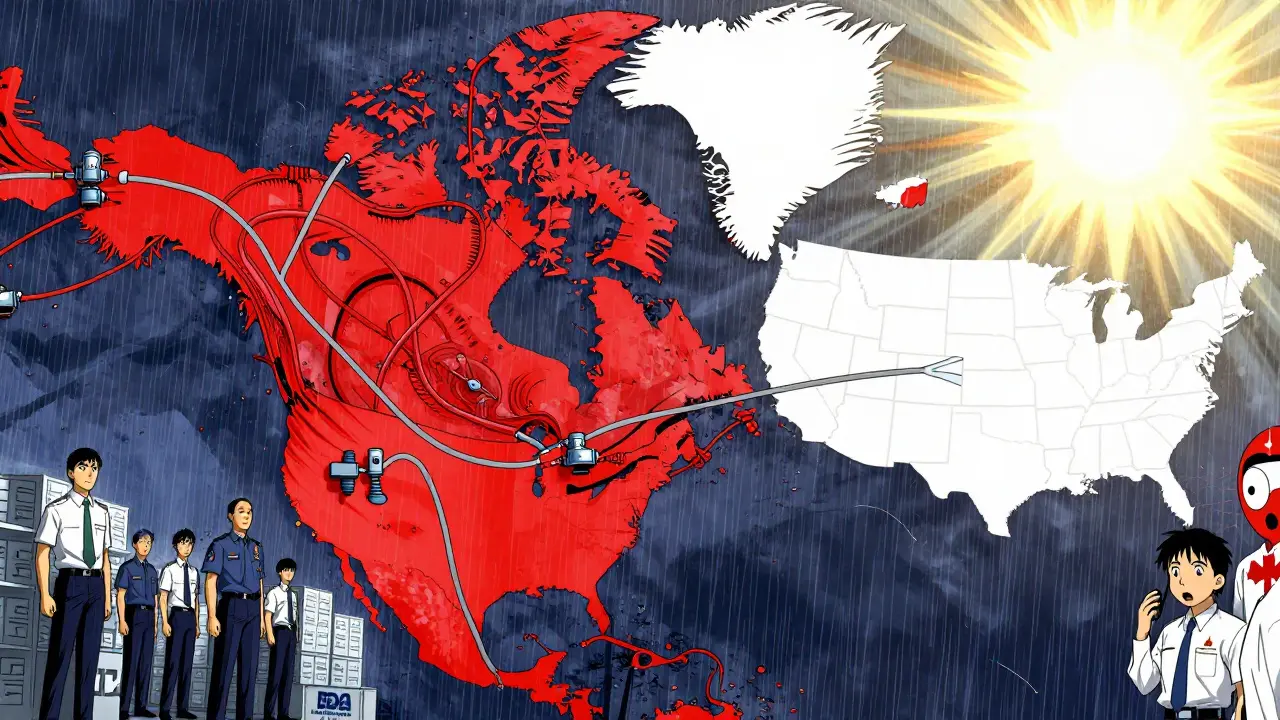
Canada’s generic prices are expected to rise 15-20% by 2025 due to global supply chain issues and inflation. Meanwhile, U.S. prices are projected to keep falling by 5-8% per year.The U.S. keeps trying to import cheaper Canadian drugs. Vermont, Colorado, and soon Florida passed laws to allow it. But Canada has pushed back. In January 2023, it launched the Supply Chain Resilience Framework to stop Canadian drugs from being shipped south in bulk.
Experts are split. Harvard’s Dr. Steffie Woolhandler says the U.S. wins on price but loses on reliability. Toronto’s Dr. Aisha Lofters warns that higher Canadian prices could break the system if they keep rising. Meanwhile, the Fraser Institute argues Canada’s control system creates perverse incentives-drug makers focus on non-patented drugs because they can charge more.
But Canada’s defenders point to the bigger picture: the country spends $814 per person on prescription drugs. The U.S. spends $1,432. That’s a 43% difference. Canada’s system isn’t perfect, but it keeps drugs affordable for everyone-not just those who can shop around or afford high-deductible plans.
Final Takeaway: Stability vs. Savings
Canada’s system is built for fairness and stability. It doesn’t guarantee the lowest price, but it guarantees access. The U.S. system is built for competition. It delivers the lowest prices for those who know how to hunt for them-but leaves others behind during shortages or when insurance denies coverage.If you care about knowing your drug will be available when you need it, Canada’s system works better. If you care about paying the absolute lowest price and you’re willing to shop around, the U.S. wins.
There’s no clear "better" system. Just two different values: one prioritizes equity and reliability. The other prioritizes market freedom and cost savings.
Why are generic drugs more expensive in Canada than in the U.S.?
Canada doesn’t allow free-market competition for generics like the U.S. does. Instead, the pan-Canadian Pharmaceutical Alliance (pCPA) negotiates a single price for each generic drug across all provinces. With fewer manufacturers (average of 3.8 per drug vs. 7.3 in the U.S.), there’s less pressure to lower prices. The system aims for stable, predictable costs for public health plans-not the lowest possible price.
Does Canada have drug shortages like the U.S.?
Yes, but less frequently and for shorter periods. Canada’s Health Canada actively monitors supply chains, works with manufacturers to prevent shortages, and can authorize alternative suppliers or private labeling. In the U.S., shortages often go unaddressed until they’re critical. Studies show sole-source generic drugs are over twice as likely to have shortages in the U.S. compared to Canada.
Can Americans buy cheaper drugs from Canada?
Technically yes, but it’s not legal under federal law. The U.S. FDA has never approved any importation program from Canada, even though states like Vermont and Colorado have passed laws allowing it. Canada has responded by strengthening its supply chain rules to prevent bulk exports that could cause domestic shortages.
Which country has a higher generic dispensing rate?
The U.S. has a higher rate: about 90% of prescriptions filled are generics. Canada’s rate is around 83%. This is partly because Canada’s price negotiation process takes longer-sometimes over a year-after a brand-name drug loses its patent. In the U.S., generics flood the market within months.
Do Canadian pharmacists earn more because of the complexity?
No. Canadian pharmacists don’t earn more per prescription. In fact, they spend significantly more time-5 to 7 hours a week-on pricing and coverage issues than U.S. pharmacists, who spend 3 to 4 hours. The extra work doesn’t translate to higher pay; it just means more administrative burden.
Is Canada’s system sustainable with rising generic prices?
It’s under pressure. Generic prices in Canada are projected to rise 15-20% by 2025 due to global inflation and supply chain issues. While the pCPA has saved billions so far, rising costs could strain provincial budgets. Experts warn that without reforms-like encouraging more manufacturers or adjusting tiered pricing-the system’s cost-saving benefits could shrink.





Shae Chapman
1 Jan 2026 at 02:53I just paid $48 for my mom's atorvastatin in Texas 😭 I literally cried at the pharmacy. Meanwhile my cousin in Toronto pays $45 and gets it delivered to her door with zero stress. Why are we still pretending this system works? 🥲