


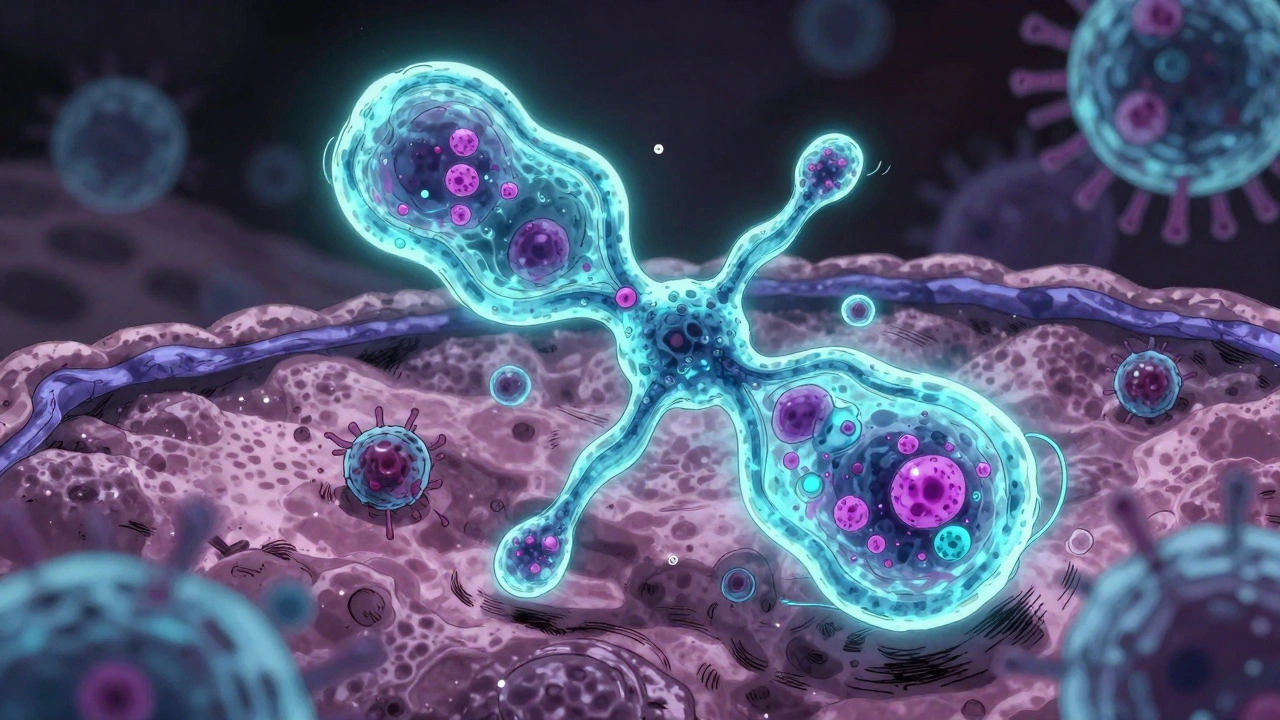

When you hear the word biosimilar, you might think it’s just another generic drug. But that’s not true. Monoclonal antibody biosimilars aren’t copies in the way aspirin or metformin are. They’re complex, living medicines made from living cells-like tiny protein machines designed to target cancer or autoimmune diseases. And even though they’re not identical to the original, they work just as well, with the same safety profile. That’s not magic. It’s science. And it’s changing how we treat serious illnesses-especially cancer.
What Makes Monoclonal Antibody Biosimilars Different
Think of a small-molecule drug like ibuprofen. It’s a simple chemical formula. Make it in a lab, and every pill is the same. Now think of a monoclonal antibody. It’s a protein made up of thousands of atoms, folded in precise 3D shapes, and decorated with sugar molecules (glycans) that affect how it works. These proteins are grown in living cells-usually Chinese hamster ovary cells-and even tiny changes in temperature, pH, or nutrient mix can shift the final product slightly. That’s why a biosimilar isn’t a copy. It’s a highly similar version. The U.S. FDA and the European Medicines Agency both require manufacturers to prove there are no clinically meaningful differences in safety, purity, or potency. That means you can’t just swap out the ingredients and call it done. You need to run over 100 analytical tests, test it in animals, and then run clinical trials in humans to show it behaves just like the original. The first monoclonal antibody biosimilar approved anywhere was infliximab (a version of Remicade), cleared by the EMA in 2013. The U.S. followed with Zarxio (a filgrastim biosimilar) in 2015-but that’s not a monoclonal antibody. The first U.S. monoclonal antibody biosimilar was Mvasi, a version of bevacizumab (Avastin), approved in 2017.Key Examples and What They Treat
There are now dozens of approved monoclonal antibody biosimilars. Here are the most common ones and the conditions they’re used for:- Bevacizumab biosimilars (Avastin): Used for colorectal, lung, ovarian, and brain cancers. Six versions are approved in the U.S., including Mvasi, Zirabev, and Avzivi.
- Rituximab biosimilars (Rituxan): Treats non-Hodgkin’s lymphoma, chronic lymphocytic leukemia, and rheumatoid arthritis. Truxima, Ruxience, and Riabni are the three approved in the U.S.
- Trastuzumab biosimilars (Herceptin): Targets HER2-positive breast and stomach cancers. Six biosimilars are approved, including Ogivri, Kanjinti, and Hercessi.
- Adalimumab biosimilars (Humira): Used for rheumatoid arthritis, psoriasis, Crohn’s disease. Hyrimoz was the first approved in the U.S. in 2023, and more are coming.
- Infliximab biosimilars (Remicade): Treats Crohn’s, ulcerative colitis, and ankylosing spondylitis. Remsima became the first interchangeable biosimilar in the U.S. in 2023.
How They’re Used in Real-World Care
In 2022, a study in JAMA Oncology tracked 1,247 cancer patients who switched from original rituximab to Truxima. The results? No drop in effectiveness. No increase in side effects. And a 28% drop in cost per treatment cycle. That’s not a small win. For a patient needing six infusions a year, that’s thousands saved-money that can go toward transportation, childcare, or even nutrition during treatment. In Australia, where I’m based, biosimilars are slowly becoming standard in public hospitals. The PBS (Pharmaceutical Benefits Scheme) now lists several monoclonal antibody biosimilars, including trastuzumab and bevacizumab versions. The goal? To stretch limited healthcare dollars without sacrificing care. What’s more, some biosimilars are now designated as “interchangeable.” That means pharmacists can swap them for the brand-name drug without asking the doctor. Remsima (infliximab) was the first monoclonal antibody to get this status in the U.S. in July 2023. That’s a big deal-it removes barriers and speeds up access.
Why They Save So Much Money
The original monoclonal antibodies are among the most expensive drugs in the world. Herceptin cost over $70,000 per year in the U.S. before biosimilars arrived. Today, biosimilars can cost 15-35% less. In some cases, after competition heats up, prices drop even further. Evaluate Pharma projects that between 2023 and 2028, biosimilars for bevacizumab, trastuzumab, and rituximab alone will save the U.S. healthcare system $250 billion. That’s not theoretical. It’s already happening. In 2023, bevacizumab biosimilars captured over 40% of the U.S. market within 18 months of launch. Trastuzumab biosimilars are on a similar path. This isn’t just about big pharma profits. It’s about access. More patients can get these life-saving treatments. More clinics can afford to offer them. More countries can include them in public health programs.Challenges and Misconceptions
Despite the evidence, adoption isn’t universal. Some doctors still worry about switching. A 2022 ASCO survey found only 58% of oncologists felt “very confident” prescribing biosimilars. That’s changing, but education takes time. There’s also the patent problem. Companies that make the original drugs fight hard to protect their market. On average, each monoclonal antibody biosimilar faces 14.7 patent lawsuits before it can enter the market. These legal battles can delay access by years. And then there’s the fear of immune reactions. Monoclonal antibodies can sometimes trigger the body’s immune system to attack them. That’s rare-about 0.001% of patients across all biosimilars-and studies show it happens just as often with the original as with the biosimilar. Still, it’s a concern, especially for patients with a history of allergies. One case in point: cetuximab (Erbitux) caused rare but severe allergic reactions in some patients because of a sugar molecule called alpha-gal. That wasn’t a biosimilar issue-it happened with the original too. But it shows how tiny structural differences can matter. That’s why biosimilar makers now test for over 120 specific molecular features before approval.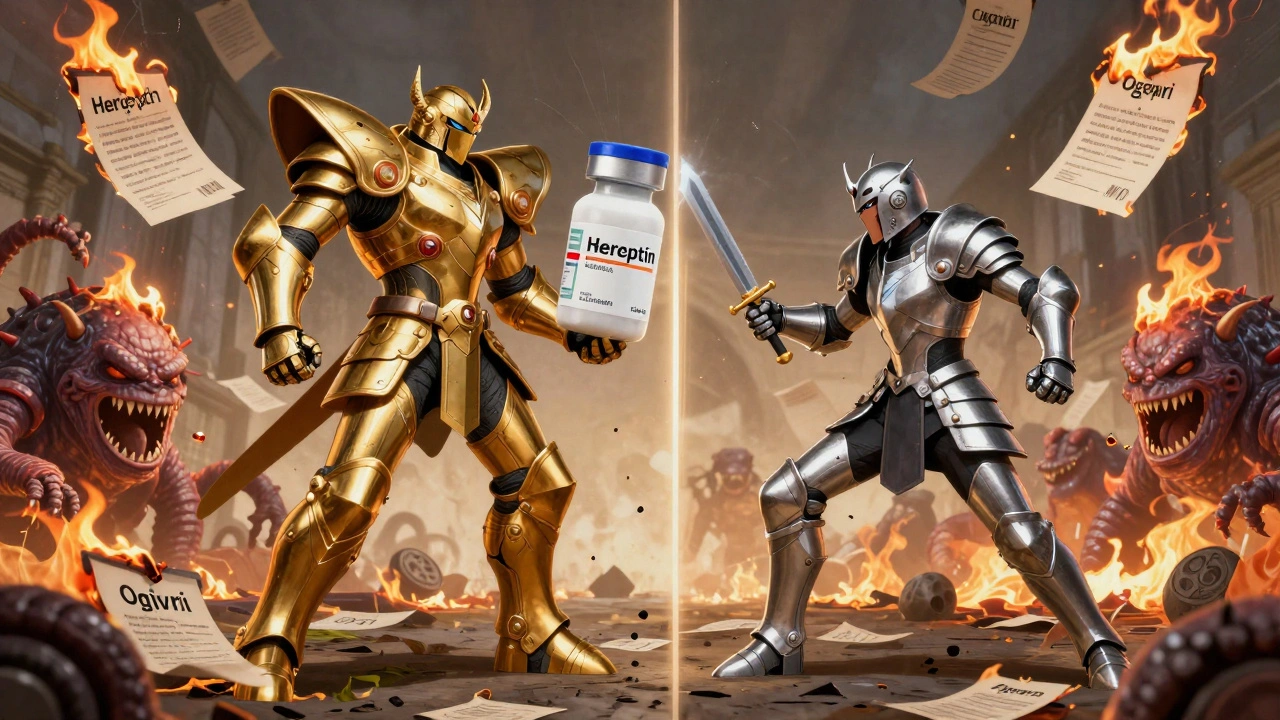
The Future: What’s Coming Next
The pipeline is packed. As of late 2023, the FDA had 37 monoclonal antibody biosimilars under review. The biggest targets? Pembrolizumab (Keytruda) for melanoma and lung cancer, and adalimumab (Humira) for autoimmune diseases. Over 14 Humira biosimilars are in development-some already approved in Europe and coming to the U.S. soon. The next wave will include even more complex drugs: bispecific antibodies (that target two cancer markers at once) and antibody-drug conjugates (which deliver chemotherapy directly to cancer cells). The EMA plans to release new guidelines for these in early 2024. By 2027, IQVIA predicts monoclonal antibody biosimilars will make up 35% of all biologic prescriptions in the U.S.-up from 18% in 2022. Cancer therapies will drive most of that growth, making up 62% of the volume. Analytical tools are getting smarter too. Mass spectrometry and glycan mapping can now detect differences smaller than a single sugar unit. The FDA’s 2023 draft guidance recommends 127 specific tests to confirm biosimilarity. That level of precision was unthinkable a decade ago.What This Means for Patients
If you’re on a monoclonal antibody like Herceptin, Rituxan, or Avastin, you might soon be offered a biosimilar. Ask your doctor if it’s right for you. It’s not about cheaper-it’s about equivalent. The science says it works. The data says it’s safe. And the cost savings mean more people can get treatment. Don’t assume biosimilar means second-rate. It means science has caught up with complexity. It means we can treat more people. It means hope isn’t priced out of reach anymore.Are monoclonal antibody biosimilars the same as generics?
No. Generics are chemically identical copies of small-molecule drugs like metformin or lisinopril. Biosimilars are complex proteins made from living cells, so they can’t be exact copies. But they’re highly similar, with no clinically meaningful differences in safety or effectiveness. The FDA and EMA require extensive testing to prove this.
Are biosimilars safe to use instead of the original drug?
Yes. Thousands of patients have switched from originator monoclonal antibodies to biosimilars in clinical trials and real-world use. Studies show no increase in side effects or loss of effectiveness. The FDA and EMA require proof of safety before approval. In fact, some patients report fewer allergic reactions with biosimilars due to improved manufacturing controls.
Can pharmacists switch my medication to a biosimilar without asking my doctor?
Only if the biosimilar is designated as “interchangeable” by the FDA. As of 2025, Remsima (infliximab) is the only monoclonal antibody biosimilar with this status in the U.S. For others, your doctor must specifically prescribe the biosimilar. Laws vary by state and country, so always check with your pharmacy or provider.
Which cancers are treated with monoclonal antibody biosimilars?
Common cancers treated include HER2-positive breast cancer (with trastuzumab biosimilars), colorectal cancer (with bevacizumab biosimilars), non-Hodgkin’s lymphoma (with rituximab biosimilars), and lung cancer (with bevacizumab or future pembrolizumab biosimilars). These drugs target specific proteins on cancer cells to stop growth or signal the immune system to attack.
How long do biosimilars take to reach the market after the original drug’s patent expires?
It can take 5 to 10 years. Even after a patent expires, companies often file multiple lawsuits to delay competition. The average monoclonal antibody biosimilar faces nearly 15 patent challenges before approval. Once approved, it typically takes 6-18 months to become widely available in clinics due to formulary reviews and provider education.
Do biosimilars have different side effects than the original drugs?
No significant differences have been found in large studies. The most common side effects-like fatigue, fever, or infusion reactions-are the same as the originator. Rare immune reactions, such as those linked to alpha-gal sugars, occur at similar rates in both. Regulatory agencies monitor safety closely, and post-marketing data continues to confirm equivalence.
Will my insurance cover a biosimilar?
Most insurers in the U.S., Australia, and Europe now prefer biosimilars because they’re cheaper. Many require you to try a biosimilar before covering the brand-name drug. Some even automatically substitute them if they’re interchangeable. Check your plan’s formulary or ask your pharmacy.
Are biosimilars approved in Australia?
Yes. Australia’s Therapeutic Goods Administration (TGA) approves biosimilars using standards similar to the EMA and FDA. Several monoclonal antibody biosimilars-including trastuzumab, bevacizumab, and rituximab versions-are listed on the Pharmaceutical Benefits Scheme (PBS), meaning they’re subsidized for patients. Access is growing rapidly in public hospitals.




Iris Carmen
10 Dec 2025 at 05:02so like... biosimilars are just fancy generics but with more lab coats? lol. i mean, if it works and costs less, why are we even arguing? 🤷♀️