


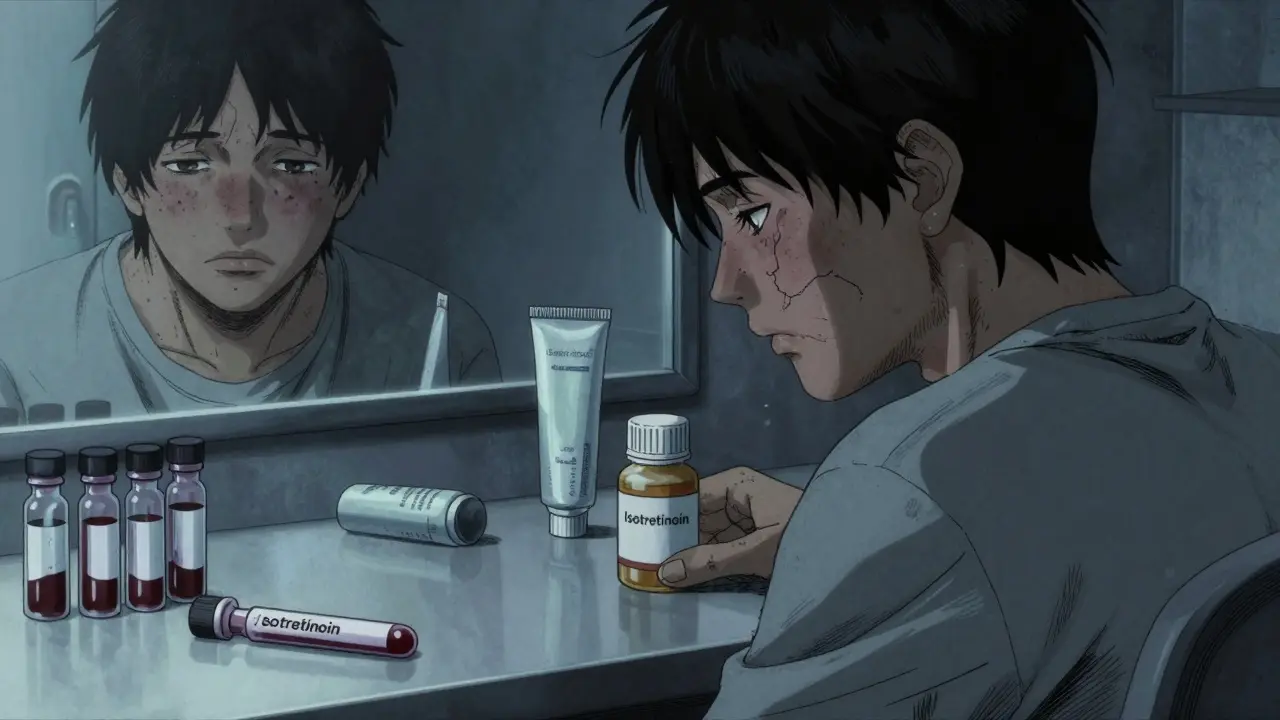

When your acne doesn’t respond to creams, antibiotics, or even birth control pills, and your skin is covered in painful, deep cysts that won’t go away - that’s when most dermatologists point to one drug: isotretinoin. It’s not the first thing you try. But when other treatments fail, isotretinoin is the only one that can truly reset your skin. For many people, it’s life-changing. For others, it’s a journey full of dry lips, blood tests, and strict rules. Let’s cut through the noise and look at what really happens when you take this medication - the safety, the labs you need, and the real results you can expect.
How Isotretinoin Actually Works
Isotretinoin is a synthetic form of vitamin A. It doesn’t just treat acne - it reprograms the factors that cause it. Most acne treatments focus on surface issues: killing bacteria, drying out oil, or unclogging pores. Isotretinoin attacks the root. It shrinks your sebaceous glands by up to 90%, which means your skin produces far less oil. Less oil means fewer clogged pores and less food for the acne-causing bacteria, Cutibacterium acnes. It also stops skin cells from clumping together inside pores and reduces inflammation that turns a pimple into a swollen, painful cyst.
Unlike topical treatments that need daily use, isotretinoin is taken orally for a set period - usually 5 to 8 months. After that, most people don’t need to keep using it. That’s because it doesn’t just suppress acne - it often eliminates it for good. About 80% of patients never see their severe acne come back after finishing the course. That’s why dermatologists call it the gold standard.
Who Gets Isotretinoin - And Who Doesn’t
Isotretinoin isn’t for mild acne. If you have a few blackheads or occasional breakouts, you don’t need it. It’s meant for severe nodular or cystic acne - the kind that leaves scars, causes emotional distress, and doesn’t improve with other treatments. It’s also used when acne is resistant to long-term antibiotics or hormonal therapies.
But there are strict rules. If you’re female and able to get pregnant, you must be enrolled in the iPLEDGE program in the U.S. This means two negative pregnancy tests before starting, monthly tests during treatment, and using two forms of birth control. The risk of birth defects is real and severe. Even a single dose during early pregnancy can cause major malformations.
Men and people who can’t get pregnant don’t face the same pregnancy restrictions, but they still need careful monitoring. People with liver disease, very high triglycerides, or a history of depression may not be good candidates. Your dermatologist will weigh your acne severity against your health history before prescribing.
The Labs You Can’t Skip
Before you take your first pill, you’ll need blood tests. These aren’t optional. They’re your safety net. Your doctor will check:
- Complete Blood Count (CBC) - to monitor for any changes in white or red blood cells
- Liver enzymes (ALT, AST) - to catch early signs of liver stress
- Lipid panel - including total cholesterol, LDL, HDL, and triglycerides
Why? Isotretinoin can raise triglycerides and liver enzymes. In most cases, it’s mild and reversible. But if your triglycerides spike above 500 mg/dL, your dose may be lowered or paused. High triglycerides can lead to pancreatitis - a rare but dangerous condition.
You’ll repeat these tests every 4 to 8 weeks during treatment. Some clinics test at 4 weeks, then again at 8, 12, and 16 weeks. If your numbers stay stable, you’ll likely keep going. If they climb too high, your doctor will adjust your dose or delay treatment. Skipping these tests isn’t worth the risk.

Dosing: High vs. Low - What Actually Works
For years, the standard was 0.5 to 1.0 mg per kilogram of body weight per day. A 70 kg person might take 35-70 mg daily for 5-8 months. But newer research shows you don’t always need a high dose.
A 2023 review of 32 studies found that a low-dose regimen - just 0.5 mg/kg/day - given in cycles (one week on, three weeks off) for six months still cleared acne in 88% of patients. Another study from the NIH showed that 20 mg per day for three months worked for 90% of people with moderate to severe acne, with only 4% relapsing after six months.
So what’s the best dose? It depends. If your acne is severe and scarring, a higher dose may be needed. If your skin is sensitive or you’re worried about side effects, a lower, longer course can work. The total cumulative dose (your daily dose multiplied by the number of days) matters most. Most dermatologists aim for 120-150 mg/kg over the entire course. But even below that, results can be excellent.
Side Effects: What to Expect (and What to Worry About)
Most side effects are annoying, not dangerous. Dry lips? That’s almost universal - 90% of users get them. Dry skin? 80%. Dry eyes? 25-30%. Nosebleeds? 15-20%. These aren’t signs it’s not working - they’re signs it’s working. Your oil glands are shutting down.
Here’s how to manage them:
- Use petroleum jelly (like Vaseline) on lips 5-10 times a day
- Switch to a fragrance-free, gentle cleanser
- Apply a thick moisturizer right after showering
- Use artificial tears if your eyes feel gritty
Some side effects need attention. In the first 1-2 months, your acne might get worse before it gets better. This is normal - about 30-40% of people experience a flare. Don’t panic. Don’t stop the medication. Talk to your doctor. They may add a short course of antibiotics or a topical steroid to help.
More serious side effects are rare but real. Liver damage, elevated triglycerides, and inflammatory bowel disease (IBD) have been reported. Depression and mood changes are controversial - studies show a possible link, but it’s unclear if isotretinoin causes it or if people with severe acne are just more vulnerable to depression. If you feel persistently low, hopeless, or have thoughts of self-harm, tell your doctor immediately.

Results: Is It Really Worth It?
Let’s talk outcomes. After finishing a full course, about 80% of people have no acne for years - sometimes permanently. For many, it’s the first time in their life their skin has been clear. That changes everything. Studies show 85-90% of patients report high satisfaction. People quit hiding their face. They stop avoiding photos. They start dating again.
But it’s not magic. About 10-20% of people have a relapse, especially if they didn’t reach the full cumulative dose or if they had very severe acne. In those cases, a second course is often effective. It’s not common, but it happens.
One thing no one talks about enough: the emotional toll. The iPLEDGE program requires monthly visits, blood draws, and online check-ins. For women, it’s a constant reminder of pregnancy risk. For everyone, it’s a burden. But for many, the trade-off is worth it.
What Comes After Isotretinoin
After you stop, your skin doesn’t instantly go back to normal. It takes time. Your oil production slowly returns, but usually not to pre-treatment levels. Most people don’t need to go back on isotretinoin. But you might need to adjust your skincare routine.
Many find their skin stays sensitive. You may need to keep using gentle cleansers and moisturizers long-term. Sunscreen becomes even more important - isotretinoin can make your skin more sensitive to UV rays. Some people report lingering dryness or changes in skin texture, but these are usually minor.
There’s no need to use acne medications daily after treatment unless your dermatologist recommends it. For most, the goal was to break the cycle - and isotretinoin does that better than anything else.
Final Thoughts
Isotretinoin isn’t a quick fix. It’s not easy. It requires patience, discipline, and regular blood tests. But for people with severe, scarring acne, it’s the most effective treatment we have. It’s not about perfection - it’s about freedom from a condition that can dominate your life.
If you’ve tried everything and your skin still hurts, it’s time to talk to a dermatologist. Don’t wait until you’re ready. Don’t wait until you feel “good enough.” Severe acne doesn’t care how you feel. Isotretinoin does.
Can isotretinoin permanently cure acne?
For about 80% of people, isotretinoin leads to long-term remission - meaning acne doesn’t return after treatment ends. In many cases, the improvement is permanent. However, around 10-20% may experience a relapse, especially if they didn’t complete the full cumulative dose or had very severe acne. A second course is often effective if needed.
Do I need to do blood tests while taking isotretinoin?
Yes. Blood tests are required before starting and every 4-8 weeks during treatment. These include a complete blood count (CBC), liver enzymes (ALT, AST), and a lipid panel (cholesterol and triglycerides). These tests monitor for rare but serious side effects like liver stress or high triglycerides, which can lead to pancreatitis if left unchecked.
Why is the iPLEDGE program required?
The iPLEDGE program is a federally mandated risk management system designed to prevent fetal exposure to isotretinoin, which can cause severe birth defects. It requires two negative pregnancy tests before treatment, monthly pregnancy tests during treatment, and the use of two forms of contraception for females of childbearing potential. It also requires patient and provider registration and education. While it’s burdensome, it’s the only system approved to ensure safety.
Can I take isotretinoin if I have depression?
It’s not automatically disqualifying, but it requires careful evaluation. Some studies suggest a possible link between isotretinoin and mood changes, though it’s unclear if the drug causes depression or if people with severe acne are already at higher risk. If you have a history of depression, your dermatologist will monitor you closely and may coordinate with a mental health provider. If you notice worsening mood, anxiety, or suicidal thoughts, stop the medication and contact your doctor immediately.
Is isotretinoin safe for long-term use?
Isotretinoin is not meant for long-term use. It’s a short-term course, typically 5-8 months. Long-term daily use increases the risk of side effects like liver damage, high cholesterol, and bone density changes. The goal is to complete one course and let your body recover. Most people don’t need to take it again. If acne returns, a second course is usually safe and effective.


Chris Dwyer
21 Mar 2026 at 14:18Just finished my 7-month course last month and my skin has never been this clear. I went from daily cysts to barely a dot in 4 months. Yeah, the dry lips were brutal - I went through 12 tubes of Vaseline. But honestly? Worth every second. I started dating again, took selfies without hiding my face, and even wore tank tops in public. This drug didn’t just fix my skin - it gave me my life back.
Don’t let the scary stories scare you. Talk to your derm. Do the labs. Follow the rules. You’ll thank yourself later.